Birds of Paradise in the German Empire
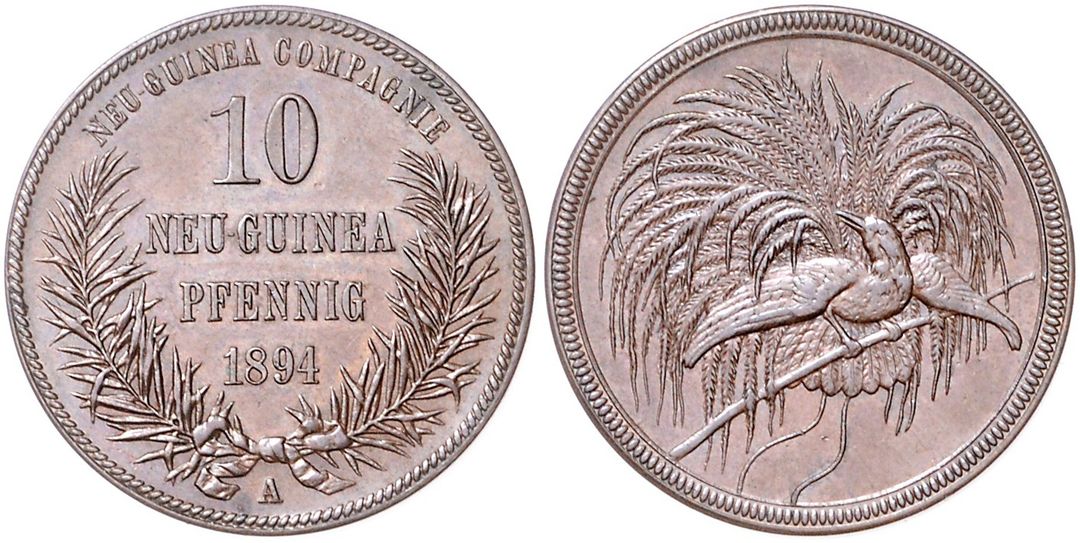
Arguably the most fine coins of the German Empire feature a magnificent bird of paradise with stunning plumage. This was not a random or merely aesthetic choice—quite the contrary. This design serves as a reminder that the skin of birds of paradise served as monetary currency for centuries in Papua New Guinea, then a German colony.
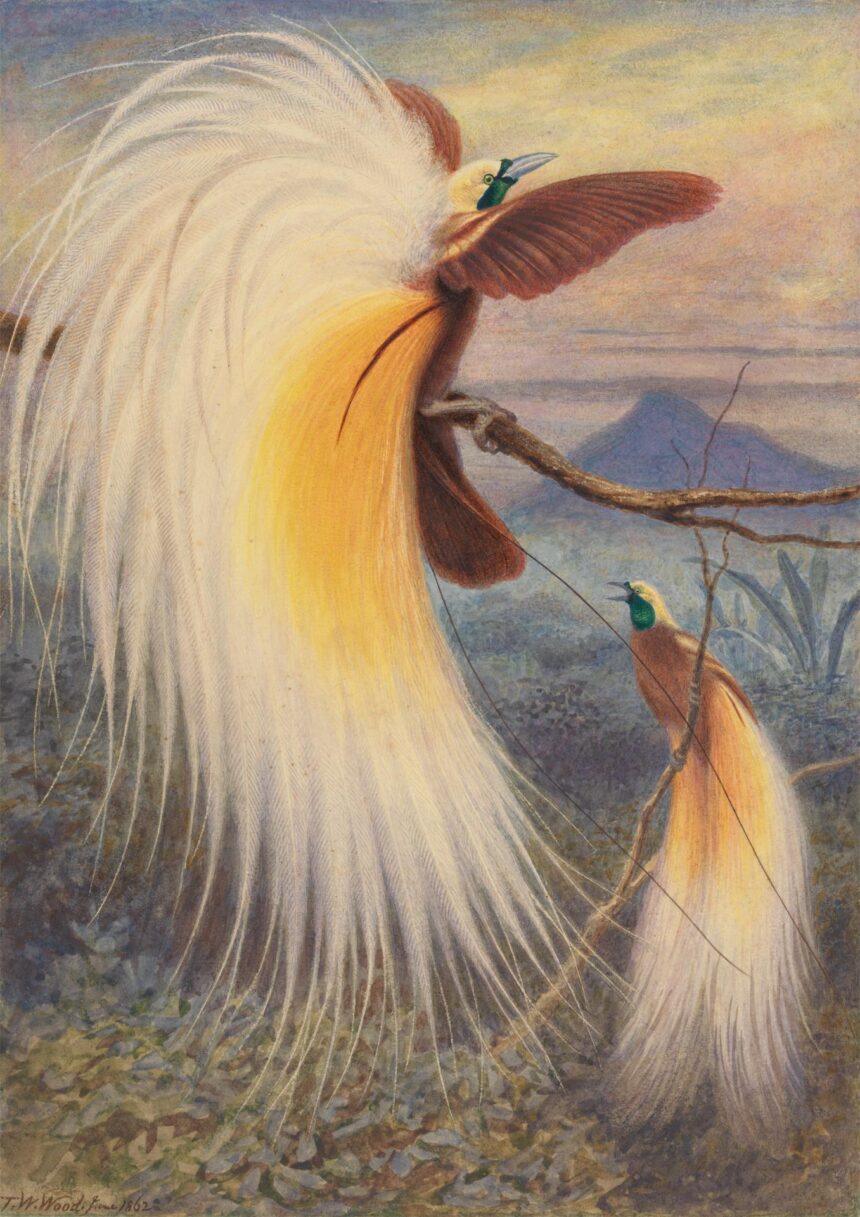
The colorful feathers of the birds of paradise were used to make an eye-catching headdress, which was worn primarily by men on festive occasions. However, catching the birds was no easy task. The indigenous people of New Guinea used glue sticks and traps, or shot arrows with blunted tips so as not to stain the precious plumage with blood. Those who were not skilled hunters had to rely on swapping. Thus, feathers—and even more so, animal skins—became a commonly used form of currency, legal tender, in New Guinea.
Swapping Feathers for a Bride
For example, they were an indispensable part of the bride price, which was paid by the groom’s clan before the wedding. This was not meant to be devaluing or misogynistic; on the contrary, it expressed the high esteem in which the bride was held. After all, her parents had spent money and time raising her. Now, just as she was ready to contribute to the family, she married into another family. Her labor thus benefited only the groom. This was perceived as an imbalance that one sought to compensate for through a payment. (Compare this to the European model, in which the groom usually receives the bride’s hand and property as a reward for his loyalty to her father.)
Birds of Paradise as an Economic Factor
Between 1925 and 1934, the average bride price was two to six bird skins. This number rose to 10 to 14 pieces between 1935 and 1945, and to 18 to 25 pieces between 1945 and 1965.
The reason for this inflation—for that is exactly what it was—was the spread of modern weapons and nets, which made it easier to catch the shy birds. The catch increased. Soon there was a surplus of bird skins, while the number of desirable brides remained the same. The brides became “more expensive.”
Bird skins were also in high demand in Europe. Since the turn of the 20th century, fashion-conscious women had been wearing bird-of-paradise feathers on their hats. This nearly led to the extinction of the birds. To limit hunting, the German government issued hunting licenses. In 1892, a hunting license cost 100 marks; by 1907, it had risen to 160 marks, and by 1911, it had climbed to 200 marks. The investment paid off. In the year 1909, a bird skin was traded for 50 to 60 marks. The state profited as well. It levied a customs duty of 20 marks per piece on imports to Germany. In 1913, 17,000 skins with a total value of over one million Reichsmarks were imported. The wholesale price at the time was 130 marks, roughly half a police officer’s monthly salary.
An Export Hit in Coin Design
Thus, the coins minted in Berlin for German New Guinea represented the most famous export item of the colony in whose name they were issued. Incidentally, these fine-designed pieces were already so popular among collectors upon their emission that they barely reached the country for which the New Guinea Company had actually had them produced.
Text by Ursula Kampmann