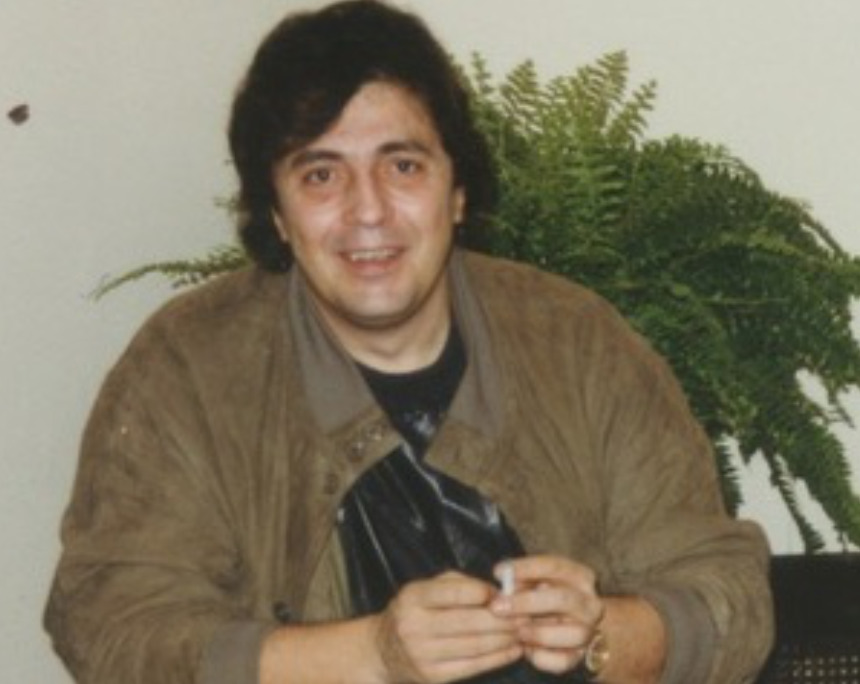
On the death of Anton “Toni” Tkalec (1948-2026)
I would like to say right at the outset that, in my view, people like Toni Tkalec were responsible for the debate on cultural property protection becoming so emotional. I think that people like him took advantage of the widely still lacking legal regulations governing international trade in coins and ancient cultural property in their favour. They lived according to a moral code that is now outdated and earned a lot of money. Their behaviour met with broad approval: in the 1980s and 1990s, it was widely believed that a state not only had the right to its cultural treasures, but also the duty to protect them. Everyone could see that the Mediterranean countries were failing in this regard. That is why many coin enthusiasts were delighted when a coin made it out of the country where it had been found. In the hands of dealers and collectors, it was safe from being melted down. It was published and thus made available for free research.
Whether this worldview is reprehensible or understandable is something everyone must decide for themselves today.
An origin with many question marks
We don’t know much about Toni Tkalec’s origins and youth. He was born on 29 February of the year 1948 in Belgrade. His parents? Well, he himself told me that his mother was a gifted opera singer and his father an engineer. On other occasions, I heard that his mother had financed Toni’s engineering studies. There were different versions, which he told me differently each time. And he was a gifted storyteller who liked to mystify his own life. Which of these is true is probably not even important. Toni would have enjoyed the confusion.
As a small coin dealer in Vienna
Things are becoming more concrete when we look at the late 1970s. At that time, Toni Tkalec was living in Vienna, and I could imagine that, like many others, he worked as a small “Westentaschenhändler” (= pocket dealer). That was the name given by coin dealers to those who made a living by buying coins in one coin shop and selling them at a higher price in another.
Toni was also a gifted coin restorer. Grading did not yet exist, and collectors liked carefully cleaned bronze coins.
Toni later enjoyed telling me how he also travelled to Zurich in his younger years. And every time, he was outraged by how arrogantly the established coin dealers there dismissed him. I believe he wanted to take revenge for this treatment throughout his life by not playing by their rules and making it quite big, he, the ‘little Serb’.
So what was the story with the Seuso treasure?
Sometime before 1985, Toni Tkalec made the leap into the premier league of coin trading. It is quite likely that the affair surrounding the Seuso treasure played a decisive role in this. Today, many journalists and activists see Toni Tkalec as the first link in the chain of dealers and speculators who traded in the Seuso hoard. He is said to have been the one who put the impressive silver service on the market. It was actually a Lebanese antique dealer named Halim Korban, owner of a shop in Vienna’s posh Hilton Hotel, who brought the first pieces to London. There they were displayed in the Mansour Gallery near Oxford Circus.
Many people at the time must have thought what a good business these silver plates would make! Don’t forget: this was the year 1980, in the middle of the height of inflation. The annual inflation rate in the UK was almost 18%. Anyone with cash was wondering how to keep it safe. Smart speculators sensed big profits and took on debt. They used borrowed money to buy works of art, which they later resold at a large profit. One of them was the British peer, politician and Freemason Spencer Douglas David Compton, 7th Marquess of Northampton (estimated fortune in the year 2017 according to Wikipedia: £110 million).
Peter Wilson, then an institution in the British art market, is said to have persuaded him to buy the first three plates from the Seuso Treasure for the equivalent of £798,000 (DM 4.8 million / CHF 4.4 million / USD 1.7 million). To put this sum into perspective: in Munich in the early 1980s, it would have been enough to buy at least 12 terraced houses with a living space of around 120 square metres in a good location. In September and December 1981, further plates changed hands for £180,000 and £525,000 respectively. In 1987, the last transaction took place, involving four silver plates for a total of USD 8.7 million.
The Treasure Goes to Hungary
What happened to Seuso’s treasure is another story. No fewer than three nations, Lebanon, Croatia and Hungary, competed for its return. Many journalists and activists attempted to reconstruct the events, without reaching identical conclusions. It was Hungary that added a murder charge to the smuggling case. There, it was claimed that the death of a soldier who traded in coins and antiques in December 1980, initially declared a suicide, was actually a murder, and that his three comrades were also victims of murder. The claim remained just that; no evidence was ever produced to support this serious accusation.
1500 years of coin minting
Whether it was the proceeds from the Seuso treasure or whether Toni Tkalec found another source of funding is something everyone can decide for themselves. The fact is that he has established himself as a specialist in valuable antique coins in Zurich since 1984. If a piece made it into a Tkalec auction, it was one of the finest a collector could possibly acquire. First in collaboration with the Austrian coin dealer Rauch, and then on its own from 1991 onwards, Anton Tkalec AG held auctions in a class of their own, and not only in terms of the quality of the goods.
Toni Tkalec took immense pleasure in impressing others with his wealth. He maintained a huge office on the posh Limmatquai, which stood empty for most of the year. Only when the auction preparations began did it fill with life. Then Toni would receive his guests, serve them champagne and ham sandwiches, and entertain them with stories from his life while lighting one cigarette after another.
Toni could be infinitely generous, and not only during his legendary auction banquets at the elegant Zunfthaus zum Kämbel. He proved to be a patron, especially to smaller coin dealers with limited budgets. On the other hand, he loved to snub the established dealers. He once confided in me that he enjoyed turning up in jeans, a sweatshirt or even a tracksuit at events where people only wore suits and ties at the time.
Toni was not a nice person. I myself witnessed how he enjoyed instilling fear in men he did not like simply by his physical presence. But those who won his sympathy were treated with care and courtesy. He enjoyed having guests at his villa in Neos Marmaras, Greece, and entertained them until the tables were sheeted with food.
The end of an era
Why did Toni Tkalec suddenly disappear with his auction house after his last auction in November 2014? We will never know. Perhaps it was the entry into force of the Swiss Cultural Property Protection Act in June 2014, which imposed very high duties of care on auctioneers of antique coins. Or was it his ugly divorce, which, as he told me, robbed him of a large part of his fortune? Toni probably also lost a lot of money trying to build a platform to compete with Sixbid, but ultimately lacked the technical expertise to do so. I can still hear him trying to explain to a programmer with broken English how his website should work.
At some point, Toni disappeared from Zurich. When I met him by chance in Munich, he told me he was living with a new girlfriend in Neos Marmaras. Then he was never seen again.
Only a few close friends are likely to have known that he had retired back to Vienna. A journalist tracked him down there. Yet another person who wanted to find out the truth about the Seuso treasure. She is said to have tried to persuade him to open the door to her in the week of his death. He did not do so. Whatever connected him to the Seuso treasure, we will never know. He took his secret with him to the grave.
By the Way: You Can See the Seuso Treasure for Yourself
In 2014, Hungarian Prime Minister Victor Orbán boasted that he had brought seven pieces of the treasure back to Budapest. They were part of an exhibition in the Budapest Parliament until the end of August 2017. Today, a research project is dedicated to evaluating them. The treasure itself can be viewed in the Hungarian National Museum.
Text by Ursula Kampmann