The trend is pointing eastwards
694 items were auctioned by Künker Auction House on 28 January 2026 in its 20th Berlin auction. A simple calculation illustrates the level of numismatics on offer here: dividing the result of 9.5 million by 694 gives an average price per item of well over 13,500 euros. The result thus exceeded the estimate by an average of 60%.
No wonder, then, that the event lasted until 8.30 p.m. Experienced collectors know that the duration of an auction is related to the number of bids. Long duration = many bids = high results.
Two special collections were offered at Künker Auction 437: an impressive ensemble of coins and medals from Brandenburg-Prussia and the top pieces from the collection of Commercial Councillor Dr Herbert Wenzel, featuring coins from the Habsburg Empire. These were joined by rarities from all over the world. And as always, before the auction, everyone wondered where public interest would lie in the new year. Let’s take a look at some of the high-priced items.
Old Germany remains affordable, except for heavy gold coins
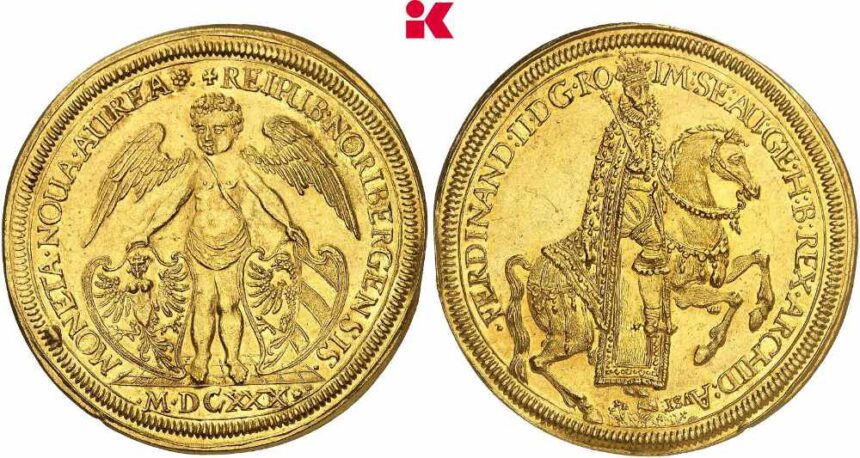
Of course, it doesn’t exactly feel affordable when results in the high four and five-figure range are achieved. But please don’t forget that the majority of the auction focused on Old Germany, that Künker is also the specialist for Old Germany, and that its Berlin auction brings together the greatest rarities of the year. Taking this into account, it is quite telling that ‘only’ five old German coins exceeded the €100,000 mark and that four of these were gold coins. The international investor market has so far only discovered heavy German gold coins. Loosers and rare talers remain the preserve of collectors.
With the exception of an extremely rare, historically interesting 4 Reichstaler coin from Braunschweig-Bevern, not a single old German silver coin exceeded the €100,000 mark. All of the striking price explosions involved gold coins, such as the exceptionally well-preserved 10-fold ducat from Schleswig Holstein, which more than doubled its estimate of 50,000 euros.
Czechia: Where grading is not important
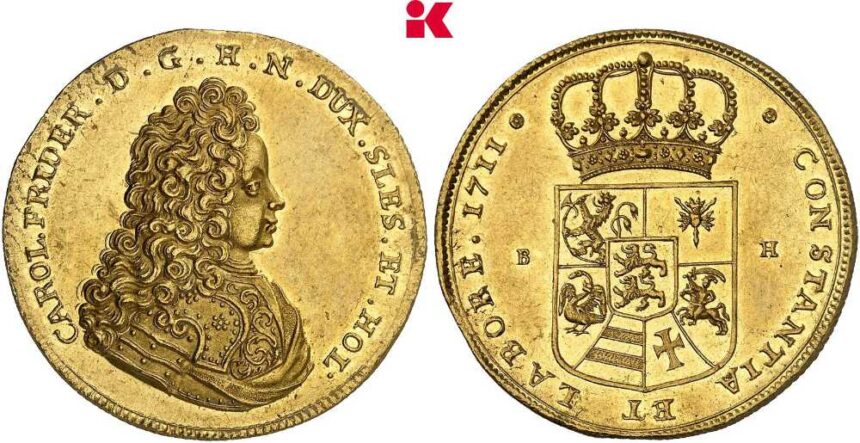
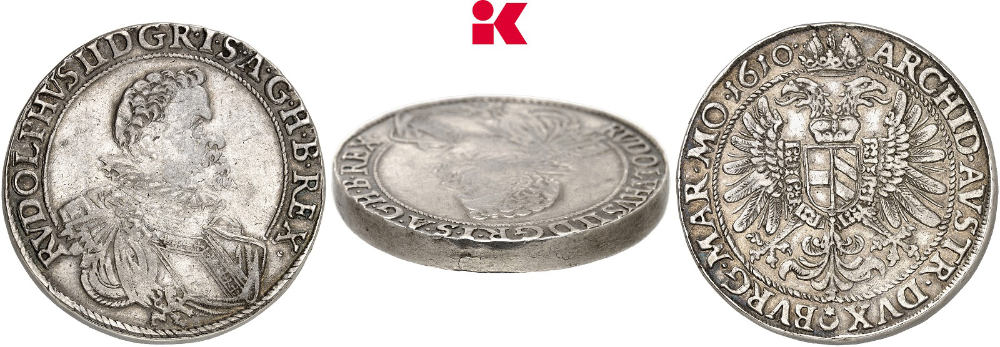
The situation changes radically as soon as you head east. The prices currently being paid for rare Habsburg coins from the Prague mint are exorbitant, so exorbitant that estimates become a joke. At €95,000, almost 16 times the starting price of €6,000, a thick double thaler from 1610 from the Prague mint, which actually contradicts everything the American investor wants to see, was sold. ‘Only’ very beautiful, no grading, plus tiny edge flaws, the centre of the coin not clearly embossed in the portrait area: you have to be a collector to know how incredibly rare this piece is. And the Czech collector’s market is hungry for rarities.
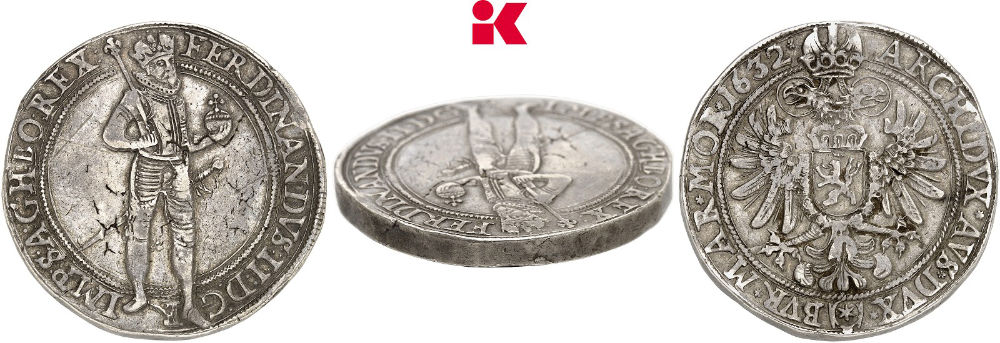
This coin was not an outlier. Everything minted in former Bohemia climbed in value. A ducat from Prague in 1615 fetched 44,000 euros (instead of 10,000 euros), and a Reichstaler from 1630 with the elegant frontal portrait of Ferdinand II fetched 60,000 euros (instead of 7,500 euros).
Similar results were achieved for coins from Kutná Hora, where a large silver mine once supplied the material for Bohemian coins. A thick double Reichstaler in very good condition with clearly visible minting errors and small scratches rose from a starting price of €4,000 to €60,000, while a Reichstaler from 1771 from the same mint rose from €8,000 to €42,000.
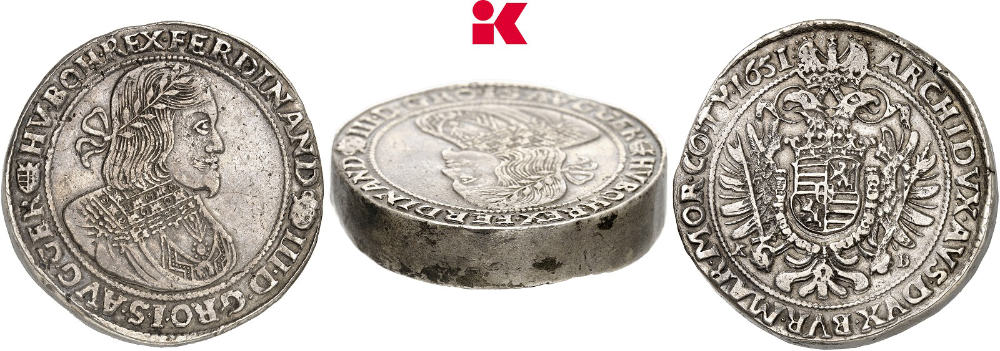
Kremnitz, now located in Slovakia, is also affected: a thick fivefold Reichstaler from this mint fetched €140,000, probably because, according to Mr Werkner, there are only two other examples in existence. One is now in the Hungarian Coin Cabinet in Budapest; the second comes from the Montenuovo Collection and is on the open market.
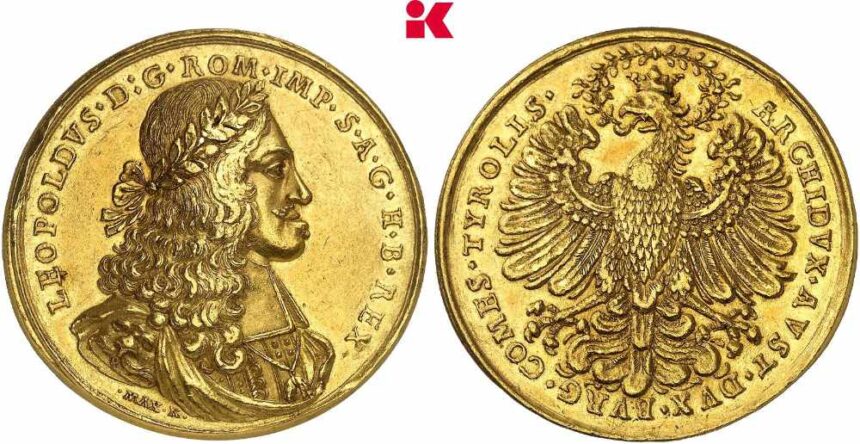
The most expensive item in the Habsburg section was, once again, made of gold. It was a 20-fold ducat bearing the portrait of Leopold I, which sold for an estimated €200,000.
Die teuerste Münze der Auktion kommt aus Russland
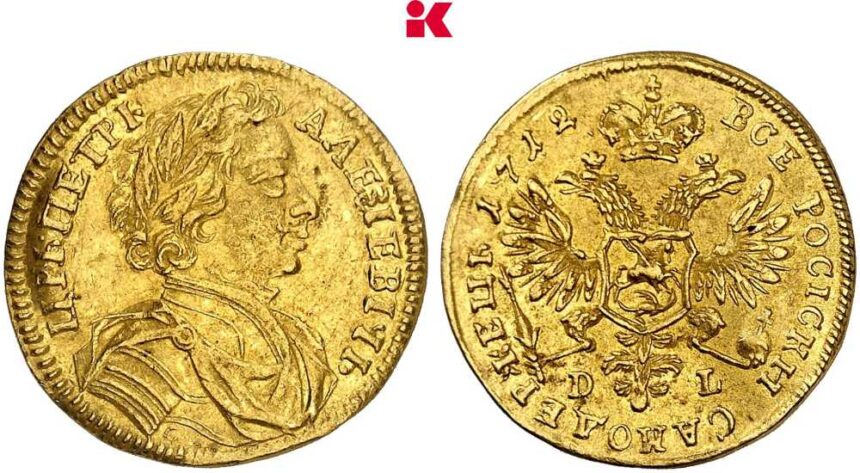
Für das teuerste Stück müssen wir noch ein bisschen weiter in den Osten gehen. Russische Münzen sind eben immer noch für Rekorde gut, auch wenn es sich nicht um schwere Goldmünzen oder -medaillen handelt, sondern um seltene Dukaten. Ein Dukat Peters des Großen aus dem Jahres 1712 erreichte mit einem Zuschlag von 220.000 Euro das höchste Ergebnis der Berlin-Auktion. Der Einlieferer darf sich freuen. Und wir wissen: Russische Münzen spielen weiterhin in einer eigenen Liga.
However, I would like to add one thing as a kind of Ceterum Censeo: historical coins can be expensive, but they don’t have to be. Coin collecting is possible on any budget!
All photos: Benjamin Seibt Lübke & Wiedemann.
Text by Ursula Kampmann