Head & Collar - a numismatic exhibition by the KHM
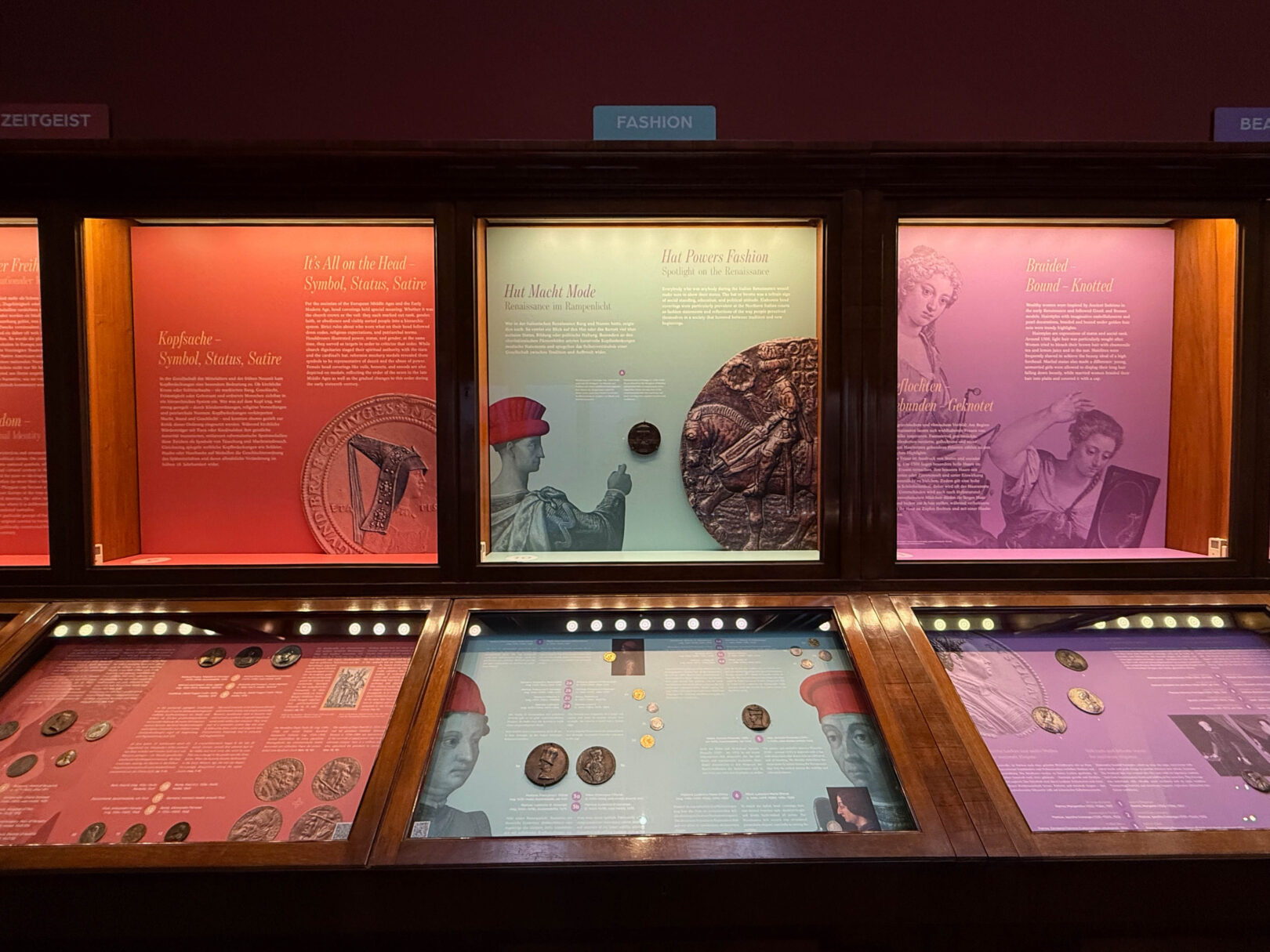
Recently, a very young relative told me about her vacation in southern England. The focus was not on sights or experiences, but on photogenic locations. She had identified these well in advance via Instagram. Her suitcase contained the clothes she planned to wear at these locations in order to realize her image idea to the fullest. At first I was horrified. Then I had to smile. Was her behavior really so different from that of the courtiers at the residences of the early modern period? Wasn’t being part of a Gesamtkunstwerk (total work of art) and being perceived as part of this Gesamtkunstwerk the goal of court fashion, which we admire today on coins and medals? The current exhibition at the Coin Cabinet in Vienna’s Kunsthistorisches Museum focuses on precisely this new perspective in its exhibition “Kopf & Kragen” (Head & Collar), which deals with numismatic self-representation.
The view of detail
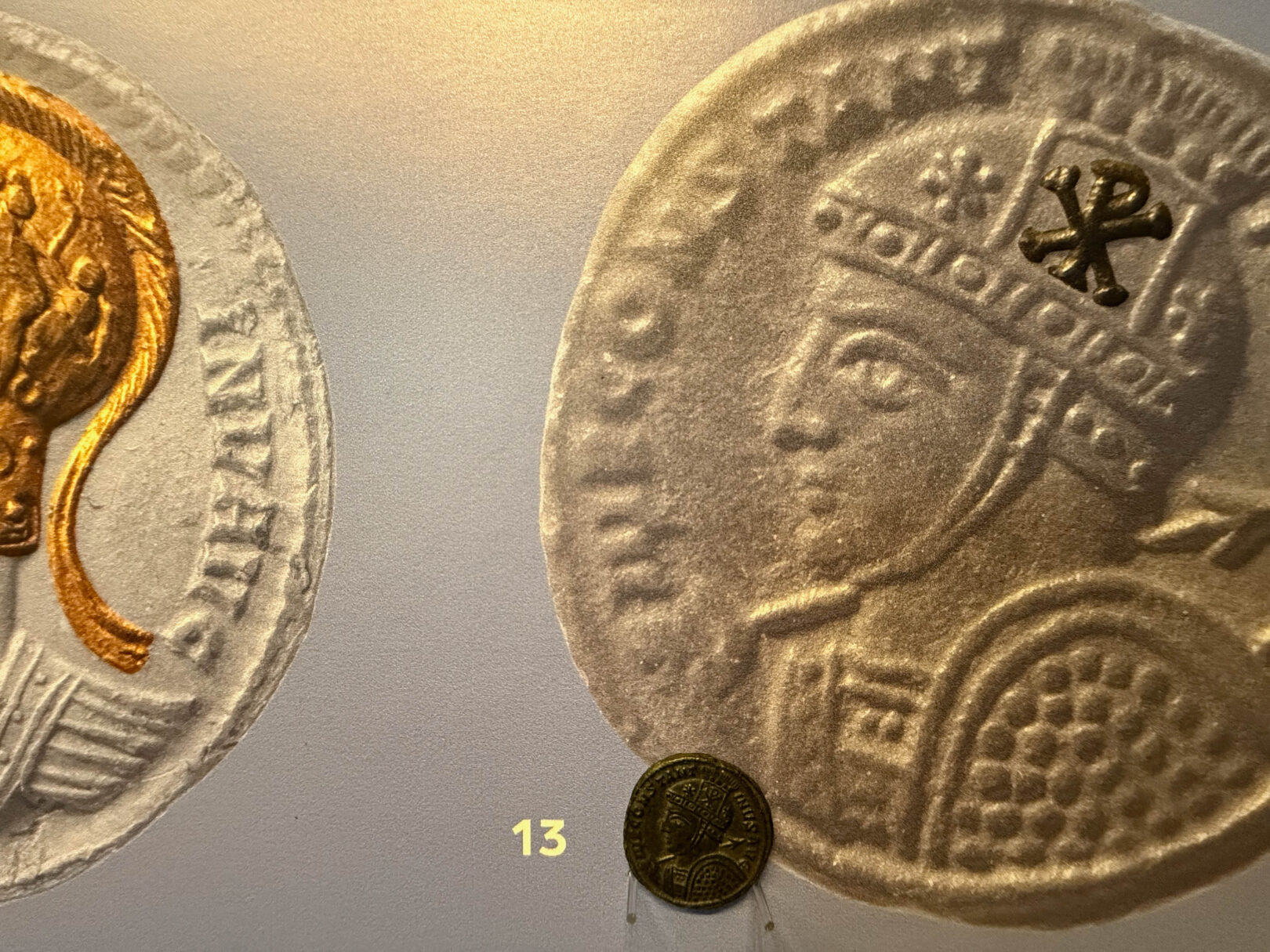
Okay, should I really tell a numismatic readership something about the significance of fashionable staging on coins and medals? No, certainly not. That would be a waste of time. We all know how closely you have to look to perceive the tiny messages hidden in the clothing, hairstyles, and beards, indeed in the whole manner of presentation. What headgear is the prince wearing? A helmet, laurel wreath, hat, cap, diadem, or crown? Each one says something about how he wants to be perceived. What is he doing with his hair? Is he adorning himself with a tall (and impractical) allonge wig? Or are his hair and beard cropped short? In military short style or civilian short style? Elaborate fur collar, uniform, or breastplate? Or has he even opted for Spanish, Italian, or French court attire? Is Madame wearing a bonnet? Open hair? Or an elaborate updo? And what are all the people depicted trying to tell us?
What is normally hardly mentioned in numismatics and mutates into a brief “bust n. r.” or “bust n. l.” in the average auction catalog is celebrated, interpreted, compared—including with painting—and interpreted here.
The texts appeal to everyone. They are funny, informative, easy to understand, and without any scientific pretensions. Every visitor can benefit from reading them—whether they are experienced coin collectors or tourists from Japan who just happened to drop in.
And the audience rewards the exhibition organizers. Klaus Vondrovec, director of the Coin Cabinet at the KHM since 2021, smiles mischievously when asked about the success of “Kopf & Kragen.” He is delighted that there are more visitors here than at many other special exhibitions at the KHM, even though it is quite difficult to stumble upon the remote rooms by chance.
Numismatic Didactics 3.0
Are you interested in scenography? Then this exhibition is a must-see, as it offers a fresh look combined with truly magnificent material (yes, yes, the KHM is one of the oldest and most important coin collections in the world). It embodies the supreme discipline of exhibition design: showcasing small objects in a big way.
Observe the visitors! First they glance briefly at a display case, are intrigued by a statement or an image, begin to read, and then slowly move from display case to display case, from coin to coin, from text to text, looking at all the tiny objects that otherwise have such a hard time competing with large-format images. Young people react this way too. The Instagram generation is fascinated by the attention to detail with which our ancestors presented themselves, not in selfies, but in coin designs.
The exhibition catalog in the style of Vogue
An innovative exhibition calls for an innovative exhibition catalog. And this one is simply incredible! If only because it looks as if its authors completely forgot what an exhibition catalog is supposed to look like. The design is reminiscent of a glossy fashion magazine, which presents coins and texts in a completely different way.
Please don’t think that the quality of the texts has suffered as a result! On the contrary. I have rarely seen so much well-researched information from such diverse fields as in this booklet. The 150 pages cost only €14.95. Every single cent is well spent.
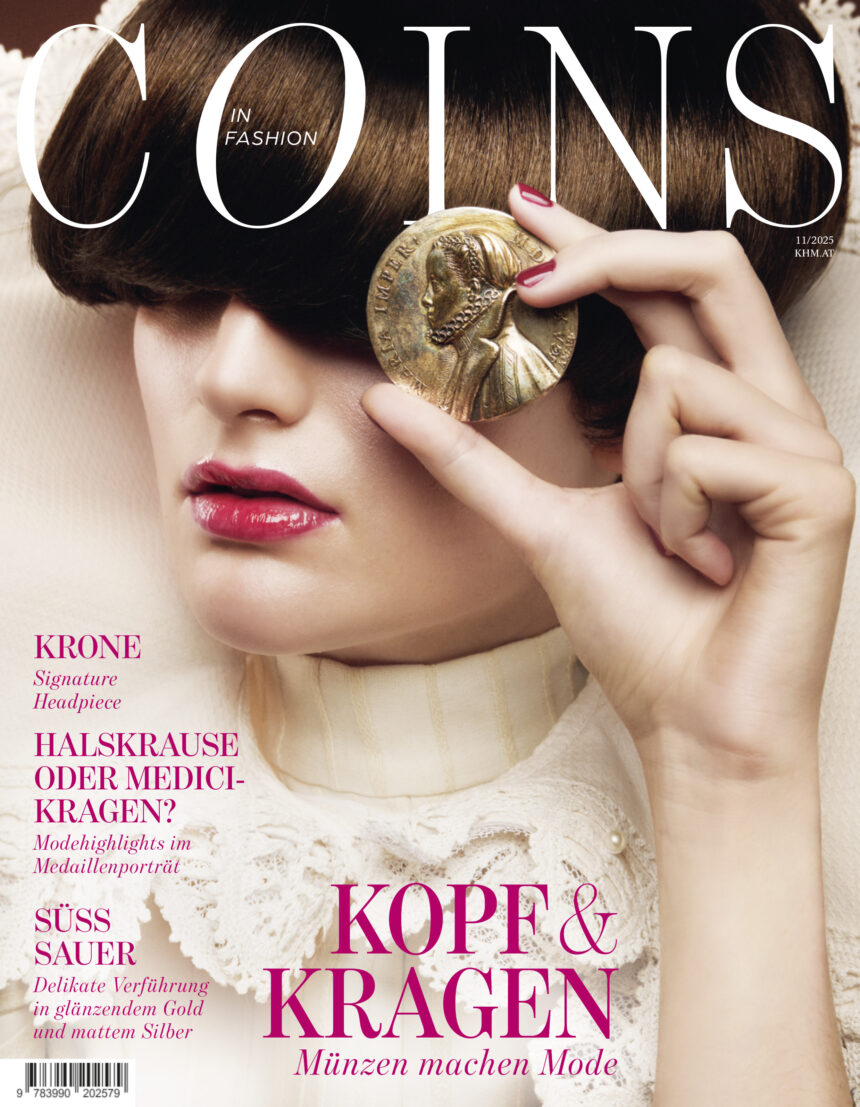
I recommend it to all collectors, but also to all curators, who will hopefully find inspiration to emulate it. Because this is how a catalog makes you want to read and entices even those who previously thought that coin portraits were boring to read.
A rich website
If you can’t travel to Vienna, we recommend at least visiting the exhibition’s website. It is also available in English, at least in part. It contains not only a few introductory texts and images, but also videos and articles, as well as a complete overview of all the jewelry pieces created in collaboration with the Abendkolleg Schmuck Design (evening college jewelry design) at Wiener KunstModeDesign Herbststrasse.
Incidentally, the exhibition catalog can also be ordered online and shipped at a reasonable cost, as it fits easily into a standard A4 envelope.
How sexy can a coin collection be?
I wasn’t the only one who was impressed by the exhibition. The Austrian newspaper Kurier ran the headline: How sexy can a coin collection be? When was the last time you read the words “sexy” and “coin collection” in the same sentence? A great success for Klaus Vondrovec’s team!
You have to admit: the KHM has achieved something that many of us still struggle with. Without resorting to pseudo-youthful language, they have taken the needs of a new generation seriously and tailored their presentation accordingly.
In summary, congratulations to the exhibition organizers. You have shown the world that numismatics has a future, especially in the age of Instagram.
Text by Ursula Kampmann