US Mint Director in controversial times
Let’s say it straight away: Paul Hollis will not have an easy time in his new role as director of the US Mint. Never before has there been such controversy over which designs should appear on American coins (and banknotes, of course). Never before has every single statement made by a mint director been interpreted and analyzed politically. Paul Hollis will have noticed this during his hearing, if not before. Two senators asked him what his position would be on the designs for the $1 coin featuring President Trump’s portrait. It is significant that this moment, of all moments, was captured on YouTube. Paul Hollis is experienced in dealing with the media and politicians. He is one of those people who are never at a loss for the right words. And yet you can sense a brief hesitation, an almost imperceptible tremor in his voice, when he states that he will abide by the legal framework. And that framework is complicated. It currently stipulates that no living presidents may be depicted on coins and no living persons may be depicted on the reverse side. In other words, there is definitely a loophole in the law…
From coin-crazy boy to mint director
Who is this new director of the US Mint? He himself likes to tell his life story this way: when he was seven, his grandmother gave him a Quarter Eagle, which sparked his passion for numismatics. While other boys playing baseball dreamed of becoming big sports stars one day, his only goal was to be a mint director. Says Hollis.
After graduating in 1994, he joined Blanchard & Co. For Europeans who are unfamiliar with this name, it is worth noting that the company, founded in 1975 by Jim Blanchard, is now one of the world’s largest distributors of gold and other precious metals to potential investors. Blanchard & Co. already had 300,000 customers in 2000, before gold and coins began their long-term surge after September 11.
Blanchard & Co. not only deals in bullion, but also numismatic treasures. In 2001, the private sale of the Saint-Gaudens Double Eagle in high relief took place here.
This made Blanchard the first company to successfully sell a coin for a seven-figure sum. That was also the year Paul Hollis left Blanchard & Co. Hollis must have discovered his talent as a salesman. He must have realized how much money could be made by selling high-quality coins to investors.
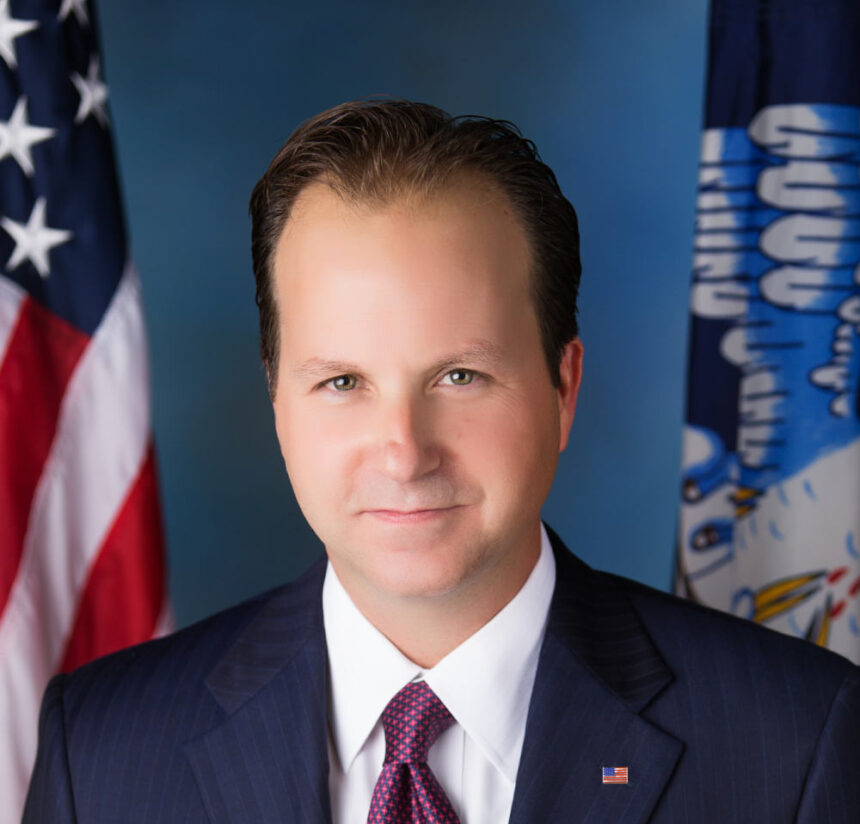
So in 2003, he founded his own coin business in Mandeville, Louisiana: Paul Hollis Rare Coins.
He quickly became well known. Hollis is not only a profound expert in American numismatics, but also a gifted PR talent who knows exactly how people tick. In 2008, he organized an exhibition at the coin museum of the former New Orleans Mint of the only existing 10 dollar coin from 1844 minted there. The media learned, to great publicity effect, that the coin was insured for $2.5 million. The result: 20,000 visitors wanted to see the coin that was said to be worth $2.5 million.
Shortly thereafter, on the occasion of the 100th anniversary of the Lincoln cent, he had 40,000 of these coins distributed to schoolchildren, nicely graded with certificates and all the trimmings, of course. The students at his former high school, John Quincy Adams Middle School in Metairie, received a John Quincy Adams Presidential Dollar in the same year as part of a grand ceremony – also graded and with a certificate made of real banknote paper.
Paul Hollis knows how to give an event the right setting. He has an excellent network in the numismatic community of American collectors and dealers, has published his own work, and knows how to present himself. His testimonial is a gold coin featuring the famous Indian Head, which his grandmother is said to have worn around her neck for many years before giving it to him. Since then, Hollis has always wanted to have it with him at crucial moments in his life. When he took his exams, when he got married, and, of course, at his confirmation hearing and inauguration.
Politician Hollis
That is one side of the new Mint Director; the other is his profound knowledge of the political system. He comes from a well-connected political family. His father, Jesse Kendrick “Ken” Hollis (1942-2010), was a Louisiana State Senator between 1982 and 2008 and is considered one of the most prominent politicians in his home state. A staunch Republican, he was not afraid to stand up for the rights of gay Americans, partly because of his personal involvement. One of his sons is gay. He accompanied his brother Paul, along with many other members of the family, to the Senate hearing. One could conclude from this small gesture that Republican Paul Hollis is a conciliatory figure, something that is sorely needed in the US at the moment.
But back to his political career. He did not study numismatics or history, as one might expect from a coin enthusiast, but political science, graduating from Louisiana State University in 1994. In 2011, he was elected to the Louisiana House of Representatives, where he served three full terms and served on several committees.
In the House of Representatives, Hollis befriended Mike Johnson, currently Speaker of the United States House of Representatives. It was during a chance encounter that the idea was born that Paul Hollis could become Mint Director.
What can we expect from Mint Director Hollis?
It is remarkable how Paul Hollis manages to get ordinary collectors to identify with him through his biography. One of us has made it, that is the general tenor of the numismatic media. This is particularly interesting because Paul Hollis actually seems to care about what collectors think of him. He takes their concerns seriously, and one believes him when he says that American coinage is important to him, especially in controversial times like these.
Coin design controversy
The American culture war is also being played out in coin designs. In 2026, the US will celebrate 250 years since its founding – including with a comprehensive coin program that will be visible on circulation coins. But what will be depicted on them? How does the American government tell its story today? This was fundamentally changed again at the last minute. Now Frederick Douglass and the abolition of slavery no longer play a role. Instead, the good old Pilgrim Fathers are back. Women’s rights? No, thank you, better to stick with the tried and tested War of Independence. Ruby Bridges is also no longer there. For those of you who, like me, have never heard this name before: this courageous little African-American schoolgirl insisted on attending a school of her choice in 1960, as the law allowed her to do. However, this was only possible under the protection of four U.S. marshals. “Ruby’s coin” is now dedicated to the Gettysburg Address, a classic piece of American education with the great advantage that everyone can interpret it however they want.
These new designs will probably be very popular with collectors. After all, we know that collectors prefer what they already know. And let’s be honest: the history of the USA cannot be told solely through the lens of minorities. It’s the mix that matters, a mix that always has to be a compromise. And compromises are not in vogue anywhere in the world at the moment.
Key objectives for his term of office
Paul Hollis is likely to be aware of all these problems. In his Senate confirmation testimony, he followed Abraham Lincoln’s example and formulated his goals in such general terms that everyone can identify with them. The US Mint should work efficiently and transparently in order to distribute a substantial amount of money to the US Treasury. To this end, he wants to improve production and strengthen ties with collectors and investors. He wants to attract new collectors by telling the exciting stories behind American coinage.
Yes, they all want that. In fact, Hollis has done nothing more than repeat his job description. And yet: How should we interpret his commitment to strictly adhere to all legal requirements and, in case of doubt, consult the mint’s legal department? Is this a rejection of those in favor of a portrait of Trump? Or is it a signal that Paul Hollis will bow to higher powers?
Perhaps politician Paul Hollis simply does not want to commit himself. We will see. In any case, I do not envy the new director of the US Mint for his task.
Text by Ursula Kampmann

