Stumbling block for Philipp Lederer
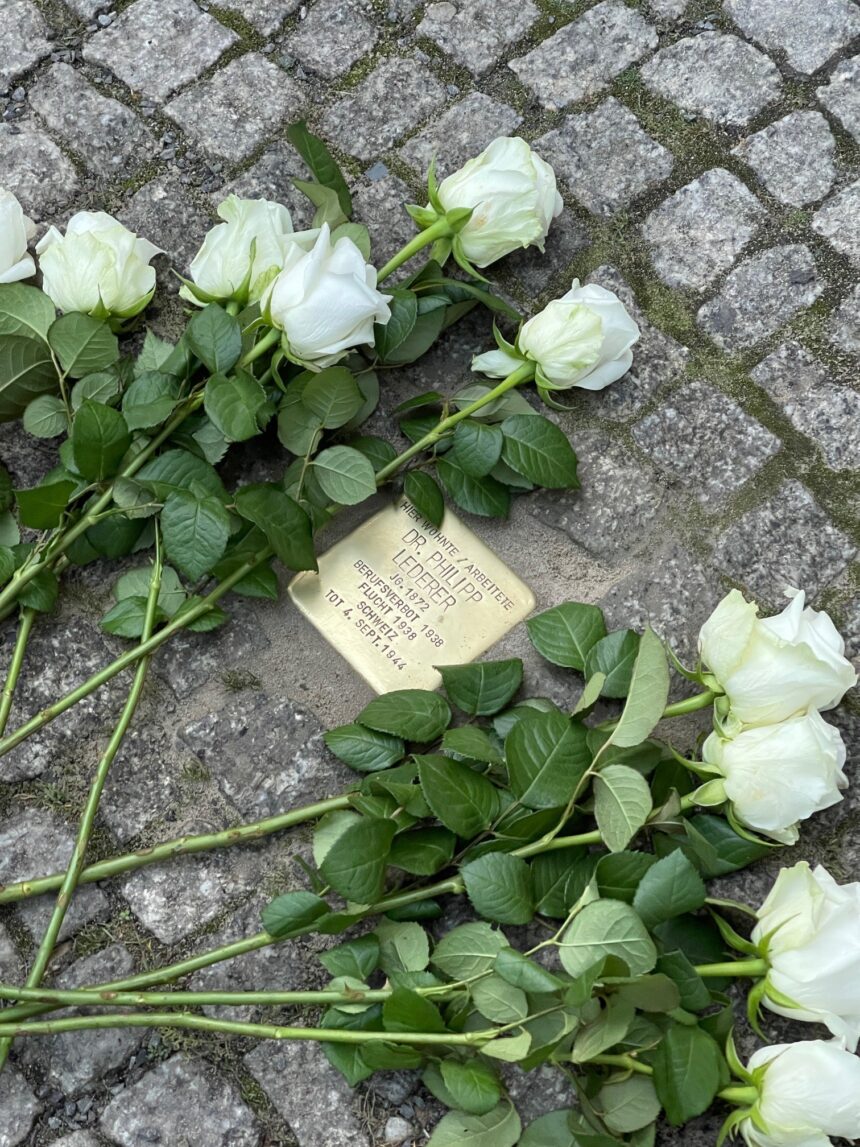
Before World War II, Philipp Lederer (1872–1944) was one of the most important German coin dealers. He is a typical example of a generation of educated coin dealers of the Jewish faith who wrote as many auction catalogs as they did scientific treatises.
While studying classical archaeology and classical philology, Lederer worked in the business of Jacob Hirsch, to whom he was related. There he catalogued important collections such as the Rhousopoulos and Consul Weber collections, while at the same time working on his dissertation on the tetradrachm coinage of Segesta. The monograph, published in 1910, is now considered a milestone in numismatics. It was based on a systematic study of dies, which was not common practice at the time.
The close collaboration between Lederer and the Berlin Coin Cabinet
Philipp Lederer opened his coin shop in 1911 at Kupfergraben 4, directly opposite what would later become the Bode Museum. His clientele included many serious collectors, among them Sigmund Freud and Nobel Prize winner Gerhart Hauptmann, to name just two prominent figures.
The Berlin Coin Cabinet also trusted Lederer. It had him carry out its orders at international auctions and auctioned off the duplicates that had resulted from the acquisition of the Löbbecke Collection through him. A glance at the visitor’s book from 1929 illustrates how close the connection was: there we find the name Philipp Lederer exactly 100 times. Lederer visited the study room of the Münzkabinett every second working day.
Persecution during the Nazi era
Although Philipp Lederer had played a very active role in Berlin’s numismatic community until 1933, his position changed when the Nazis came to power, albeit initially with few noticeable restrictions. He was allowed to continue running his coin business. This was probably less because he had served as an active soldier in World War I and more because the Nazi regime could thus exploit him as a link to German collectors of the Jewish faith. These collectors were systematically brought into financial distress. Many of them had to pay the very high “flight tax” levied in the event of emigration as a preventive measure. Many collectors could only obtain the money by selling coins, as Philipp Lederer organized. In this way, he procured foreign currency for the regime and an income for himself. He will have consoled himself (and rightly so!) that at least he prevented the worst exploitation of his customers.
With the November pogroms of 1938, the National Socialist administration also imposed a complete professional ban on Lederer. The 66-year-old managed to flee to his sister in Lugano. In doing so, he had to leave behind his stock of 2,211 silver and 169 gold coins. As Herbert Cahn put it in his obituary: “For him, a world he had firmly believed in had collapsed.”
According to Cahn, Lederer tried to “overcome the shock through diligent scientific activity.” Is that even possible? Lederer died a few years later after a short illness, unexpectedly for his friends. He probably couldn’t find the courage to persevere after all.
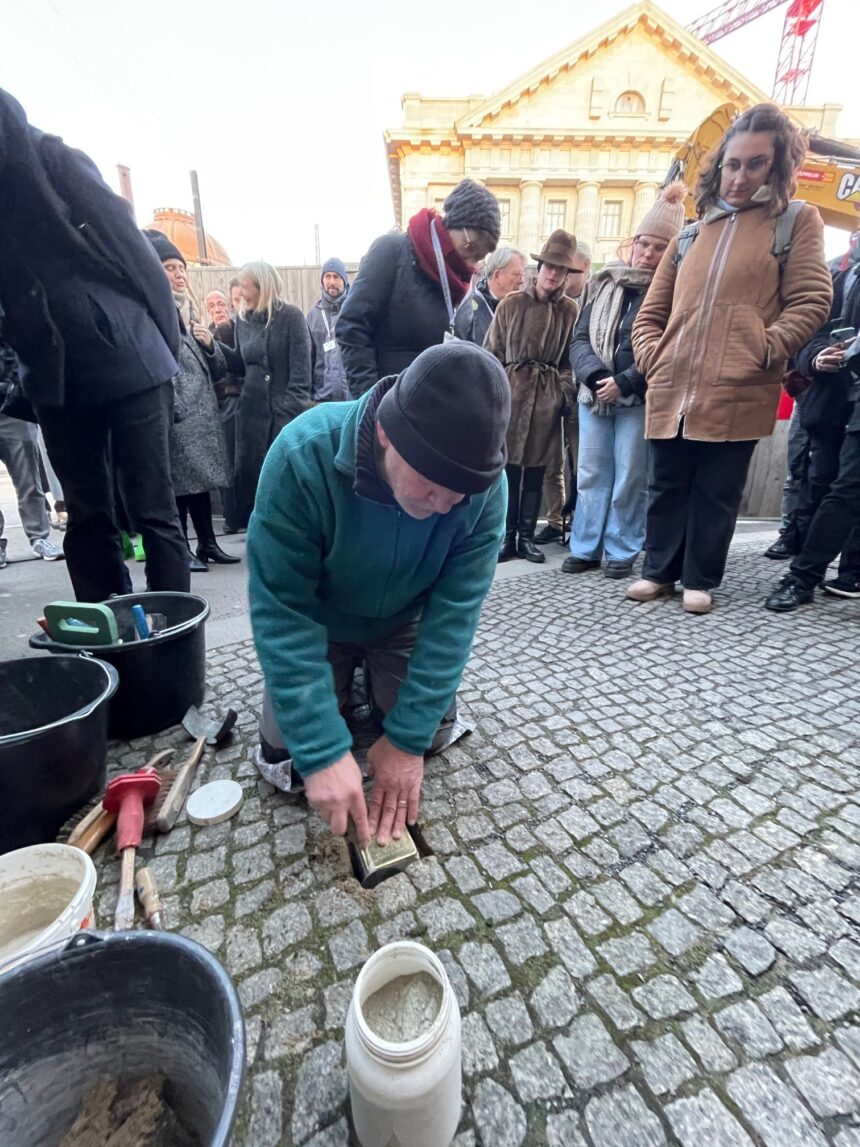
Stumbling blocks
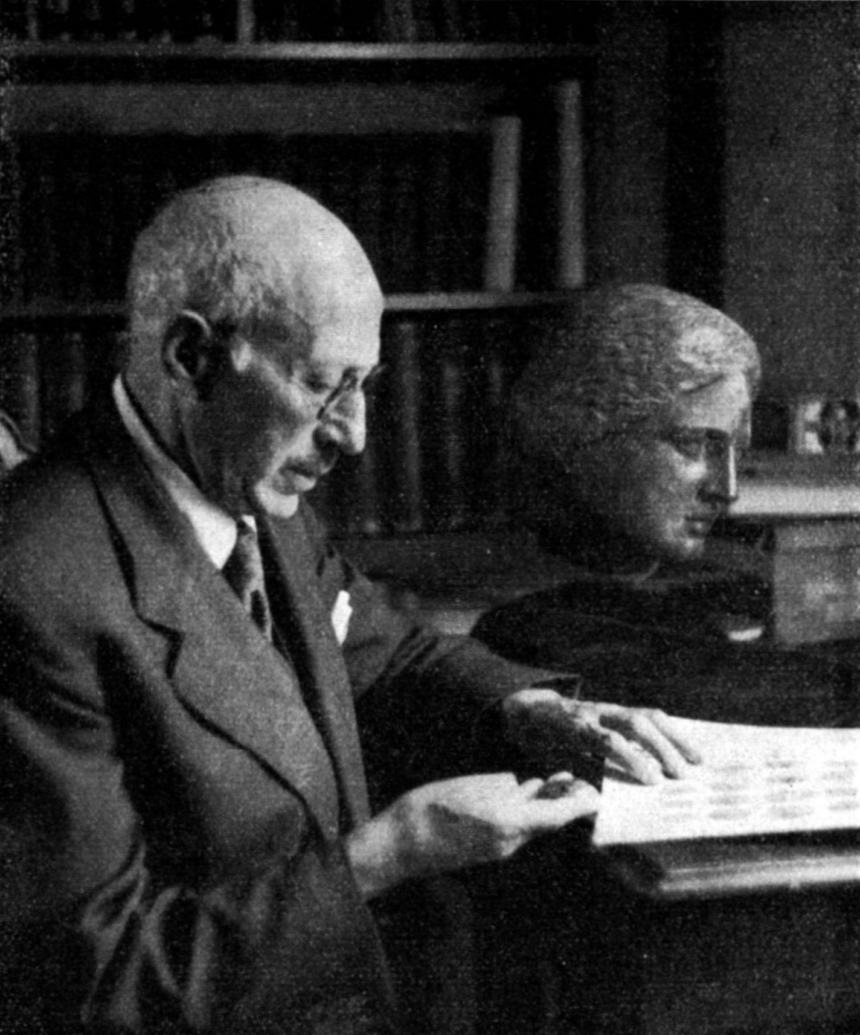
People like Philipp Lederer are easily forgotten. Because the suffering of an anonymous crowd is easier to repress than the suffering of an individual who moves us. It was in this spirit that Günter Demnig’s Stumbling Block Project was born. With over 100,000 paving stones now laid across Europe, it commemorates the tragic fate of many individuals.
The Stolperstein project has never been more important than it is today, at a time when many tend to perceive individuals not as fellow citizens, but as representatives of a belief system that is considered hostile, a foreign ancestry, or a political conviction that we cannot understand.
An initiative of the Berlin Coin Cabinet
The decision to lay the Stolperstein for Philipp Lederer was an initiative of the Berlin Coin Cabinet. It is a sign of humanity and a visible expression of the shock caused by the results of numismatic provenance research. The laying of the stumbling stone was followed by a small colloquium on the work of coin dealer Philipp Lederer. This is remarkable for several reasons. It is new for coin cabinets to acknowledge to this extent the role that coin dealers played in the creation of state collections. And it is courageous to campaign in Berlin for the remembrance of what happened during National Socialism. It is courageous, and it is necessary. The official statistics of the Berlin police recorded a total of 1,823 anti-Semitic crimes in 2024. The trend is rapidly increasing.
Christian Stoess wrote an article on the relationship between the Berlin Coin Cabinet and the coin trade during the Nazi era. You can read it on Academia.edu.
Herbert Cahn’s obituary for Philipp Lederer, published in the Schweizer Numismatische Rundschau, is also available online. Anyone who would like to gain an impression of the complexity of the moral issues that provenance researchers have to face should reread the now somewhat older review of the book “Spuren der Verfolgung” (Traces of Persecution). Thanks to our sponsors, it is still available on the website of the old MünzenWoche.
Text by Ursula Kampmann