Successful arrest at the CSNS Coin Exchange
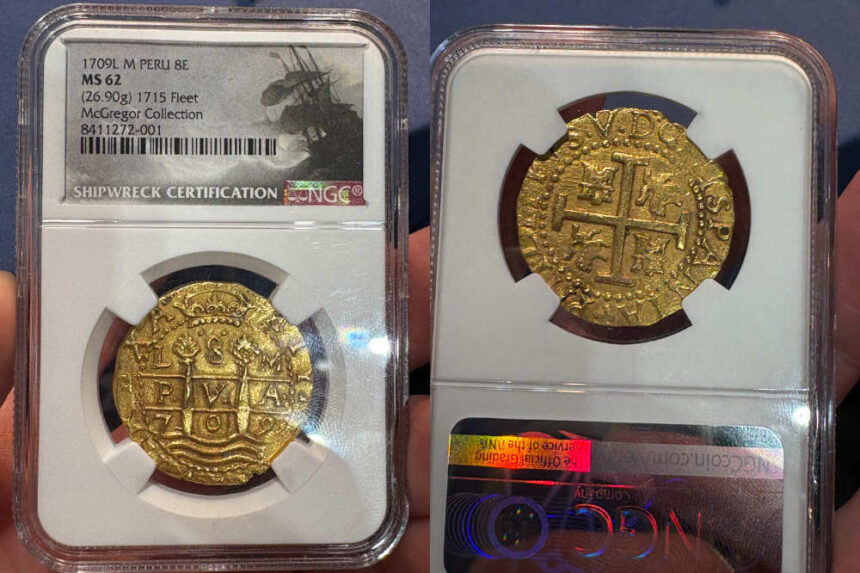
A rare coin from the cargo of the 1715 treasure fleet
It was an eight-escudo coin minted in Lima in 1709, which – as it later transpired – came from the McGregor collection. The coin had been lying on the seabed in a sunken ship. The ship was part of the Spanish treasure fleet that was sunk by a hurricane off the coast of Florida on 31 July 1715. In November 2025, Sedwick & Associates auctioned this coin for $40,500 including the buyer’s premium.
A group of observant coin dealers
But let’s hear from the hero of the story, Tony Gryckiewicz, in his own words: “The two suspects presented the coin at my table for sale at a suspiciously low price. It is a high-end collector’s item, and I asked them where they had got it from.
They told me the coin had been found amongst their grandmother’s belongings at her house. I found this very odd.” The dealer and the sellers could not reach an agreement, so the two moved on, whilst Tony began to make enquiries. ‘I spoke to a friend, David Huang, a collector who sits on the Advisory Board of the 1715 Fleet Society and is a specialist in 1715 Fleet gold cobs such as the one presented to me.’ Naturally, his friend was exactly the right person to ask. He told Tony just how rare the piece was. He searched further and found a recent auction result at the Sedwick auction – for precisely the piece on offer! Dan Sedwick also had a table at the CNCS, so Tony informed him about the offer. Dan immediately rang the buyer of the piece, only to learn that the coin had been missing for some time.
Now Tony Gryckiewicz and Noah Lehmann-Haupt from Rarity 7 / San Francisco set out to track down the sellers. Tony recounts: ‘We noticed the two guys, and Noah immediately went to notify security officials. I approached the sellers and asked if they were ready to make a deal. They agreed and followed me back to my table.’
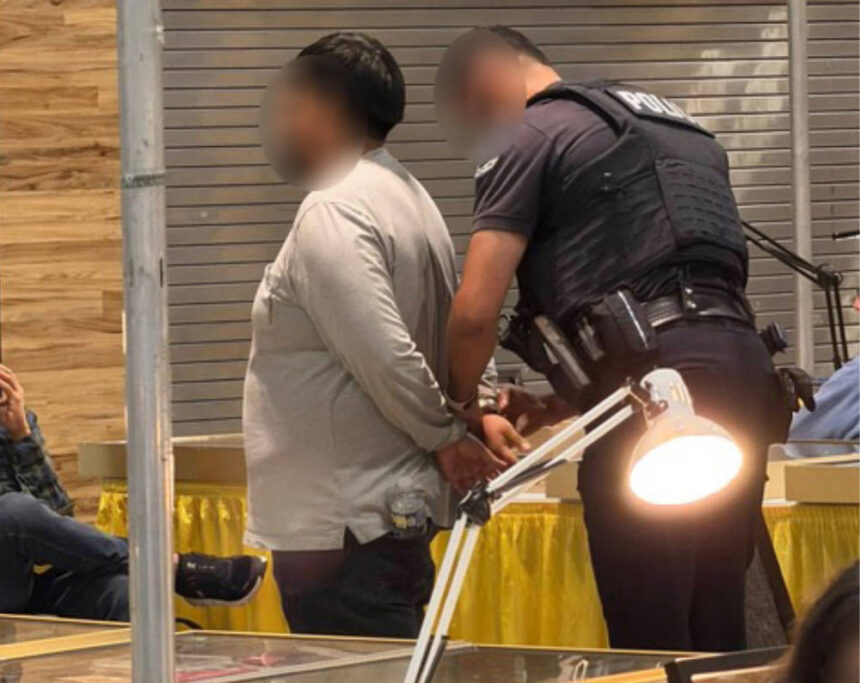
Things then got really tense, as the theft of the coin hadn’t even been reported yet, meaning the police couldn’t take any action. Tony Gryckiewicz therefore had to keep the two men waiting until the Schaumburg Police had taken the theft report over the phone. Only after this had been done did two officers arrive, question the suspects, arrest them and take down Tony Gryckiewicz’s witness statement.
It is usually coin dealers who solve cases of coin theft
Of course, the presumption of innocence applies, but this story is actually quite typical. In most cases, it is observant coin dealers who ensure that a stolen coin is returned to its owner. If the thieves, as is unfortunately becoming increasingly common these days, do not melt down the coins, there is a good chance that the dealer to whom the coin is offered will research it and come across inconsistencies. Thanks to the various auction archives, this is relatively easy nowadays.
It is important that the victim cooperates. The owner of this rare gold coin acted extremely carelessly by not reporting the theft to the police immediately and failing to inform the relevant associations.
Two crucial steps to take if your coins are stolen
That is why you should document your own coin collection using a photo file in which the obverse and reverse of each coin are clearly visible. If you are the victim of a theft, contact the police immediately and without hesitation. The next step is to contact the IAPN secretariat. The association has an early warning system and a database of stolen coins. The secretariat informs all members, who in turn notify their national associations.
It has to be said: the system is most effective for expensive coins, the sort that dealers don’t come across every day. With long lists of German, Austrian or Swiss commemorative coins, or even bullion, the chances are very slim. But in the case of a truly rare, eye-catching coin, the likelihood of getting it back at some point is very high – even if that ‘some point’ can take a very long time.
Test and images: Ursula Kampmann