ANS relocates to Ohio
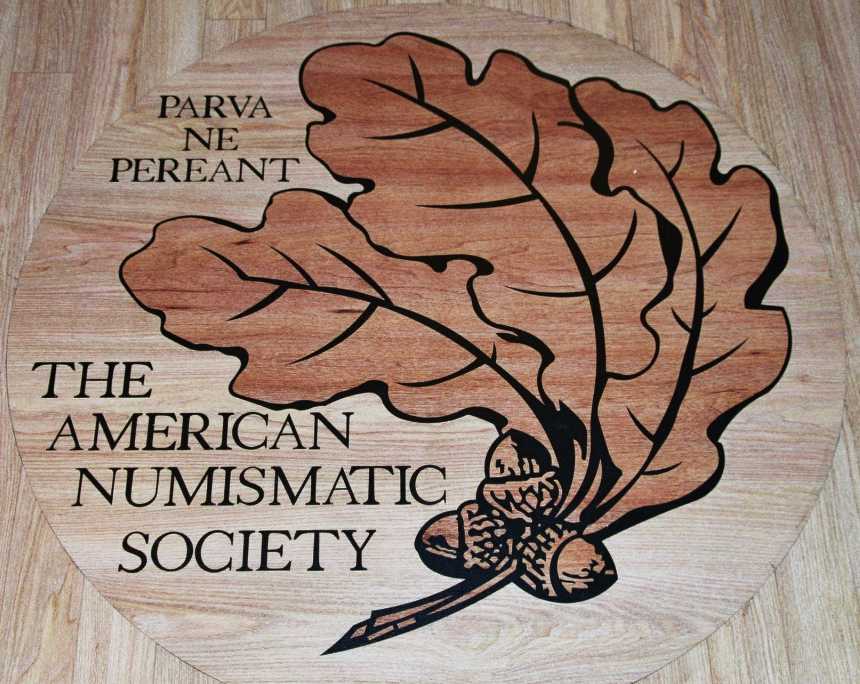
It was a formidable ambition that some young and very young men formulated when they met on April 6, 1858, at the invitation of Augustus B. Sage, who was just 16 years old at the time. The 14 founding fathers named their local coin club the “American Numismatic Society,” which was somewhat pompous given the actual circumstances. The name was inspired by two great royal role models: the Royal Numismatic Society, founded in London in 1836, and the Société Royale de Numismatique de Belgique in Brussels, founded in 1843.
The first neighborhood: Audubon Terrace
But the challenge inspired them. In fact, the ANS, as the American Numismatic Society is often abbreviated, developed into the American research center for numismatics, a true counterpart to the British Museum or the Berlin Coin Cabinet. Of course, it helped that American wealth was concentrated in New York in the second half of the 19th century and that many rich and beautiful people discovered coin collecting as a hobby.
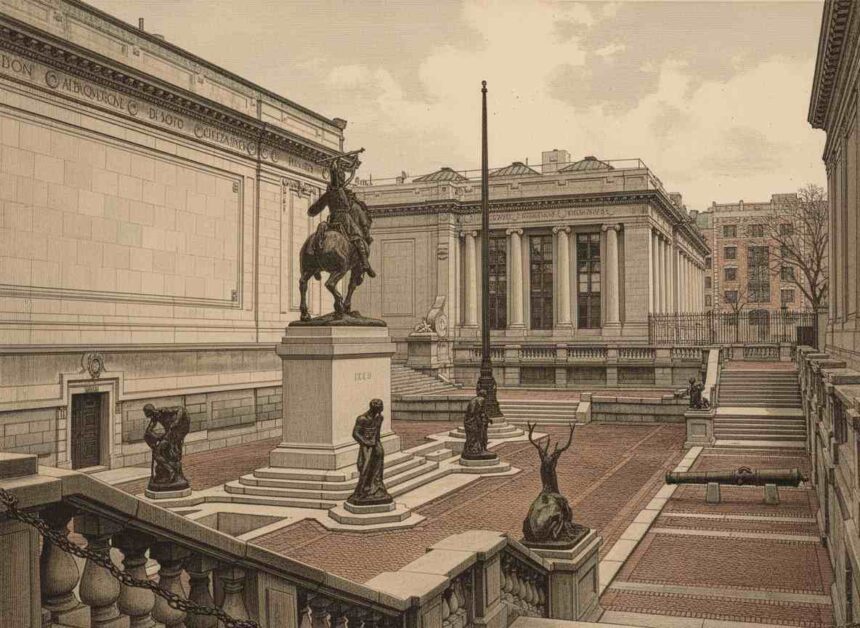
Many of them were sponsors and benefactors of the ANS. Let us mention just a few: J. Pierpont Morgan (banker), J. Sanford Saltus (steel magnate), Edward Dean Adams (financier), and William Poillon (ceramicist). The most important of these was Archer M. Huntington, heir to one of the four richest railroad barons in the United States. He dreamed of a cultural center on Audubon Terrace in Upper Manhattan, and so he provided the land and the funds for the ANS to build its own building.
Located at Broadway, between 155th and 156th Streets, New York, the ANS truly became an American Numismatic Society, whose museum notes and yearbooks were written and read by the most important numismatists worldwide.
changes
All of this happened a long, long time ago. And in that long time, the role of numismatics has changed. Of course, there are still patrons, but many of them prefer to invest their money in other, more high-profile projects. In addition, real estate prices in New York exploded. So, the ever-increasing costs of maintaining a large institution were met with a decline in members willing to donate.
In addition, Washington Heights, where Audubon Terrace was located, developed into one of the largest drug hubs in the northeastern United States in the 1980s. In 1989, The New York Times described the neighborhood as the “Crack Capital of America.” The local police department recorded 103 murders, 1,130 assaults, 1,919 robberies, and 2,647 burglaries. Foreign numismatists whispered (and certainly exaggerated a little for effect) about the horrors they had experienced on their way to Audubon Terrace.
This isolated the ANS, and two factions emerged, one in favor of keeping everything as it was, the other calling for long-overdue changes.
The move to Manhattan
We must not forget that although the ANS has one of the largest coin collections in the world, it is a private association and therefore receives virtually no significant government support. Leading the ANS was therefore less of a scientific task and more of an economic one.
In 1999, Ute Wartenberg, who had previously worked for several decades as curator of Greek coins at the British Museum, took on the role.
When she took office as Executive Director of the American Numismatic Society, she was well aware that her task would not be easy and that her measures would not only win her friends. Together with the reformers, she pushed through a budget in 2000 that drastically reduced costs and prepared for the ANS’s move to Manhattan. The goal at the time was to make the American Numismatic Society fit for the modern world of collecting, to bridge the gap between scientific standards and a focus on the average collector.
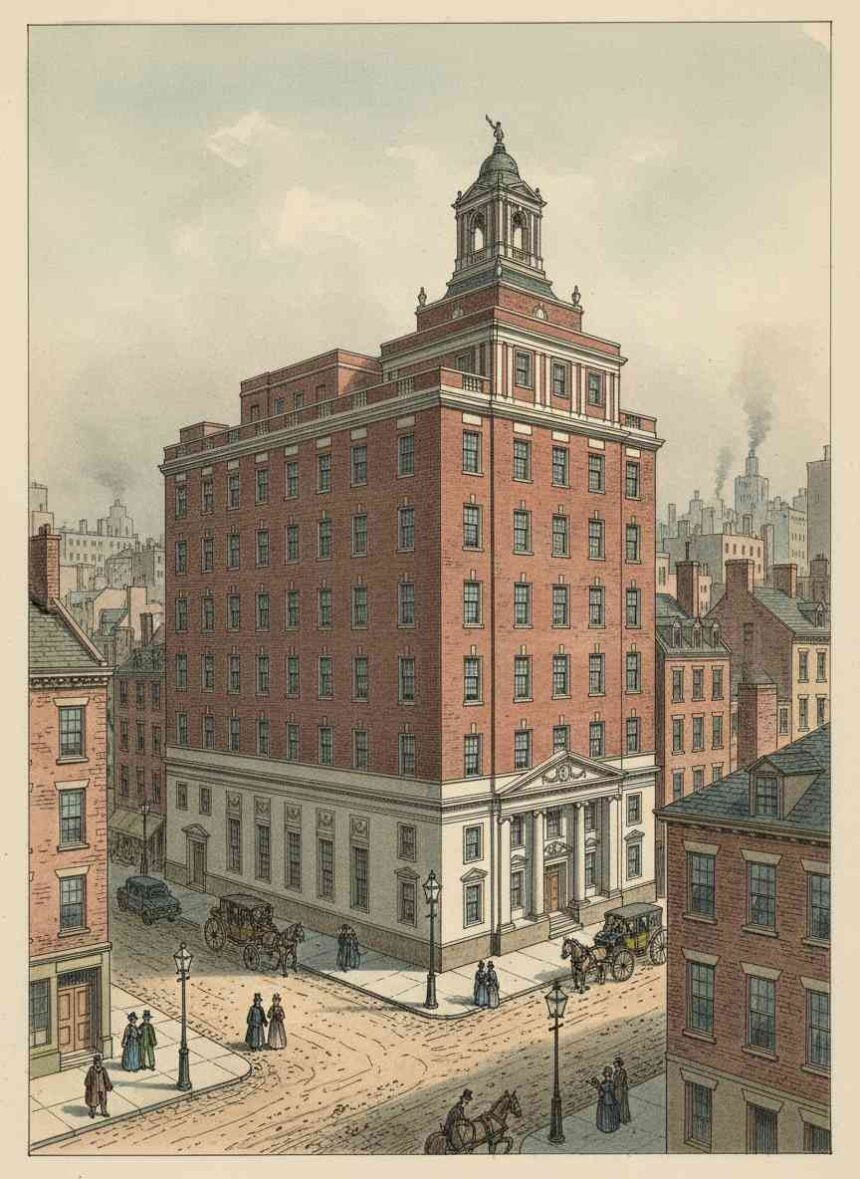
So the building on Audubon Terrace was sold, and a new building in Manhattan, at 96 Fulton Street, was purchased for $6.5 million. A large part of the necessary funds were donated by the then president of the ANS, Donald Partrick, and the Harry Bass Foundation. The move took place in 2003. Everyone was full of hope that the convenient location would greatly increase visitor numbers.
For rent: 75 Varick Street
Hopes were quickly dashed. Visitor numbers did not rise as hoped, and the move did little to attract new members. In addition, costs continued to climb. The financial sword of Damocles still hung over the society, forcing the trustees to decide on another move just four years later.
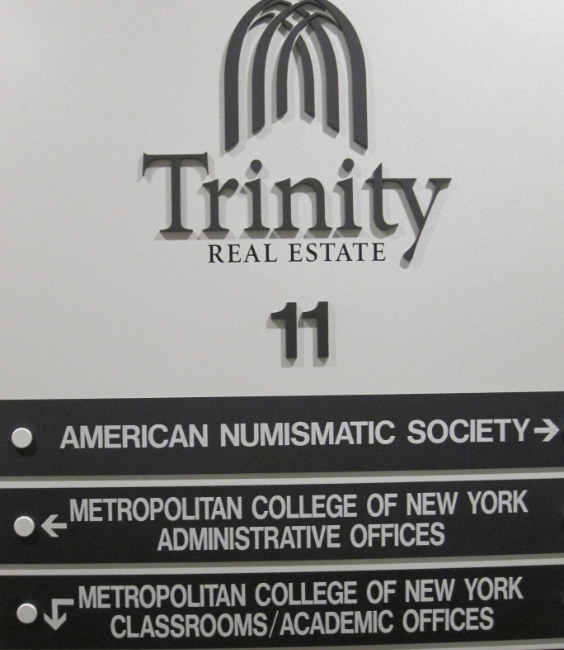
This time, they decided not to buy a building. The six elegant floors on Fulton Street were reduced to a single floor. The ANS now resided on the 11th floor of 75 Varick Street, where it continues to do its excellent work.
The move had prevented costs from spiraling out of control, but the situation was still unsatisfactory from an economic standpoint. For $1.8 million per year, the ANS did not have enough space in the second most expensive city in the world to adequately store its collections and books and make them accessible to the public.
Coronavirus and the possibilities of the internet
Then came COVID-19, and the ANS was able to fully leverage its pioneering role in digitization. Because we must not forget that, despite all these economic difficulties, the ANS managed to advance numerous scientific projects on the internet. Among other things, it was one of the first to make its collections available online. Today, it provides scientists with a wealth of digitally catalogued works that are of existential importance.
Unlike many museums, the ANS’s work was hardly restricted by COVID-19. On the contrary, many members only learned to appreciate the ANS’s offerings during the lockdown. In particular, the Long Table—a regular lecture series via digital meeting room—attracted participants from all over the world. This may have been the moment when everyone involved realized that the American Numismatic Society does not necessarily have to be based in New York, even if it was once founded there.
In search of a new home
Since then, there has been repeated talk of plans for where the ANS could move to. Chicago, for example, was under discussion. But it was difficult to find a sensible solution that met all of the ANS’s requirements. After all, there had to be a central airport nearby. It needed a comprehensive library and links to other research institutions. The cost of living should be low, but the atmosphere should still be attractive. Last but not least, the hope was to find a large community that would be interested in the services offered by ANS locally.
Toledo, Ohio
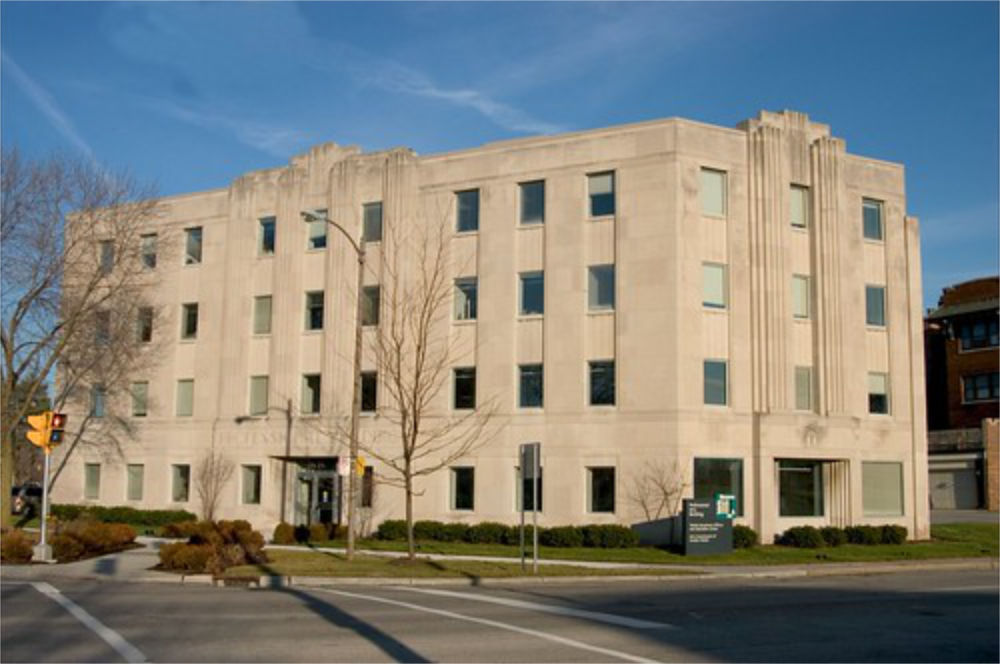
All of this is now set to become reality on the campus of the Toledo Museum of Art. An impressive Art Deco building has already been purchased. The move will be completed in 2028. With investments totaling USD 20 million, the dream of finally establishing a modern money museum, which was never affordable in New York, is set to become a reality.
There could be plenty of visitors, as the campus offers enough space to accommodate even school buses. This would allow the ANS to play a central role in educating people about money, as many leading money museums have done today.
All this makes up for the fact that Toledo is part of the so-called Rust Belt, which has lost much of its economic potential due to the decline of traditional industries. But in recent years, there seems to be an upswing. In 2025, Toledo was ranked among the most interesting real estate markets in the US, with real estate prices rising by over 30% at the beginning of the year, although growth has since leveled off at just under 10%.
Toledo thus offers the charm of a low cost of living and a hopeful spirit of optimism. The city welcomes ANS with open arms, because what was just one institution among many in New York is seen by Toledo as what ANS is: an internationally networked institution that could make the name Toledo, Ohio, known throughout the world. A local news station has already covered the move.
ANS employees must now decide whether to move to Toledo. Half of them are said to have already made up their minds.
Trustees’ Award for Adam M. Levine
Adam M. Levine, director of the Toledo Museum of Art, played an instrumental role in the entire process. He has known the ANS for many years and recognized the opportunities that such a move could bring for both sides. The ANS trustees acknowledge his central role and will present him with the Trustee’s Award during the ANS’s annual gala dinner at the New York International Numismatic Convention.
Adam Levine truly deserves this award for paving the way for the ANS to write a new chapter in its long history. A chapter that will hopefully not be dominated by financial worries. It would be nice if the ANS could finally concentrate on numismatic research and the dissemination of numismatic knowledge.