A promising start
A new exhibition is always a risk – for the organiser, for the exhibitors and for the visitors. Will it be possible to attract a critical mass of exhibitors so that the exhibition is financially viable and collectors find sufficient selection? Will enough buyers turn up to make participation worthwhile for the exhibitors? However fine an event may be, its success ultimately depends on whether exhibitors and visitors see their financial expectations met or not.
The organisers, exhibitors and visitors who gave the numismatic section of the Munich Show a chance from 23 to 25 October 2026 also faced all these risks.
What exactly is the Munich Show?
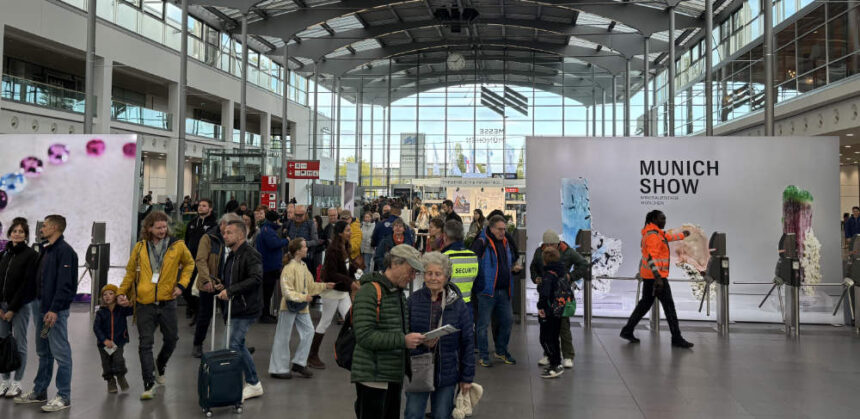
As mentioned, there is always a risk involved in attending a new event, even if that risk is somewhat lower in the case of the Munich Show. After all, this event is an established trade fair that attracts tens of thousands of visitors to the Riem exhibition halls once a year. The Munich Show is thus Europe’s largest trade fair for minerals, gemstones and fossils.
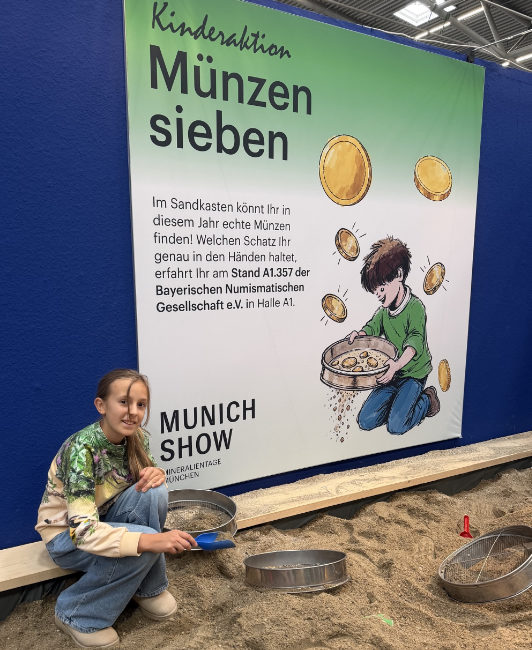
Thousands of jewellers, jewellery manufacturers and mineral shop owners buy their stock here. Added to this, over the two days of the weekend, there are literally tens of thousands of collectors and at least as many families looking for an educational pastime for their little ones. In my quite life, I have never experienced a fair where more children flock into the halls. They are curious, receptive and open to everything they see. The question now is how to deal with this curiosity!
The potential
Simply by virtue of its reputation and scale, the Munich Show offers a promising platform for numismatics. Visitors to the Munich Numismatic Show are mostly people who have already caught the collecting bug. There is a good chance that they will (hopefully) also develop a passion for numismatics.
Furthermore, thanks to its size and extensive advertising, the Munich Numismatic Show enjoys excellent access to the press. The exhibition magazine, to name just one example, is distributed with a major Munich daily newspaper in an issue of ten thousand copies. There is good reason to hope that, riding on the coattails of the minerals section, numismatics can acquire a ‘cool’ image and thus attract an audience that may not previously have had numismatics on their radar.
For us at CoinsWeekly, this potential was – and remains – the reason why we are committed to this fair.
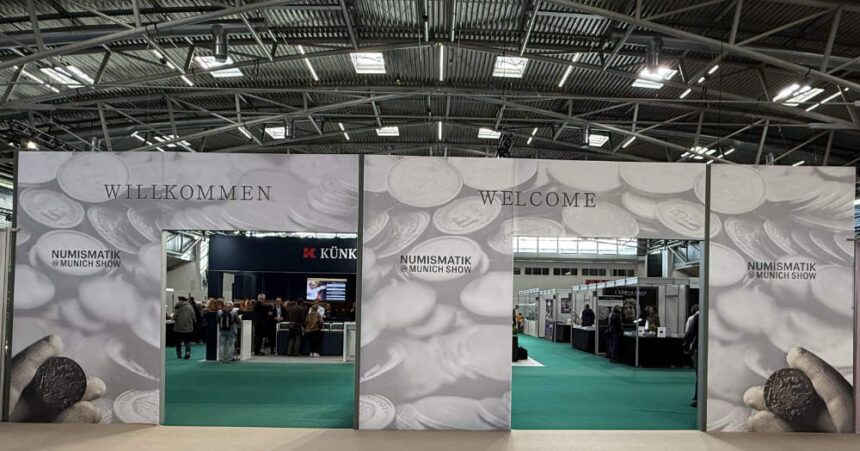
The numismatic section
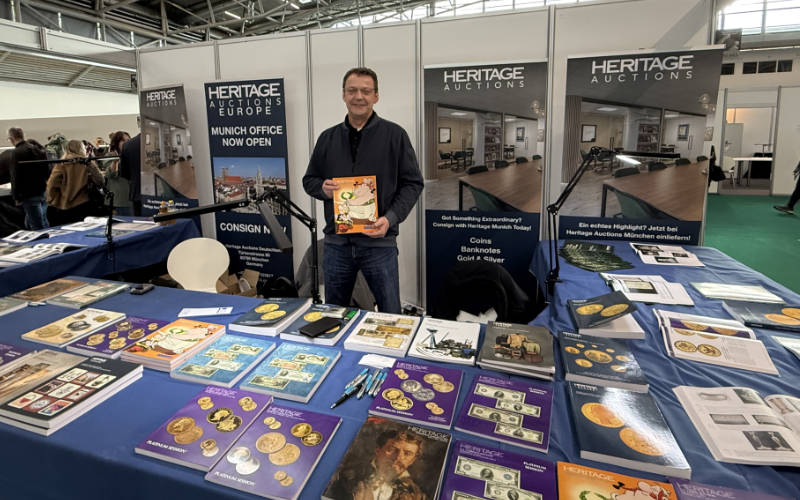
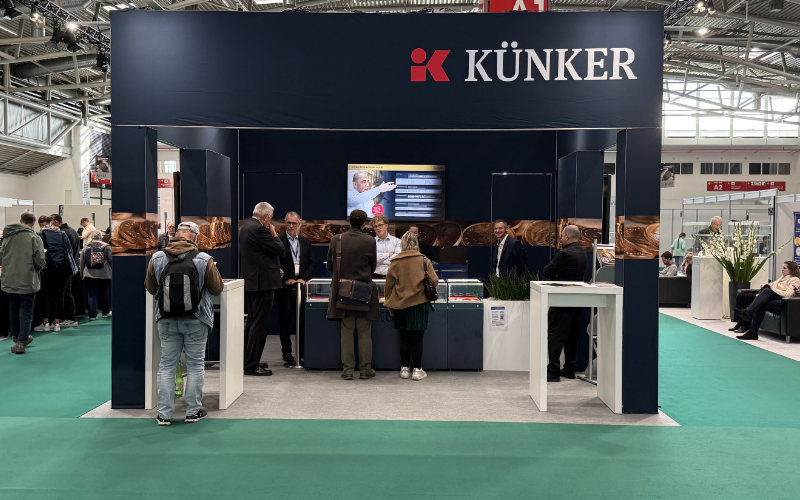
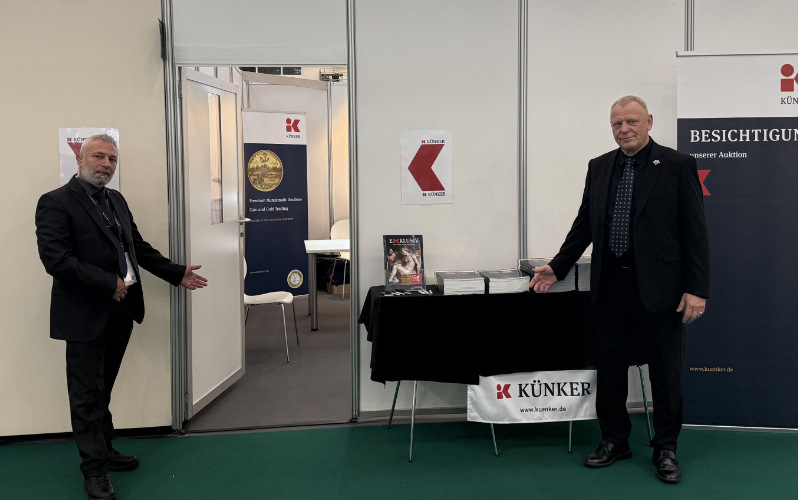
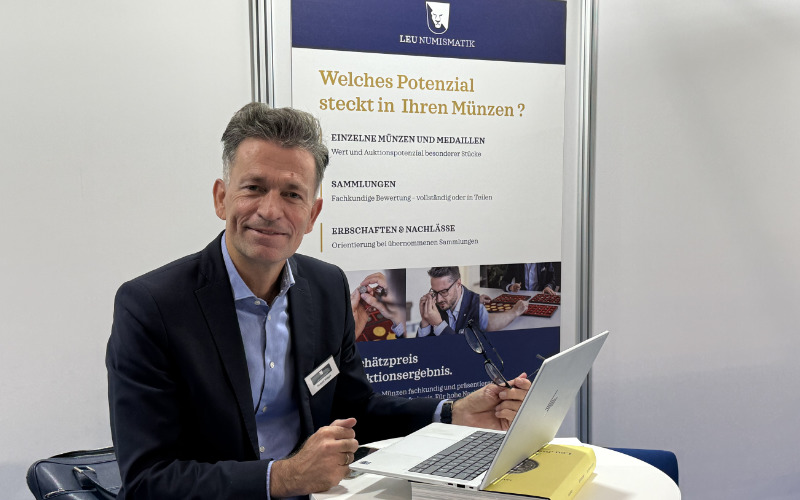
Many others have also recognised this potential. They took the risk and booked a stand. These included, in particular, the major auction houses such as CNG, Emporium Hamburg, Gorny & Mosch, Heritage, Künker, Leu Numismatik, Numiscorner, Rauch, Rhenumis and Teutoburger Münzhandlung.
But service providers such as PCGS and Safe were also on site with their offerings.
Naturally, on Dealers’ Day – Friday – many collectors and colleagues – provisional exhibitors – came along to find out whether they would like to organize an exhibition at the new fair next year. But from Saturday onwards, the newcomers dominated the scene with their fundamental questions: Which coins should I buy if I want to invest in coins? Where can I buy coins? Where can I sell coins?
At a fair, people want to buy coins, not just look at them!
Most visitors came with the intention of buying a coin and taking it home straight away, even if very few had a huge budget for it. As a result, the ‘small’ dealers became the main attraction of the specialist section. Crowds gathered here, and business was excellent. Anyone who asked these dealers if they were satisfied with the results saw nothing but beaming eyes.
Some of them – as is customary at coin fairs worldwide – were already packing up by midday on Sunday. In doing so, they missed out on a good portion of the business. This is because, in the afternoon, the Munich Show reduces ticket prices, meaning that at 2.00 pm another large wave of visitors keen to buy poured into the exhibition halls.
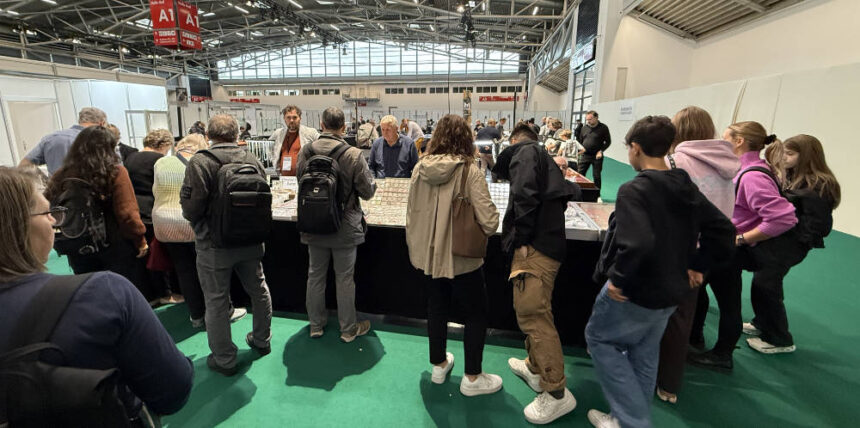
In fact, many collectors at the Munich Show waited until just before closing time to make their purchases. There is a good reason for this. They are used to seeing dealers in the minerals section slash prices significantly before the end of the event to minimise the amount they have to take back.
Competition from the colourful world of minerals
Yes, there are cultural differences that numismatics faces at the Munich Show. After all, the small, round objects of which we numismatists are so proud have to compete here with the magnificent colors and shapes of mineralogy! Whilst a tourmaline, an opal or a pyrite reveals its beauty at a glance, it takes a great deal of background knowledge to recognise numismatic rarity!
This experience is important for us. Many coin dealers still live in a past where historical knowledge was taken for granted. But the world is changing. The Munich Show confronts us with a completely different audience to the one we normally encounter at coin shows. The event thus becomes a testing ground where we can see first-hand what does and does not resonate with a wider public.
The relevance of contemporary numismatics
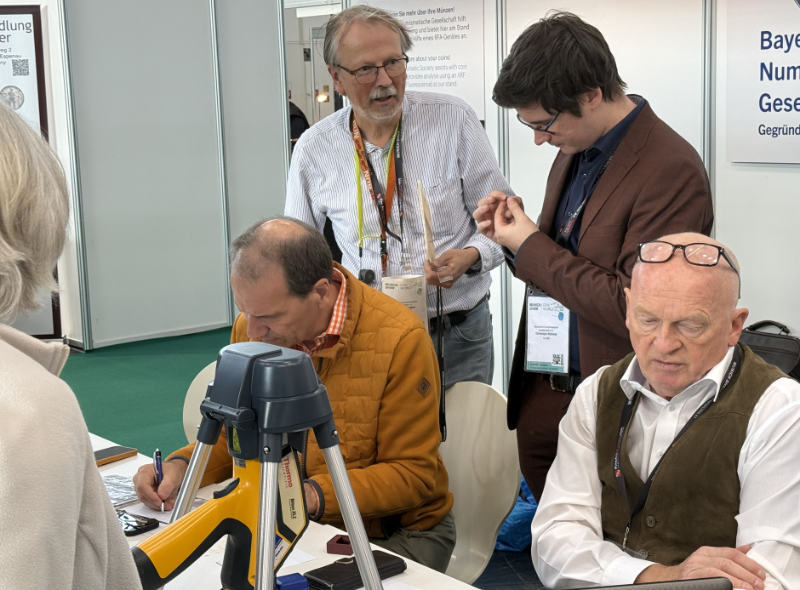
For any honest observer could see straight away that it was neither the classic coins from the major auction houses that attracted the most attention, nor the magnificent art medals so lovingly and expertly presented by the Bavarian Numismatic Society.
The interest of all those new to the field, who were encountering coins for the first time in the new Numismatics section, was immediately drawn to the CIT Coin Invest stand. The coin publishers from Liechtenstein had travelled with a team of three. None of them had a moment’s rest, but spent the whole long day answering questions. The stream of visitors simply wouldn’t let up.
And that wasn’t just because the stand was situated directly opposite the entrance to the numismatics section!
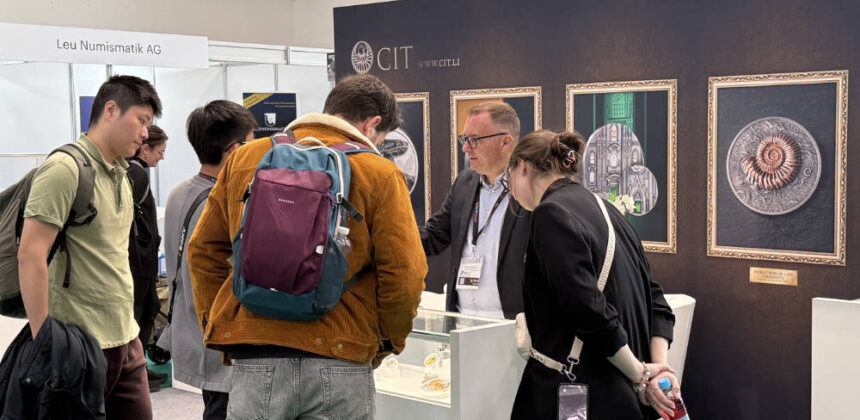
On the contrary: CIT’s exhibition stand was perfectly tailored to its target audience. It was dominated by large, colourful illustrations. In addition, curious visitors were presented with a plentiful yet manageable quantity of coins. Children received a small gift. Anyone who stopped here would certainly not be dreaming of buying a denarius of Caesar or an Athenian tetradrachm afterwards… Impressive coin sculptures, such as the 1-kilogram Silver version of the Grand Canyon, proved far more appealing to this audience.
A coin featuring an inlay in the form of a small piece of coal from the wreck of the Titanic emerged as the secret star. Ever since the film, everyone knows this passenger ship! And for the general public, the ‘perceived’ history is in any case more important than concrete artefacts from the past.
Traditional numismatics must adapt if it is to attract new enthusiasts
This brings us to the learning curve that has only just begun for this event. Simply doing the same as always won’t get us anywhere at the Munich Show. Traditional numismatics must learn from a CIT-style presentation. To do so, however, we’ll have to step out of our comfort zone. Simply placing one piece next to another on a Beba tray won’t win us any new collectors, no matter how interesting the story behind the coin or medal may be.
In the age of Instagram and the like, we need ‘eye-catchers’ – objects or images that are large, colourful and striking. For newcomers, we need different forms of promotion. An auction catalog is all very well and provides plenty of information, but we first have to explain to most visitors how an auction works.
This makes the Munich Show a reality check, revealing what we can use to win over newcomers to numismatics.
A final word on the fabulous organisation
One thing was mentioned by all participants and therefore must not go unmentioned here: the friendliness for which the Munich Show is renowned. Let’s start with the organisation. Almost every exhibitor shared their own example of how the organisers had helped them quickly, efficiently, competently and, on top of that, extremely friendly.
Personally, I was delighted by the politeness of the public. I don’t think I’ve ever heard the words ‘please’, ‘thank you’ and ‘have a fine day’ so often. At the refreshment stand, run by a northern Italian association of mineral enthusiasts, a few pleasantries were always exchanged.
And I wouldn’t want to keep my favourite moment of each day from you either: every morning at 9.00, the friendliest voice I’ve ever heard welcomed visitors and exhibitors to the Munich Show. As soon as the loudspeaker was switched on, the conversations fell silent and everyone listened attentively. I swear: I even heard contented sighs in response to this outpouring of friendliness!
The verdict
Let’s sum it up: the first Munich Show to feature a numismatic section got off to a promising start! Exhibitors and visitors were satisfied. Business went considerably better than might be expected for a first-time event. If numismatics can now manage to adapt to the needs of a new, young audience, and if collectors incorporate the Munich Show as a regular fixture in their diaries, then the numismatic section of the Munich Show will grow and flourish until it becomes an integral part of numismatic life.
The next Munich Show will take place from 15 to 17 October 2027. Don’t forget to make a note of this date! CoinsWeekly has already completed its registration. And we’ll be bringing a special edition of CoinsWeekly for all the children – complete with a colouring book and child-friendly texts. After all, we all need to adapt to this new audience.
More highlights from the numismatic section of the Munich Show:
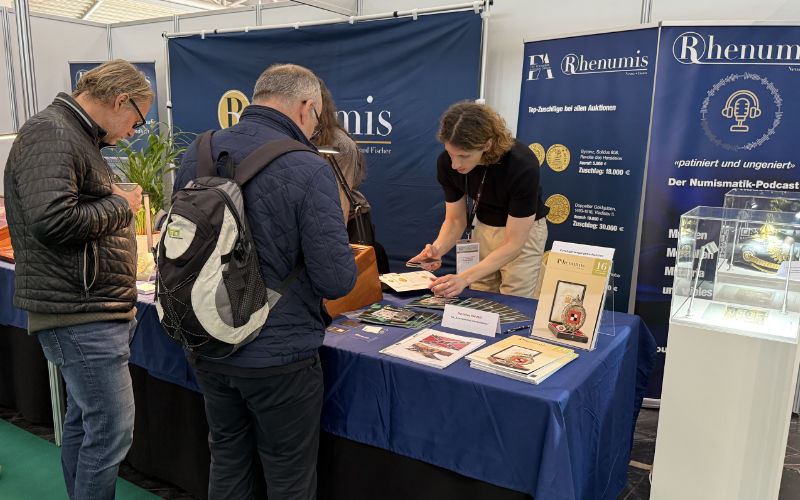
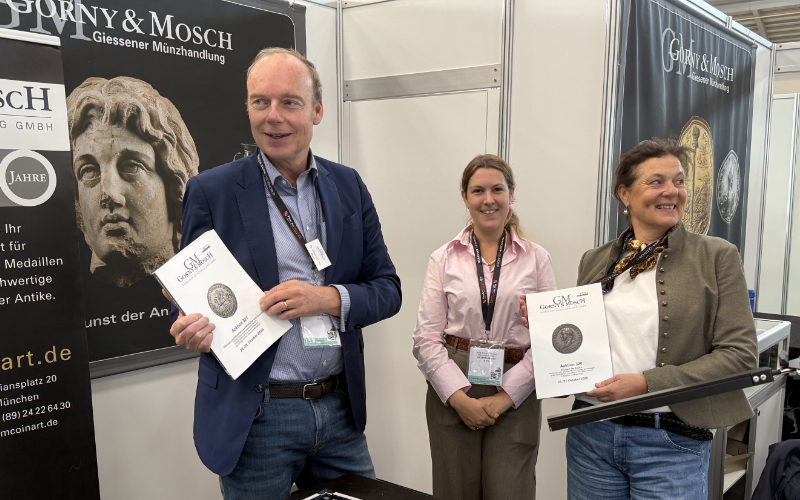
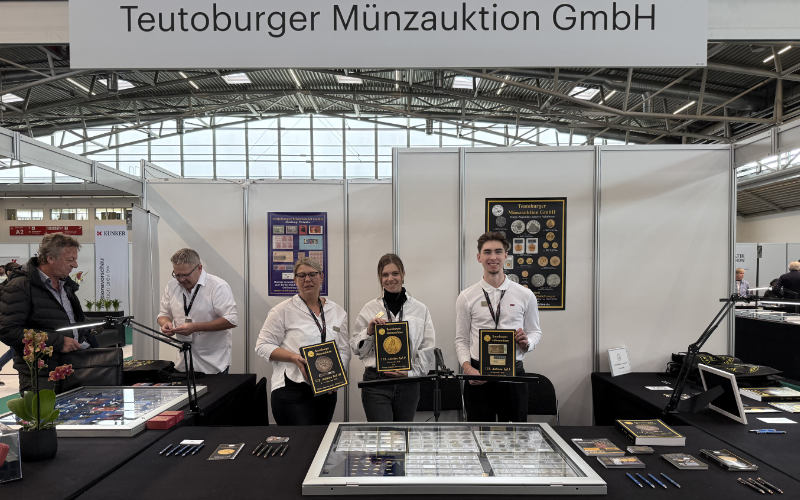
by Ursula Kampmann / MünzenWoche