Why do we collect coins?
Anyone entering the magnificent staircase of the Natural History Museum will inevitably find their gaze drawn to a portrait of Emperor Franz Stephan of Lorraine. He is busy. He is engrossed in his collection. Behind him, at the centre of the painting, stands a man carrying a tray of medals. This is Valentin Jamerey-Duval, the son of a coachbuilder, a brilliant self-taught numismatist and, since 1748, director of the Imperial Coin Cabinet.
Should we interpret this painting as a private scene? As a glimpse into the Emperor’s leisure activities? Certainly not, for it was commissioned for representational purposes eight years after Franz Stephan’s death. And so the question arises: why could (coin) collecting be so prestigious for an emperor that his design was used to depict him engaged in this activity?
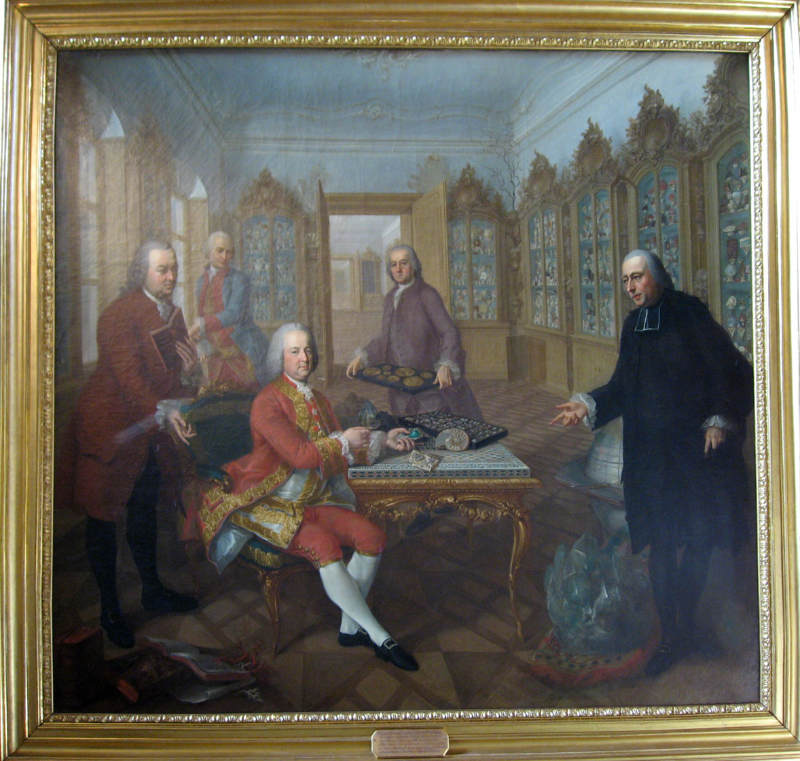
Not that this illustration is the only example of the significance of coin collecting. There are numerous books that spread the fame of a major collection throughout the world at that time. They were not intended for specialists, but for peers, who were meant to turn green with envy. For this reason, these books were not published in the national language, but in the languages spoken by the nobility and the educated classes of the time – often Latin, Italian or French.
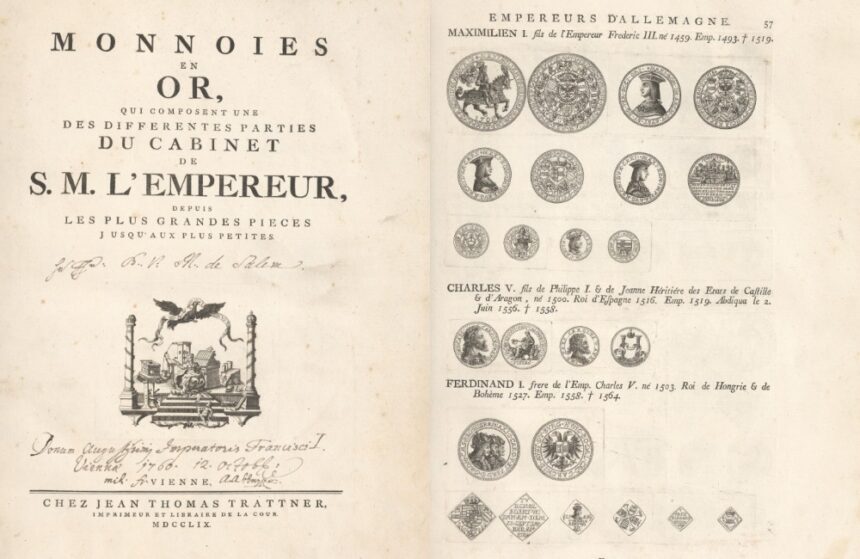
One of the most important of these works, which is also closely linked to the painting shown here, will be offered at an auction on 25 November 2026 by Numismatisches Antiquariat Lang.
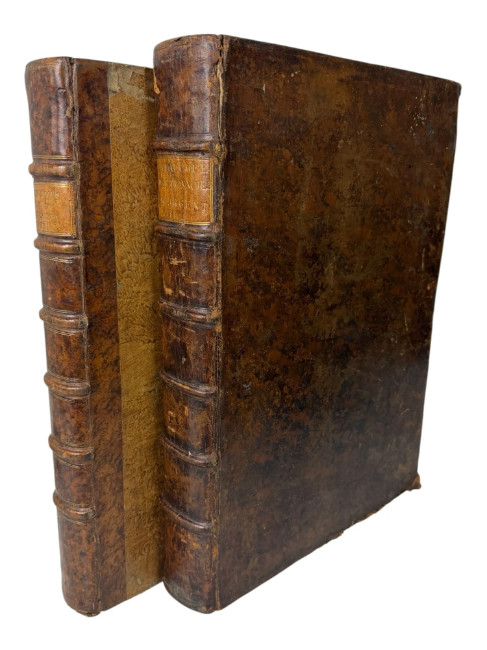
This is Duval’s catalogue of the imperial coin collection, compiled at the request and expense of Franz Stephan himself. And this took place right in the middle of the Seven Years’ War, as if the Habsburg Monarchy had no other concerns at the time! Emperor Franz Stephan personally ensured that the catalogue found its way into the most important libraries. He presented it as a gift to well-known opinion leaders and members of the nobility, including the specimen that is now housed in the Heidelberg University Library.
Every page is impressive as you leaf through it. Let’s not forget: we’re talking about gold coins! Maximilian I’s golden display gulden from 1509 has been offered at auction just once in the last two decades – in 2012. On that occasion, it fetched a six-figure sum. The gold version of the ‘Dreikaisertaler’ is also extremely rare and consistently fetches a six-figure sum. And these are just two of the many rare pieces that featured in this collection. It wasn’t just the Habsburgs who were proud of their coin collection. Their eternal rival, Frederick II of Prussia, also bought on a grand scale – after all, he had to make up for the losses his father had inflicted on the royal coin collection by melting down the gold coins.
What was it about this that made the rulers of Europe boast of having the most significant coin collection? And, indeed, why do people collect coins of all things? Both questions are closely linked.
The roots in the Renaissance
To answer this question, let us go back in time to the Renaissance, when two developments intersected. Let us begin with a man who revolutionised European thought. I am speaking of Francesco Petrarca (1304–1374).
Petrarca is regarded as the founding father of Humanism and the Renaissance. He placed the individual at the centre and called for a return to Roman culture. This also entailed a new image of those in power. Petrarca demanded that they govern well. He held up the Roman emperors as role models. Good emperors such as Augustus or Trajan were, in his view, worthy of emulation; bad emperors such as Nero or Domitian served as cautionary tales.
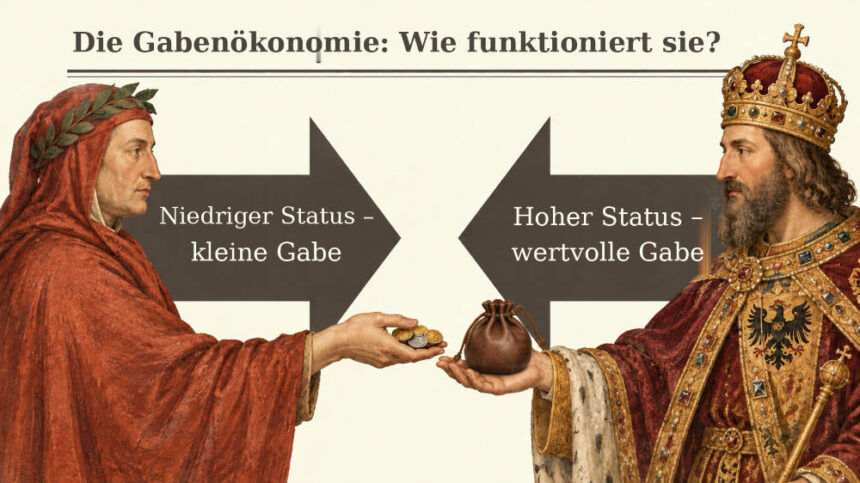
Petrarch was known quite widely in Europe for his writings. But he had one major problem: he had no money. If he wanted to study in peace, he needed people to provide him with money for his living expenses. And this is where his interest in coin collecting began. For Petrarch made use of a system that we now know as the gift economy.
Gift economy
In social studies, the gift economy refers to the exchange of gifts according to fixed rules, without any immediate quid pro quo. Such gifts are exchanged on specific occasions determined by a society’s traditions. Until the end of the early modern period, the most important day for exchanging gifts was the start of the new year. However, gifts were also given on other occasions, such as when someone hosted a wedding, birthday or christening. In the case of royal houses, this might have been a promotion in rank or a coronation.
Those attending the celebration would bring a gift with them. The host would distribute gifts as a memento of the day. Official visits could also serve as an occasion for the exchange of gifts. And this brings us back to Petrarch. For on 15 December 1354, Petrarch visited Charles IV at the Emperor’s invitation. On this occasion, he presented him with Roman gold and silver coins, accompanied by an exhortation that he should measure himself against these examples. Petrarch mentions this in a letter. What he does not mention is that he received a valuable gift in return for his coins.
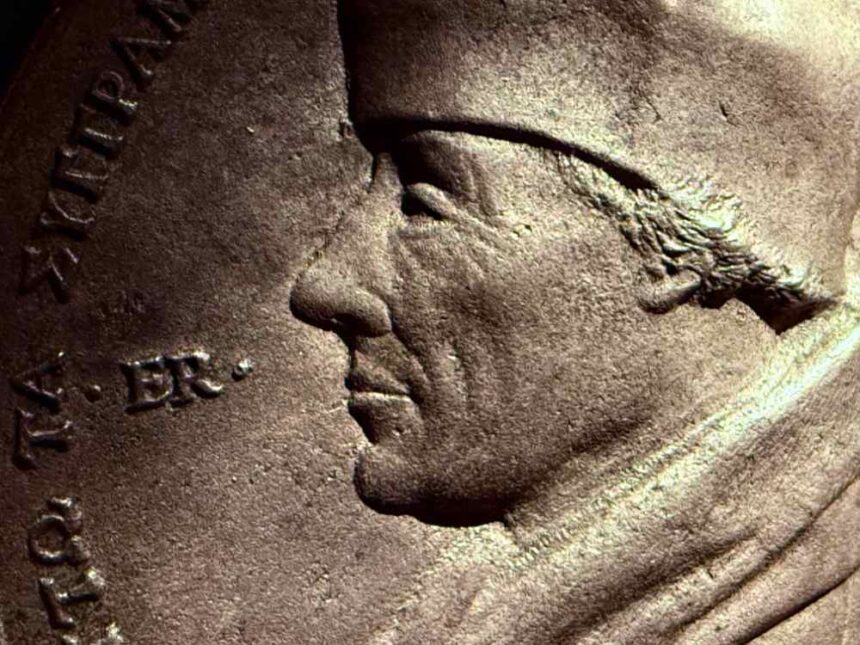
In this way, or in a similar manner, many humanists made use of the social conventions. We know of another well-known beneficiary, the humanist Erasmus of Rotterdam (1466–1536). To ensure he always had a suitable gift to hand, he ordered a medal from Quentin Massys that bore his own likeness. He had most of the specimens made from lead, as this was the cheapest option.
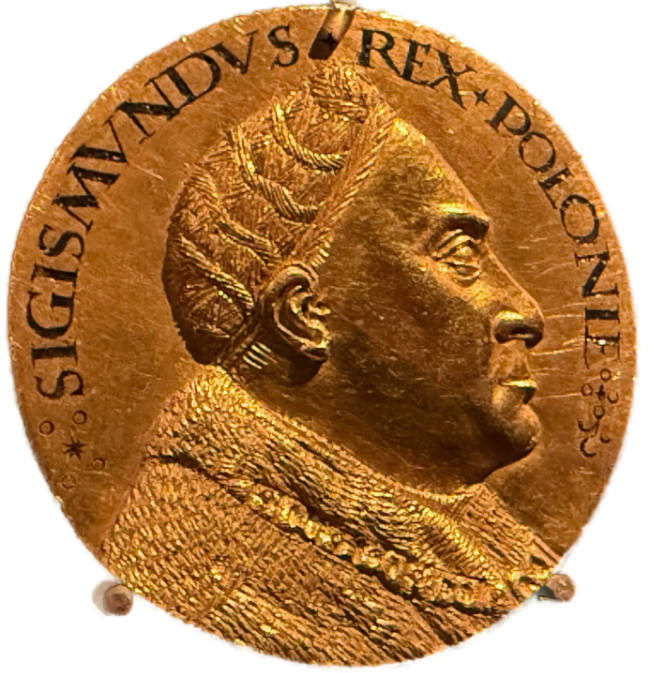
The gifts he received from his admirers, on the other hand, were made of gold; for example, a gold medal bearing the portrait of King Sigismund I of Poland, which the royal councillor Severin Boner had sent to him.
The role of the Renaissance medal
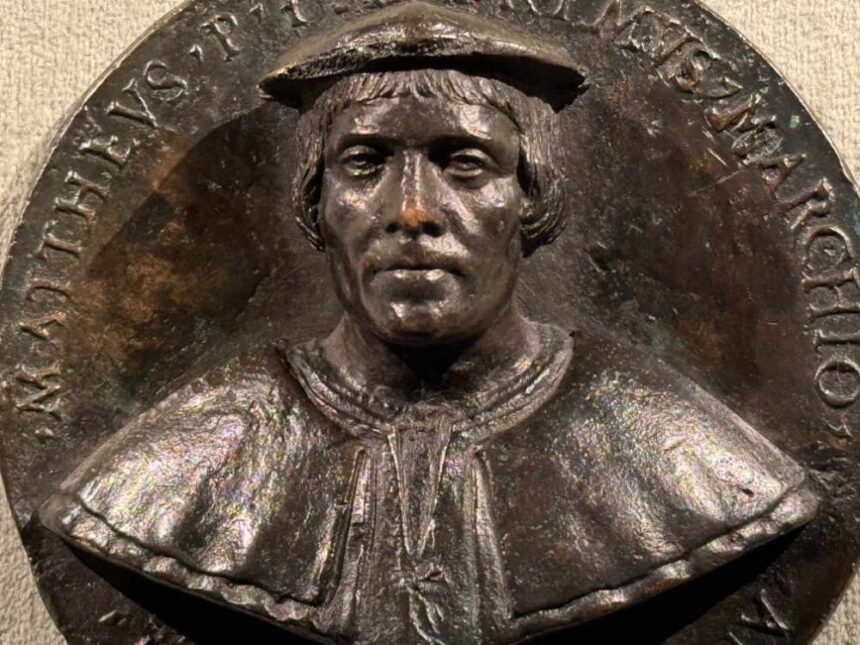
And this brings us to the second development: medals, which increasingly replaced elaborate and expensive paintings as gifts exchanged between peers. It is primarily bronze medals that have survived to the present day, though there were also medals in silver and gold. These were soon no longer painstakingly created and cast by eminent artists, but minted much more efficiently in the royal mint.
The Donative
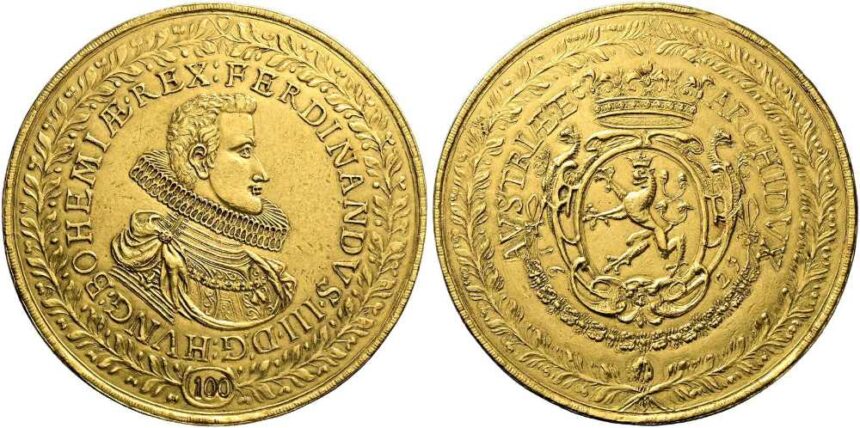
We refer to these coins today as ‘donatives’ because they were not intended for circulation but were produced as gifts. Those who needed the monetary value of the pieces had them melted down; those who could afford to collect them added them to their coin collections.
The Habsburgs, in particular, minted countless donatives. The Emperor was, in principle, bound to always make the grandest gift. To ensure he could precisely determine who received how much, his donatives were usually produced in various, finely graded denominations. For the sake of simplicity, the value was sometimes – as in this example – stamped or punched onto the coin.
The Prestige of a Coin Collection
This explains why coin collections were so prestigious in the early modern period. Their composition consisted mainly of gifts. A person’s importance could be gauged by the gifts they had received. A family’s importance was likewise reflected in its coin collection, as this represented the combined significance of all its members. To put it simply: the larger a coin collection was, and the more donatives from prominent figures it contained, the more important its owner was.
That is why many princes built stately rooms to display their coin collections in a fitting manner. That is why they published catalogues which made it known far and wide just how many heavy gold coins they possessed. That is why Duval first published a catalogue of prestigious and rare gold coins before turning his attention to the more common silver coins.
We shall save for future articles the questions of what role coin dealers played in this context, why coin collecting experienced such a boom amongst the middle classes in the 19th century, and since when we have been collecting more for investment reasons than for prestige.
Books as records of our history
At this point, I would also like to emphasise the significance of early modern numismatic literature, not only for research but also for cultural history. A book such as Duval’s catalogue is, after all, more than just a catalogue. It bears witness to the immense status that a coin collection conferred in the early modern period.
What is happening in the collectors’ world today is merely a small, insignificant echo of that. Nevertheless, coins still hold a completely different status to Labubu, Pokémon cards or a Star Wars lightsaber – even if the latter has just fetched an impressive price at Heritage.
All these collectables are subject to trends; their value rises and falls depending on whether people take an interest in a particular phenomenon or forget about it. Coins, on the other hand, have held their significance as collectables for more than half a millennium, and they are likely to retain it for another half millennium.
by Ursula Kampmann / MünzenWoche