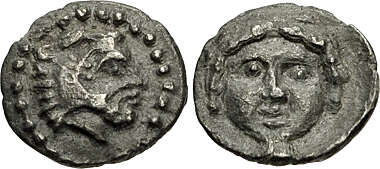
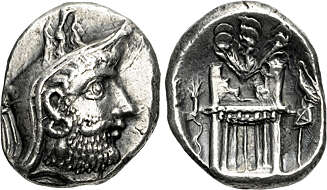
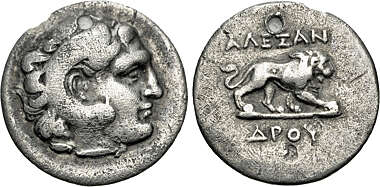
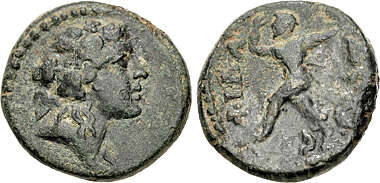
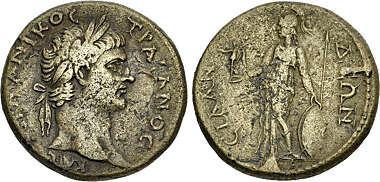
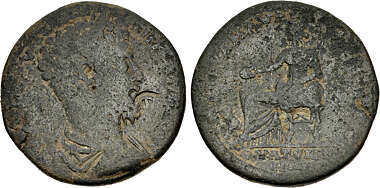
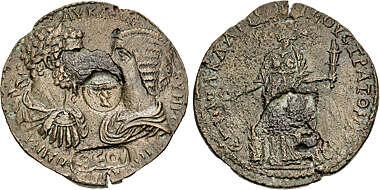
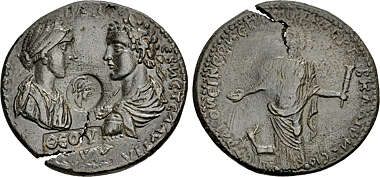
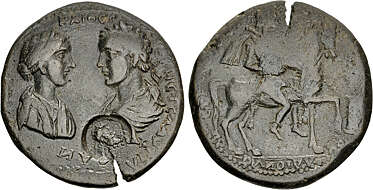
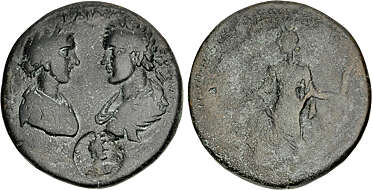
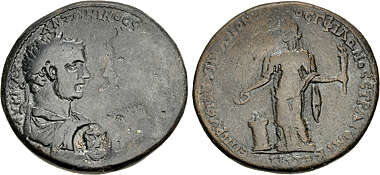
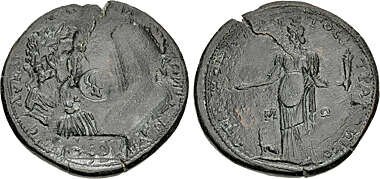
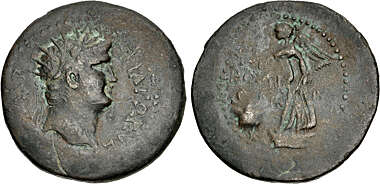
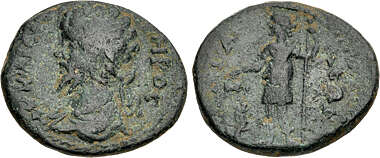
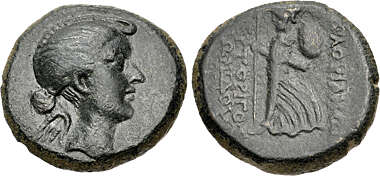
Los 355. MACEDON, Koinon of Macedon. temp. Caracalla to Severus Alexander. AD 198-235. AR Medallion (13mm, 1.14 g, 12h). Head of Alexander the Great right, as Herakles, wearing lion’s skin headdress / AΛEΞAN ΔPOY, lion advancing right. RPC –; AMNG III 895; K. Dahmen, “Alexander in Gold and Silver: Reassessing Third century AD Medallions from Aboukir and Tarsos,” in AJN 20 (2008), 31; BMC 95. Toned, minor marks, holed and repaired. VF. Extremely rare. Ex SPQR Collection 5 (16 January 2025), lot 175. Even after Macedon became a part of the Roman Empire, Alexander the Great continued to be a great inspirational icon, evidenced by the almost continuous reference to him on the coinage of the Koinon of Macedon. Not only was Alexander viewed in Macedonia as its greatest hero, but his conquest of Achaemenid Persia prefigured the Greco-Roman wars with the Parthians and, later, the Sasanians. With these empires posing viable threats to Roman interests in the East, and Caracalla and Severus Alexander envisioning themselves as a second Alexander (Severus Alexander going so far as to have his imperial coinage after AD 231 carry the obverse legend IMP ALEXANDER PIVS AVG), it was important that these emperors include the conqueror’s homeland in his itinerary as he made his march eastward to retrace Alexander’s steps and fight the Parthians. During this period, a number of special issues in gold and silver, such as this small medallion, were struck (for the gold issue, see Triton XVI, lot 690). While the depiction of Alexander varied – Lysimachus-style diademed head of Alexander for the gold issues and head of Hercules wearing lion’s skin for the silver – the reverse of these issues show a lion advancing right, a type which was already familiar on early royal Macedonian coinage and bronze Koinon issues (Dahmen, pp. 507-8). Arguing that these gold and silver issues could not be either circulating money or athletic prizes, he concluded that (p. 519 and note 129) these small medallions were possibly magisterial donatives which also served the function of amulets, issued by local liturgies who venerated Alexander and wished to show their loyalty to the emperor.
Startpreis:
90 USD
82 EUR
68 GBP
75 CHF
Nur ungefähre, gerundete WerteDatum:
20.11.2026
 consentmanager.net