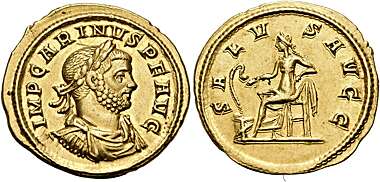
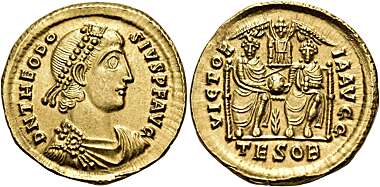
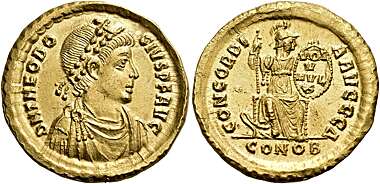
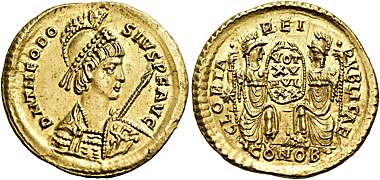
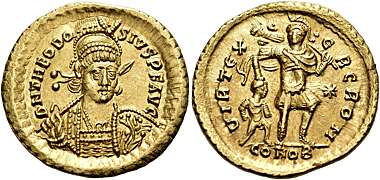
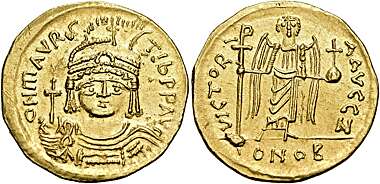
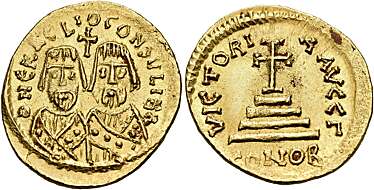
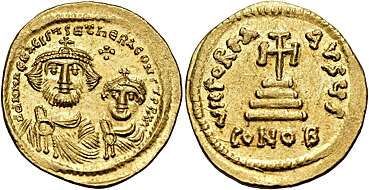
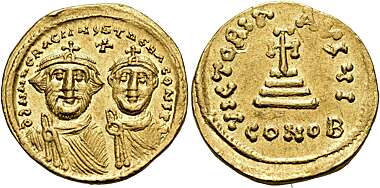
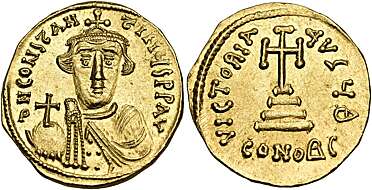
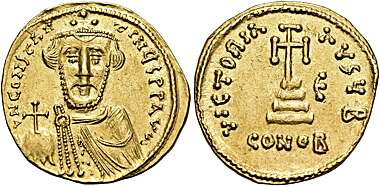
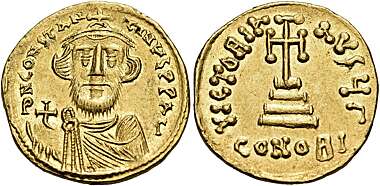
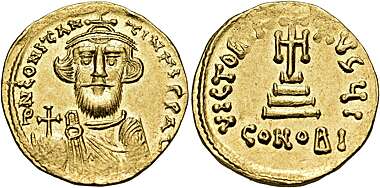
Los 373. Carinus, 283-285. Aureus (Gold, 20.5 mm, 5.45 g, 11 h), Rome, 284. ΙMP CARINVS P F AVG Laureate, draped and cuirassed bust of Carinus to right. Rev. SALVS AVGG Salus seated to left on a low-backed throne, holding, with her right hand, a patera from which she feeds a serpent rising from a low altar to her left, and resting her left arm on the back of her throne. Calicó 4358. RIC V, 2, 229. Very rare. Clear and toned. Minor marks, otherwise, extremely fine. From the collection of an Iberian Amateur, ex Numismatica Ars Classica, 138, 18 May 2023, 805 and Tkalec, 22 April 2007, 328. This coin plays an important role in Nomos 39, which opened with a collection of aurei of Diocletian, since Carinus was Diocletian's direct predecessor! Carus, the father of Carinus, died in Mesopotamia while on campaign in 283, reportedly struck by lightning in his tent, though many historians suspect murder. His younger son, Numerian, died on the way back west in 284, and his death was concealed for days: his body was carried in a closed litter until the smell gave it away. The eastern army then proclaimed a commander of the imperial guard, Diocles, emperor in November 284. He later became better known by the Latinised form of his name, Diocletian. Carinus, Carus's elder son, had remained in the west. In 285, he marched against Diocletian, meeting him at the Battle of the Margus (the Morava, in modern Serbia). According to the sources, Carinus's army was actually winning when he was killed by his own officers. One story says it was a tribune whose wife he had seduced. Diocletian became sole emperor, paving the way for the Tetrarchy. https://cdn.nomosag.com/auctions/95/video00373.mp4?sv=2023-01-03&ss=b&srt=co&st=2025-03-10T16%3A25%3A27Z&se=2099-03-11T16%3A25%3A00Z&sp=rl&sig=i7RzFAqwYGMJUp3u71BbRyL3HhIAtR%2F8cUnRnTVQfyU%3D&rsct=video%2Fmp4
Startpreis:
18'000 CHF
19'611 EUR
16'351 GBP
22'023 USD
Nur ungefähre, gerundete WerteDatum:
04.11.2026
 consentmanager.net