A numismatic memento of St Mark’s Basilica
It is no coincidence where you travel to and what you choose to see. Millions of tourists have trodden these paths before you and have shaped our tourist preferences. Through a variety of various media – formerly books and pictures, later postcards and films, and today more likely YouTube and TikTok – they have shown us what we are supposed to feel in these places. Numismatics, too, plays a role in promoting tourism. Jacques Wiener not only created the finest architectural medals of the 19th century, but also used them to capture the imagination of those who stayed at home.
Many educated people collected his creations with great enthusiasm. Among them was the Prussian King Frederick William IV. The Imperial Collection, which is to be auctioned by Künker on 24 November 2026 as an eLive Premium Auction, includes his collection of 44 Wiener medals, featuring some of the Belgian medallist’s most famous works of art.
In this article, you can find out more about the artist, his business model, and why he was so successful. The focus is on one of his early and well-known medals, which depicts St Mark’s Basilica in Venice.
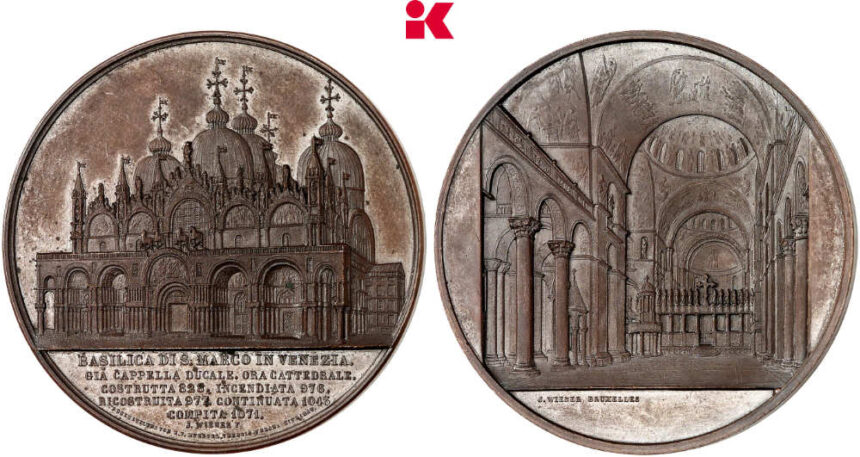
What can be seen on the Wiener ‘St Mark’s Basilica’ medal?
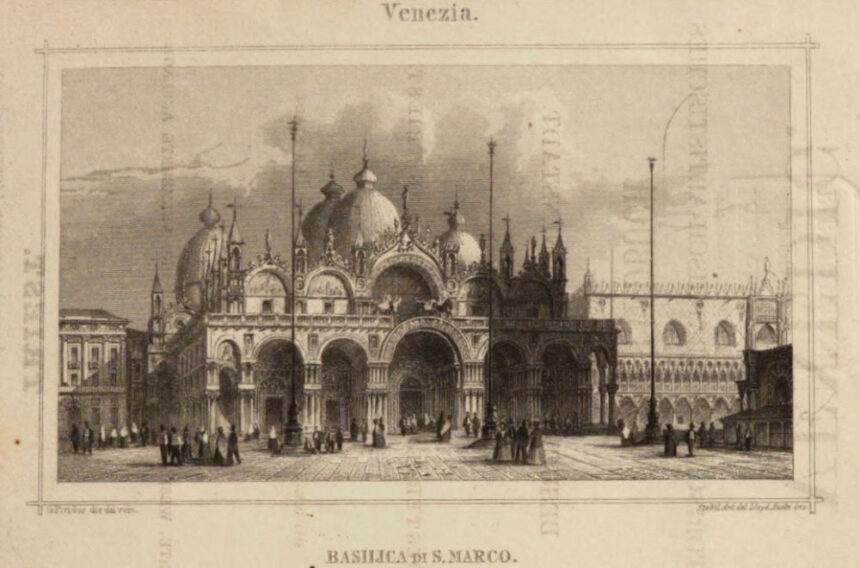
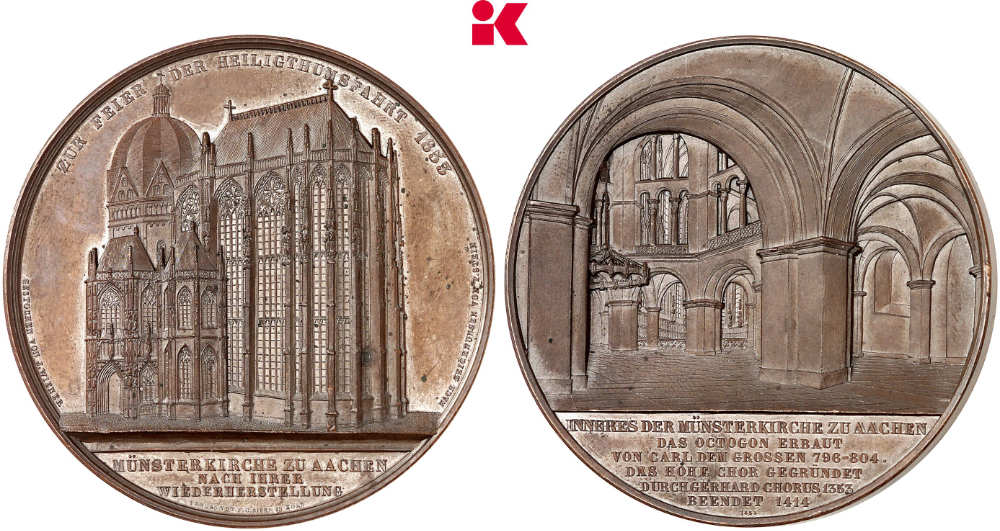
The obvers shows a view of St Mark’s Basilica in Venice as seen from St Mark’s Square. The exergue in Italian, which we have translated here, reads: Basilica of St Mark in Venice / formerly the Doge’s Chapel, now a cathedral / built in 828, burnt down in 976, reconstructed in 977, work resumed in 1043 / completed in 1071; below this, in slightly smaller lettering, we read ‘J. Wiener f[ecit]’ and, at the quite small edge of the revers, ‘BOOKSHOP OF H.F. MUNSTER. VENICE. VERONA AND TRIESTE
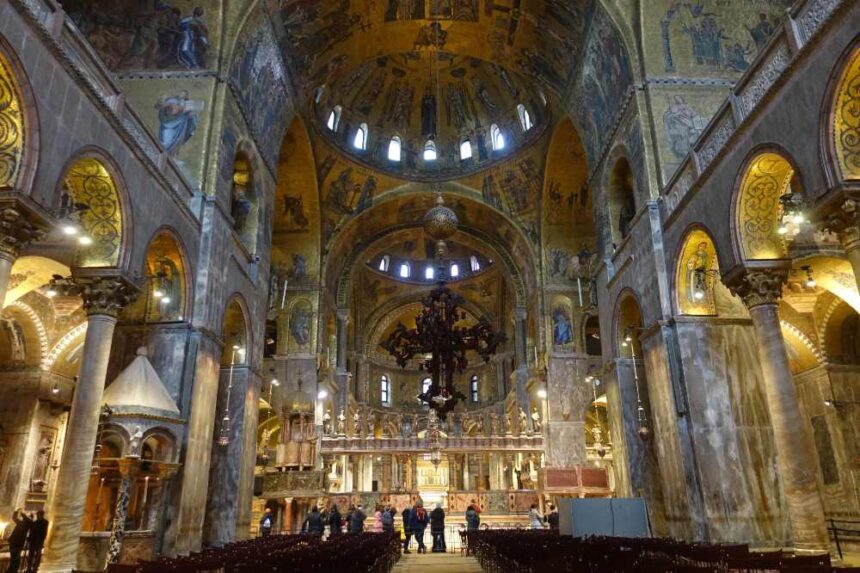
The revers shows – in great detail – the interior view of the nave of St Mark’s Basilica, with the view directed towards the high altar; below this, ‘J. WIENER, BRUSSELS’.
Who was Jacques Wiener?
Jacques Wiener (1815–1899) was the child of a Jewish family who, due to a disability, was unable to follow in his father’s footsteps. He was therefore sent to live with an uncle who earned his living primarily as a copperplate engraver. His clients were publishers who used his work to illustrate their books. It was a booming trade, which Wiener learnt from the ground up. It was not until he was a young man that he came into contact with the medal-making trade. He learnt the craft from the coin publisher Pierre Lévèque in Paris. His work there gave him the idea of founding his own coin publishing house. He did so in Utrecht. After making a very good living for several years from designing buttons, a marriage of convenience gave him the leisure to realise his dream of designing Europe’s most fine buildings on medals. Using the most modern marketing methods, he succeeded in distributing these products throughout Europe. In 1874, his career as a medallist came to an abrupt end when his eyesight began to fail. Wiener died in 1899, more than 20 years later, at the ripe old age of over 84.
Why did Wiener’s series depicting Europe’s most fine buildings become so popular?
To understand Wiener’s success, we must bear three various factors in mind.
Firstly, there was the burgeoning tourism industry, which in the second half of the 19th century transformed travel from an activity reserved for the nobility into a widespread leisure pursuit amongst the affluent middle classes. New modes of transport, such as the railway, dramatically sped up journeys, enabling ever-wider sections of society to marvel at the wonders of Europe.
Secondly, there is salon culture, which has become so alien to us today. It is hard to imagine the boredom felt by many wealthy middle-class women. They found themselves confined to a narrow social circle whilst being relieved of all domestic duties. The most important part of their social life consisted of mutual visits, during which it was considered good form to converse in a knowledgeable and witty, yet harmonious manner. Travel experiences and conversations about distant lands became a very popular topic. To stimulate these discussions, every salon was equipped with a wealth of objects – the famous coffee-table books, sketchbooks and paintings. These were intended to catch the visitor’s eye and inspire conversations to which the hosts could contribute. Wiener’s medals were a perfect fit for this particular category of goods.
Thirdly, let us consider the international exhibitions, which, following the Great Exhibition of 1851, became an important means of trade communication. They gave craftspeople from across Europe the opportunity, for the first time, to connect with customers from all over the world and – even more importantly – to find distribution partners in foreign countries. Jacques Wiener regularly participated in national and international exhibitions with his products.
Why did Jacques Wiener choose St Mark’s Basilica?
Since the emergence of the aristocratic Grand Tour in the 16th century, Venice and St Mark’s Basilica had been regarded as a ‘must-see’ and the crowning highlight for any traveller to Italy. It is therefore no surprise that Jacques Wiener turned his attention to this subject relatively early on.
The die must have been completed before 1854, as Wiener first exhibited the medal in 1854, at the Exposition Générale de Beaux-Arts in Brussels that year. A year later, the medal was on display at the Exposition Universelle in Paris, before being presented at exhibitions on five further occasions, including in London, Antwerp and at the 1873 World’s Fair in Vienna.
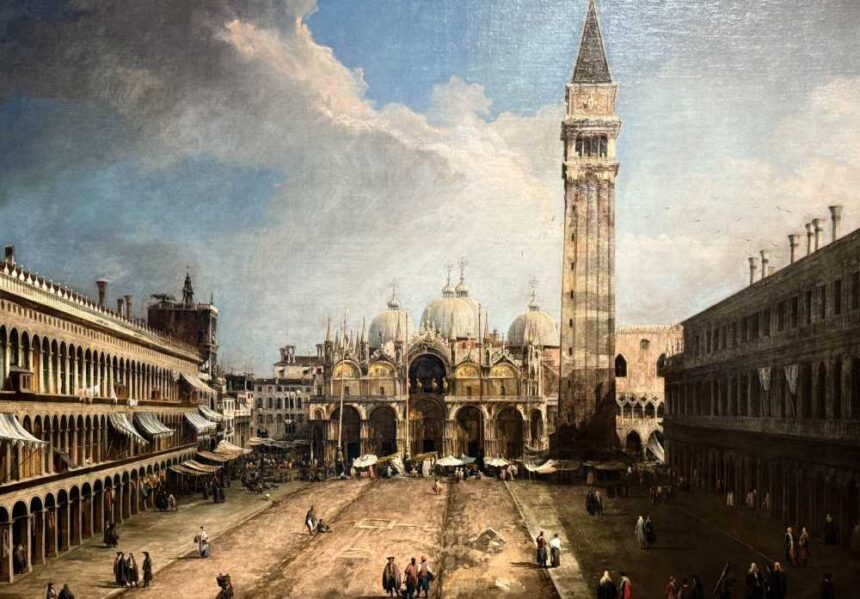
The bookshop run by Hermann Friedrich Münster (1817–1868), which is mentioned on these medals, was a meeting point for international tourists in Venice, with branches in Verona and Trieste. Choosing it as a ‘point of sale’ was a stroke of genius on Wiener’s part. From 1857 onwards, Münster ran a bookshop with a reading room right on St Mark’s Square, where travellers could pass the time whilst stocking up on souvenirs. Adding Wiener’s medals to this range made perfect sense.
Anyone who had missed the chance to buy the Venice medal, or who could not afford to travel there at all, had the opportunity to do so from home. We know of numerous advertisements through which Wiener’s distribution partners promoted his medals in magazines. We also know that both the Victoria and Albert Museum and the British Museum acquired Wiener’s medals from local traders in the trade.
In other words: Wiener established a distribution system similar to that which we still recognise today in the trade in contemporary coins. He himself sold his medals to distribution partners in other countries, some of whom – as the reference to Hermann Friedrich Münster seems to suggest – held a kind of national exclusive right.
Was Jacques Wiener in Venice to seek inspiration?
We are not aware of any journey Jacques Wiener undertook to Venice, though this does not mean we can say with certainty that he was not there. However, it was by no means necessary for Jacques Wiener to have seen St Mark’s Basilica in person in order to create his works. He preferred to draw on familiar images from books, which explains his fundamental decision to depict the full view of a building from the outside on the front and from the inside on the revers. Illustrators usually opted for precisely this perspective, so Wiener always found models to work from. Particularly noteworthy is the astonishing wealth of detail with which Wiener ‘copied’ his models.
What is a Wiener medal worth?
Künker has set the starting price for the lot at 100 euros. This is far too low for this grade combined with this provenance. Wiener medals in comparable grades can fetch up to 500 euros. Which is still very reasonable given the craftsmanship involved. The reputation of 19th-century medals continues to suffer today from the disparaging remarks of certain museum directors who, at the turn of the century, sought to distinguish the Impressionist ‘art medal’ from the ‘commercial medals’ produced by the likes of Jacques Wiener.
Further medals created by Jacques Wiener
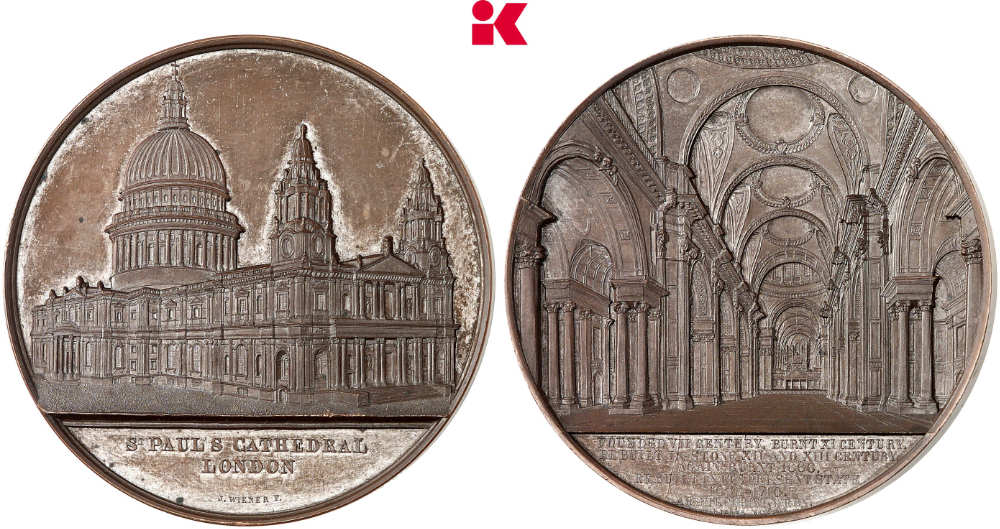
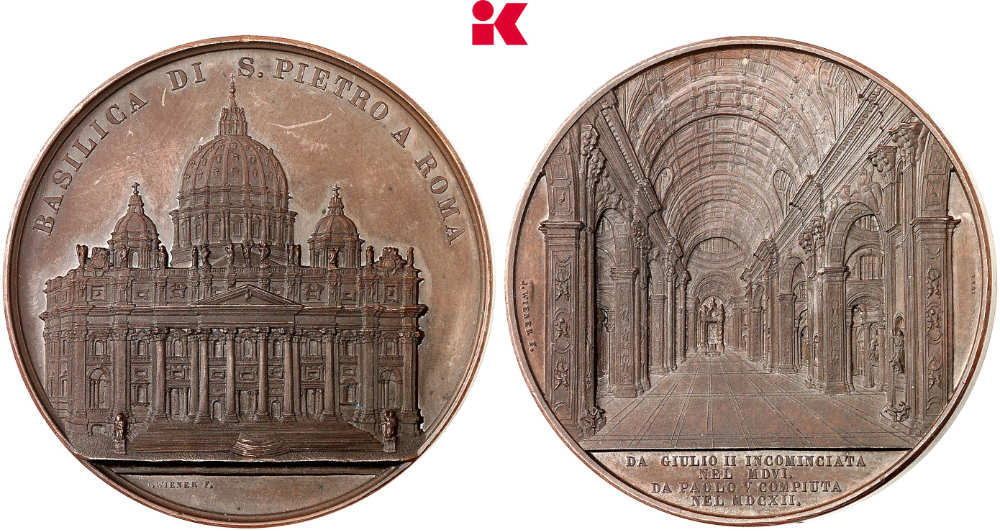
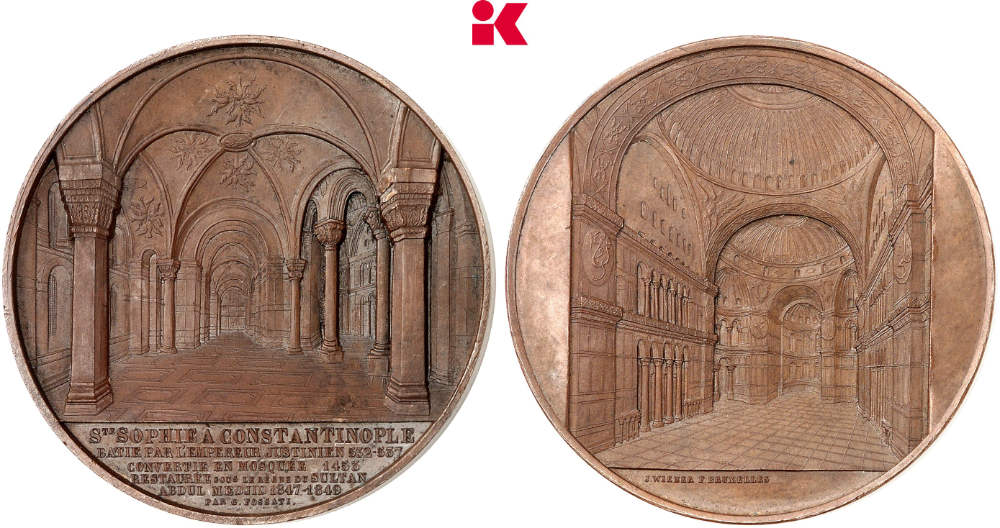
Text and images: Ursula Kampmann