Hiroshima Branch
Most countries have a mint at a single location. Few nations, like the United States or Germany, have multiple mints. Japan, with three locations, is one of them. This is necessary to cover the entire production process in a decentralized manner: from alloying and coiling to blanks, coining, and packaging. In a country where cash remains so central, this is a strategic statement.
Three mints in three different parts of the country
Osaka, whose mint I had the privilege of visiting in 2024, is home to the headquarters of the Japan Mint, where decisions are made regarding themes, motifs, strategies, and all administrative details. Here you will find the creative department, responsible for the dies, as well as the enamel department, where the brightly colored medals – a specialty of the Japan Mint – are created.
The Saitama Mint, where I had the pleasure of visiting in 2023, is located near Tokyo. Its focus is on the production of commemorative coins and the state control of gold items. Here, the coveted hallmark is applied, guaranteeing the buyer the fineness of the gold.
Although circulating coins are produced in both Osaka and Saitama, the true center of production is located in Hiroshima. Shortly before the start of this year’s TICC, I made a detour there and learned a great deal. I had never before seen how a coil for circulating coins is made. It was fascinating! Join me on my tour of the Hiroshima Mint!
Alloy and casting
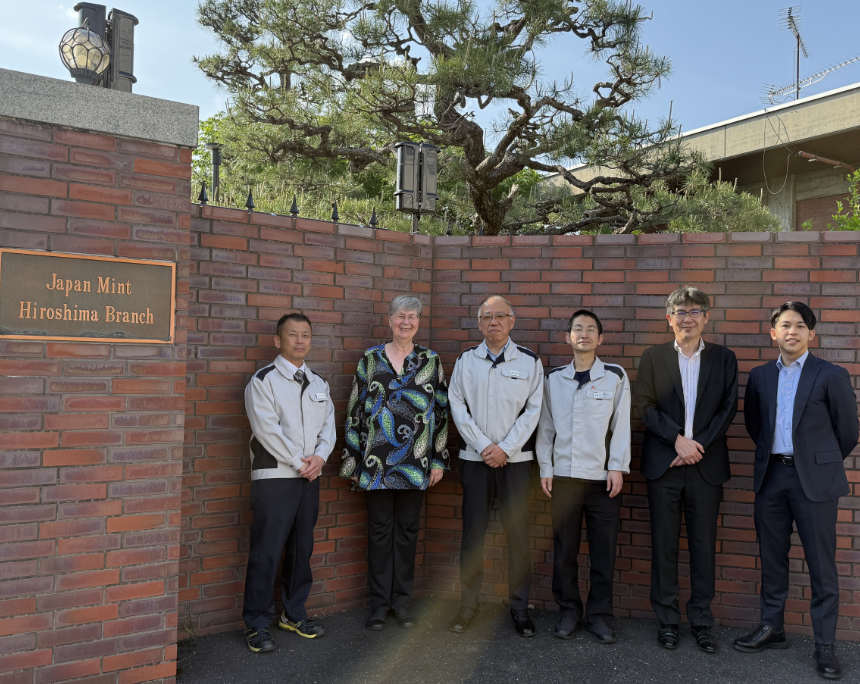
One thing I’ve learned during all my visits to the Japan Mint is that the Japanese are wonderful hosts. When they receive a guest, the entire operation prepares for their arrival. This was also true in Hiroshima. Every department had prepared something special for me to help me understand the technical processes. For example, Mr. Otani, Director of Melting Division, who was guiding me through the Melting Division, had a selection of the various raw materials used to create each alloy laid out right next to the entrance.
As the name suggests, the Melting Division does nothing other than melt metal to produce the specific alloys required for the various blanks. The end products of the Melting Division are massive ingots, which are subsequently further processed in the Rolling Division.
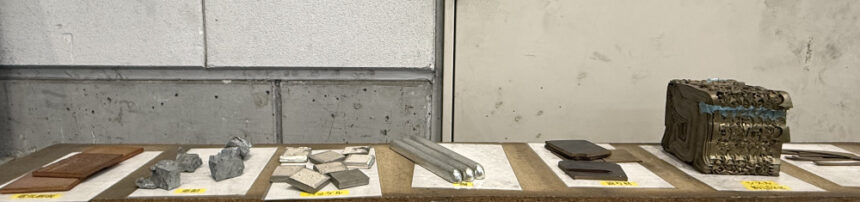
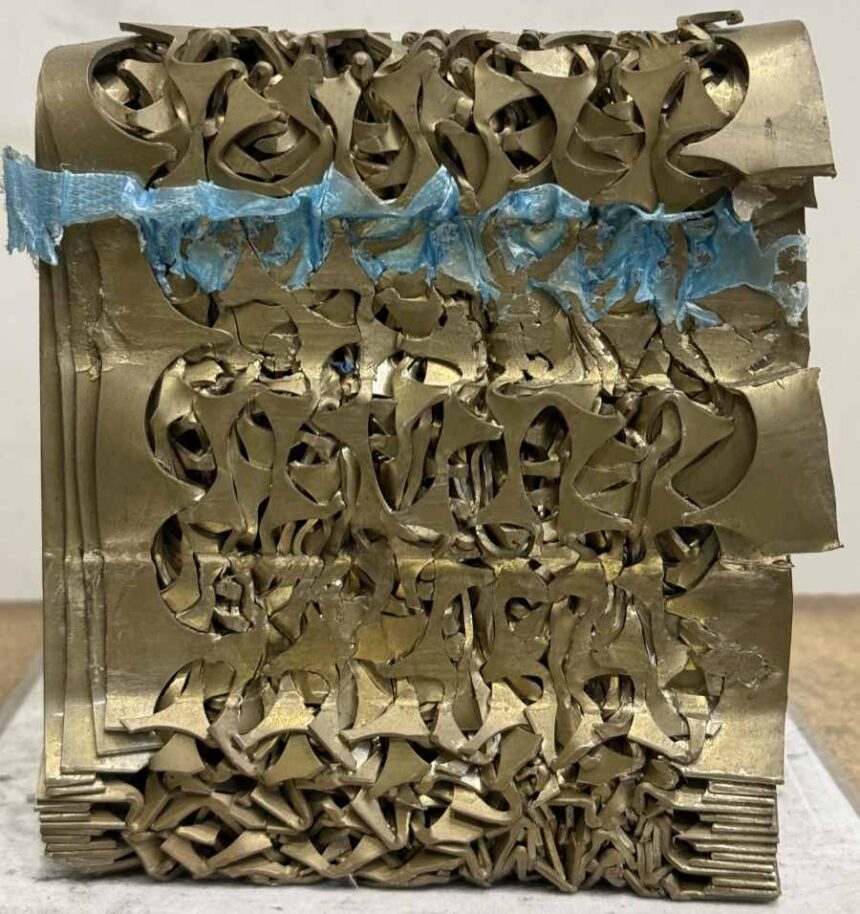
But first, I’m fascinated by the various raw materials, which arrive in different shapes and weights. I’m particularly impressed by a heavy block. At first, I can’t tell what it’s made of. Only upon closer inspection does it become clear: it’s made of finely cut, tightly folded punching grids, the kind left over after the blanks have been punched out.
This is very efficient and resource-saving. The waste from blank production goes directly back into the melt and can be processed back into coils without additional processes.
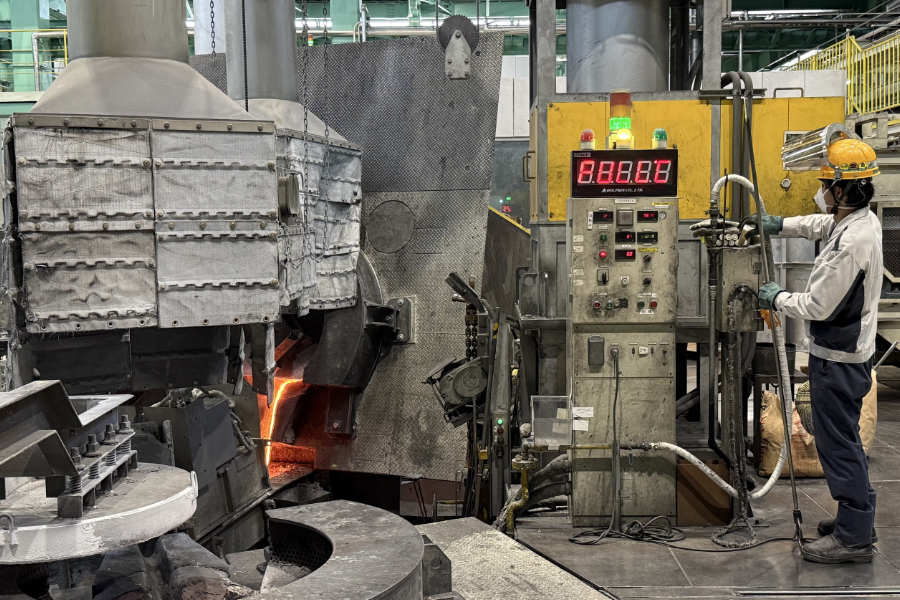
Now comes the part that impresses me the most! You can tell by the rising temperature: We’re approaching one of the two blast furnaces where the alloy for the blanks is alternately heated and mixed. I’m allowed to look into the boiling mass, but I have to hold a shield made of transparent protective material in front of my face, which I do gladly and willingly.
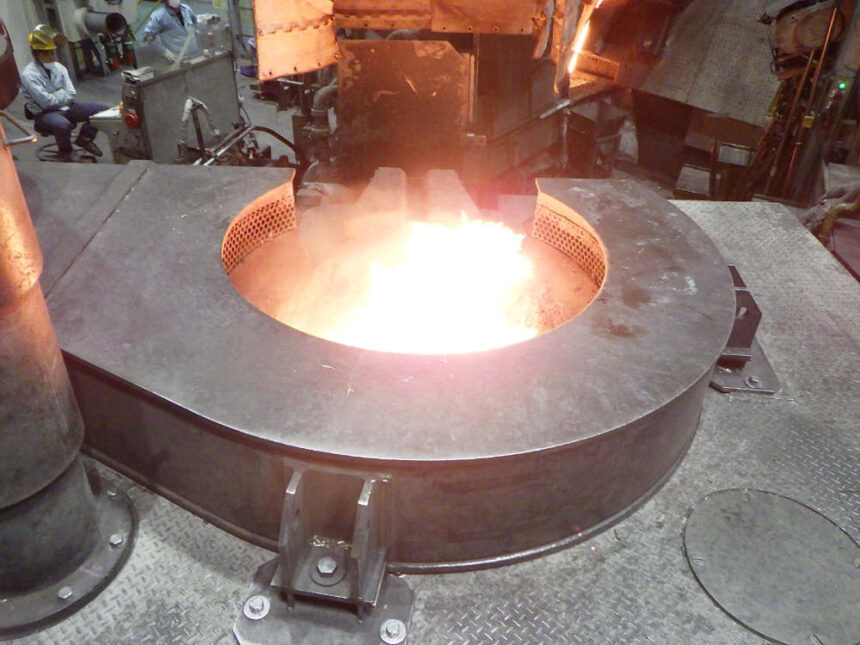
Honestly, boiling metal is quite an experience. It reminds me that people in the early modern period imagined hell as a giant fiery furnace. Looking into the cauldron, you understand what that motif meant to them.
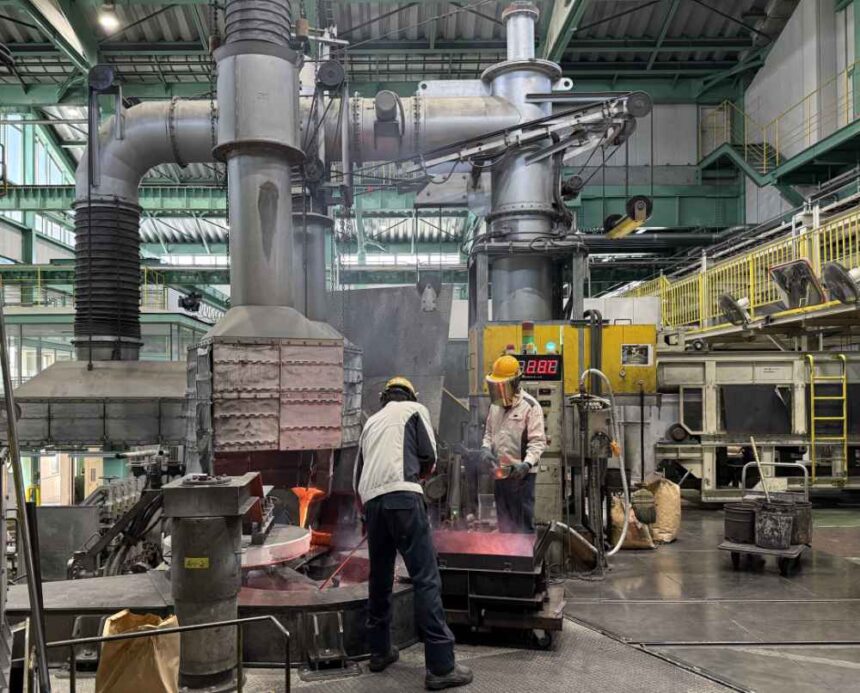
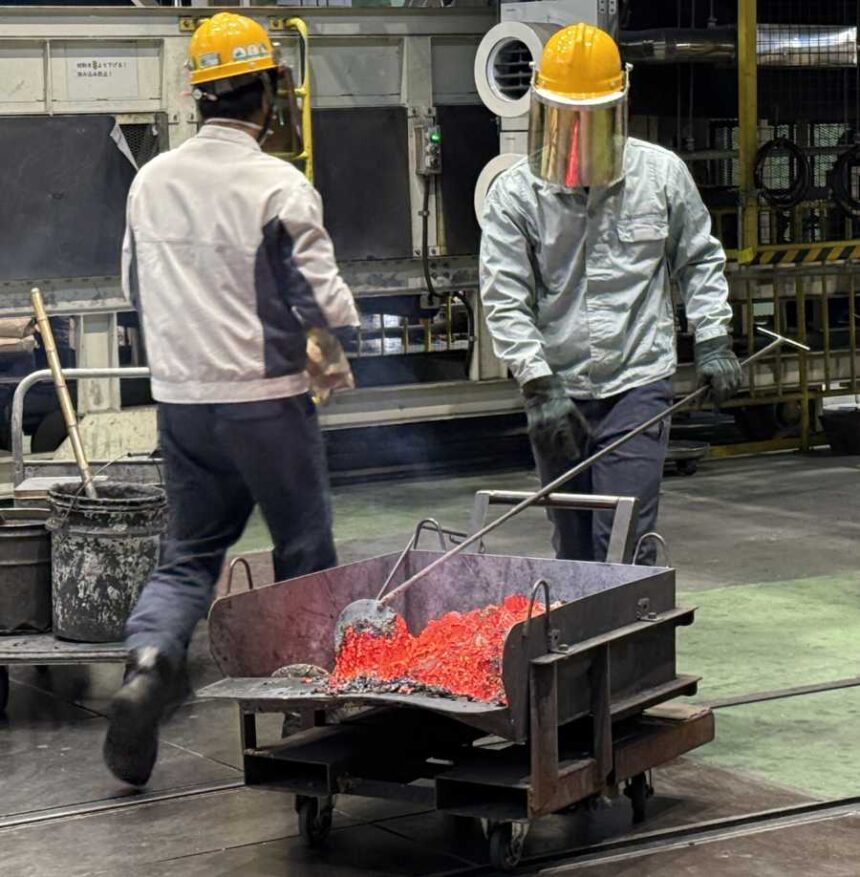
What fascinates me most is the fact that even with the most modern technology, the same processes still have to be carried out as in ancient times. Of course, everything is more efficient, better, and safer today. But even so, for a perfect casting, the slag that forms on the surface of the molten metal has to be skimmed off. Two employees of the Japan Mint do this with long ladles and a small wheelbarrow, the inside of which glows fascinatingly. It’s a dangerous and strenuous job. I’m glad I don’t have to do it.
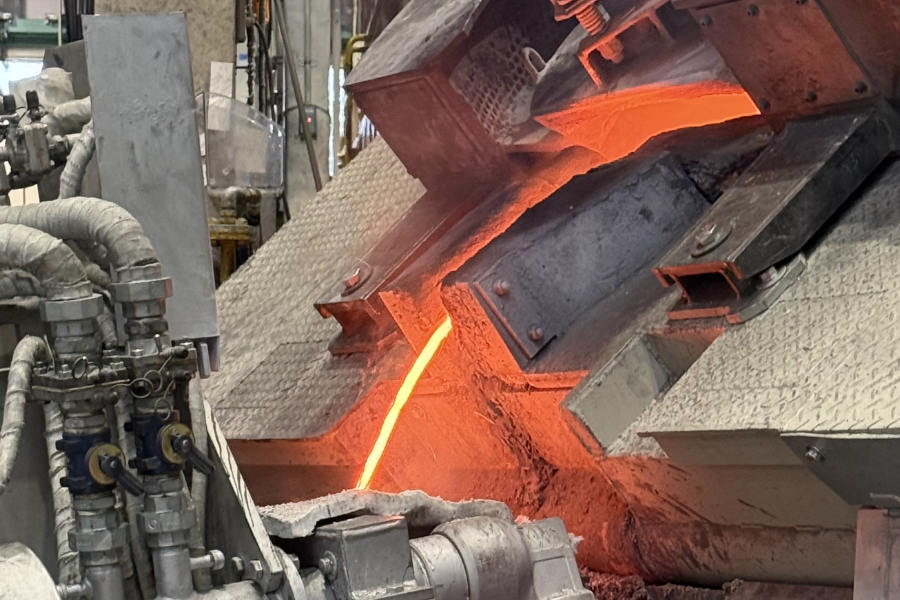
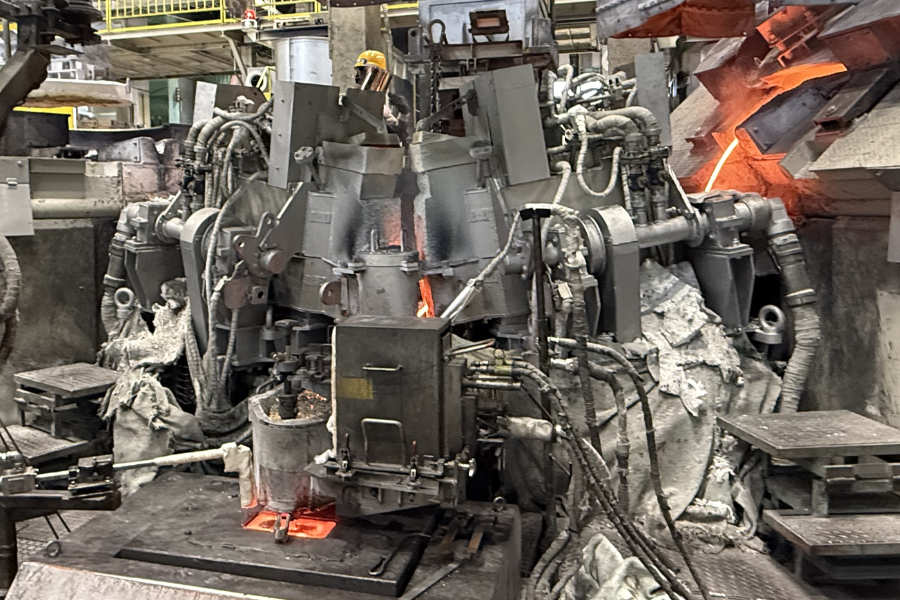
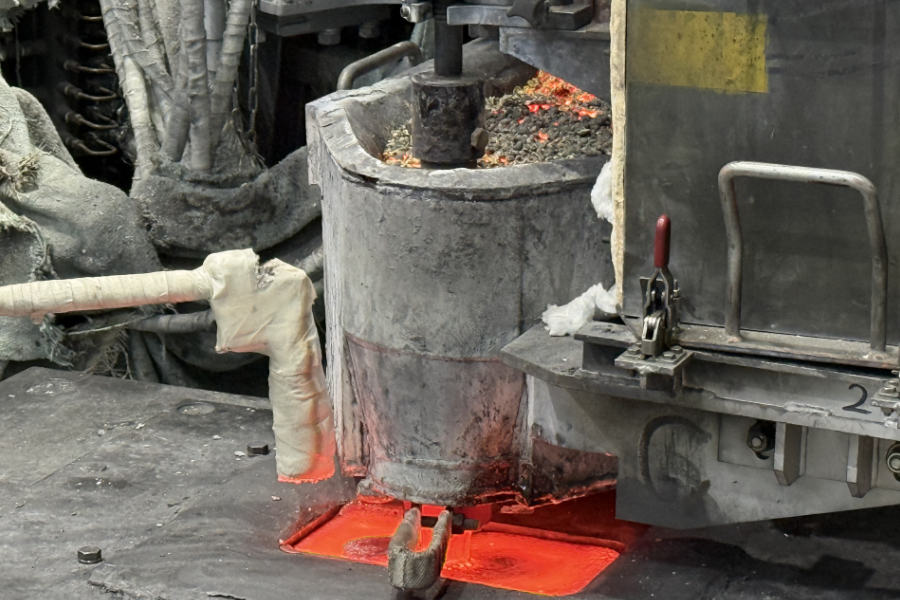
Next comes the casting process. From a massive continuous casting plant, the molten metal flows downwards into a mold. At regular intervals, this strand of metal is cut, creating enormous metal ingots the size of a wooden beam.
And that brings us to the next department, which Mr. Yamasaki will guide us through. He is the head of the Rolling Division, where metal ingots are rolled into coils.
I admit, it’s not the first time I’ve seen a coil being made. However, until now I’ve only been to factories that exclusively processed precious metals – and when it comes to precious metals, bars and coils are significantly smaller.
It’s a shame that no one is standing next to the ingot, but you can perhaps see how enormous the metal block is in relation to the door.
Gigantic ingots are transported on small metal carts that run on rails and play a cheerful tune. This is important because it prevents an inattentive employee (or me) from being run over by one of these carts.
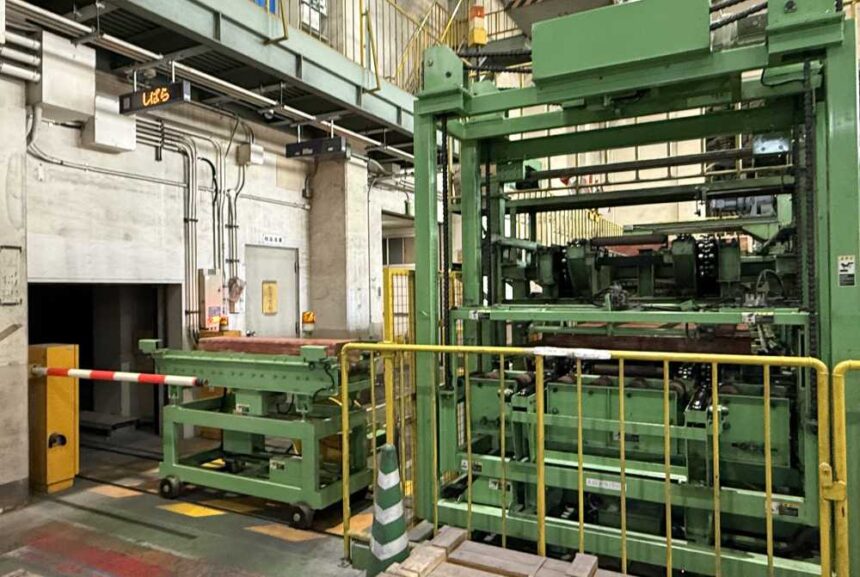
The ingots are then automatically transported to the storage area, from where they are shortly afterwards pushed into a furnace. There they are heated until they glow red-hot. This is because it is better for the initial rolling process if the metal is easily malleable.
A fully automated gripper places the glowing ingot onto the conveyor belt of the hot rolling mill.
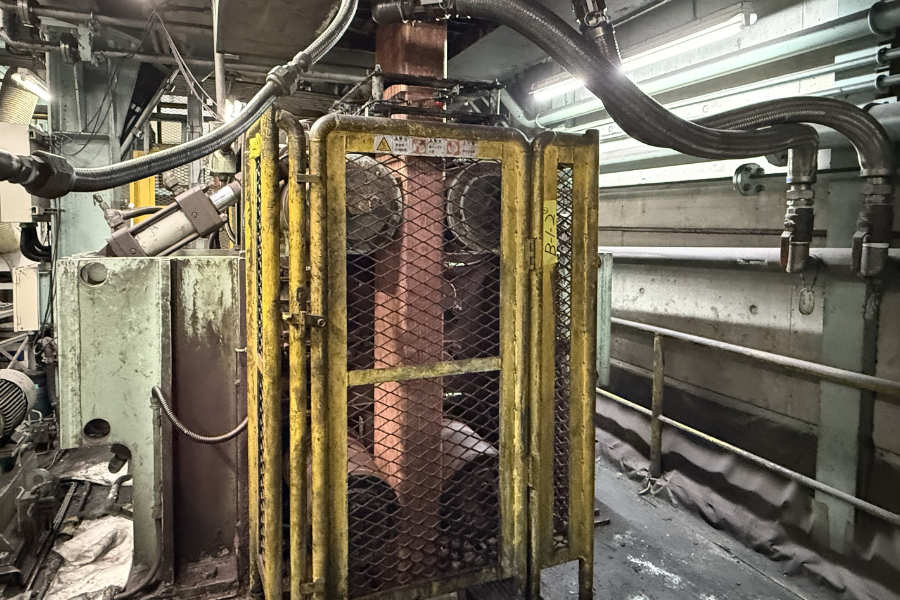
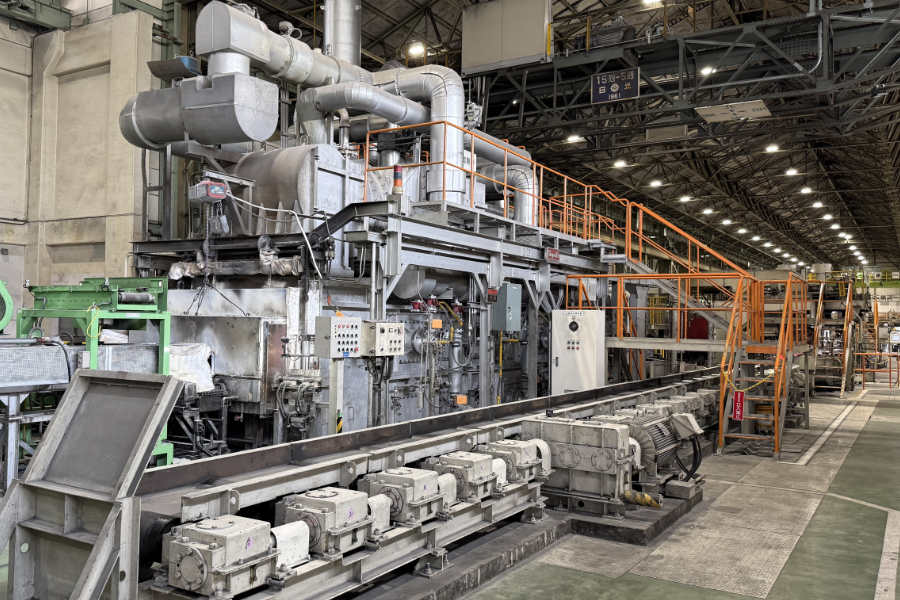
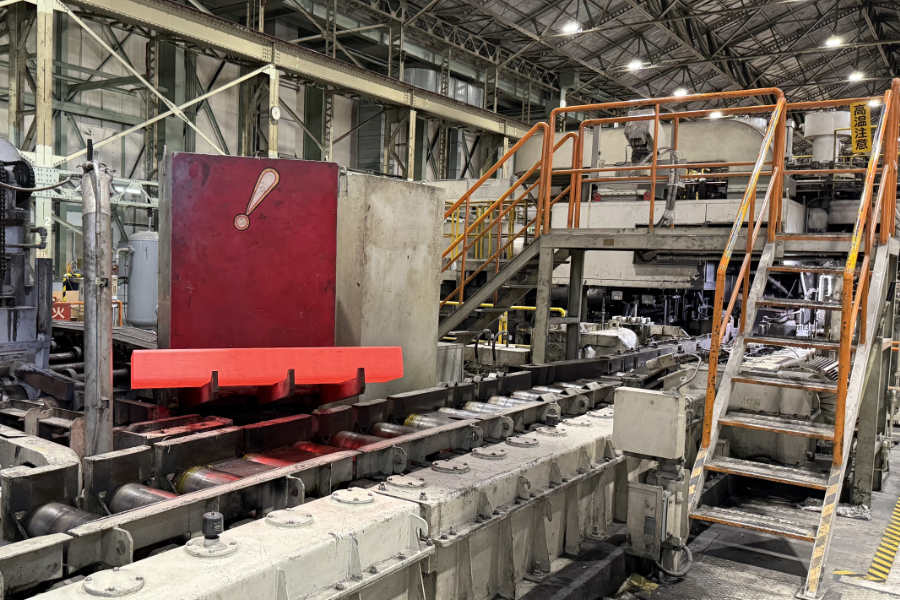
While the production of the alloy is impressive, I can’t get enough of watching this process. There’s something playful about watching the glowing ingot being rolled into a long strip in the rolling mill. It rolls back and forth on a long conveyor belt, becoming a little longer with each new rolling cycle.
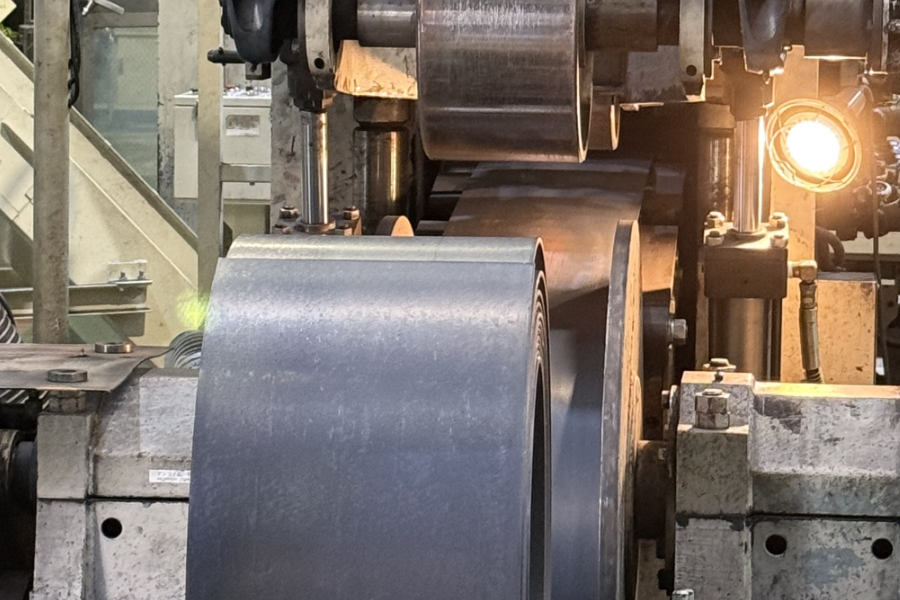
This step is not yet about achieving the precision required for the finished coil. Now it’s solely about speed. The longer the material has time to cool down, the more difficult it is to process. Consequently, after an initial winding, the long strip undergoes further processing in several stages.
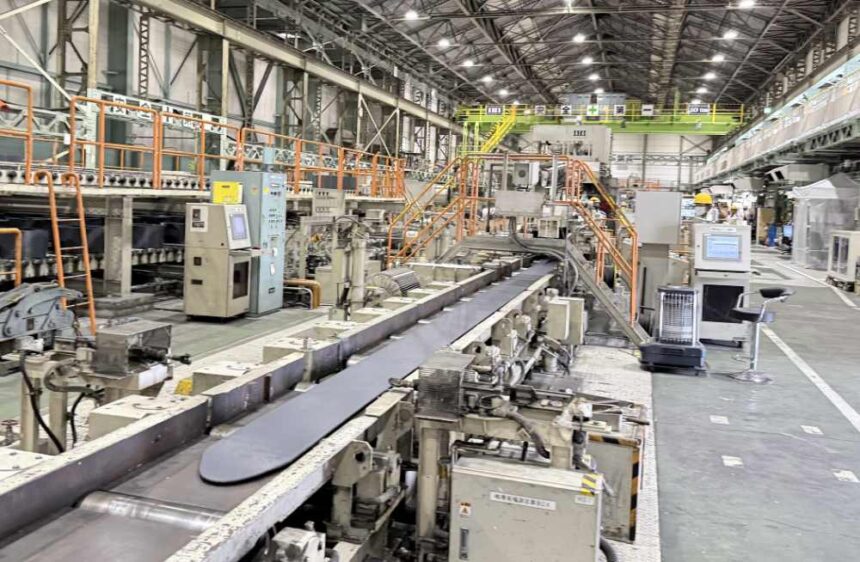
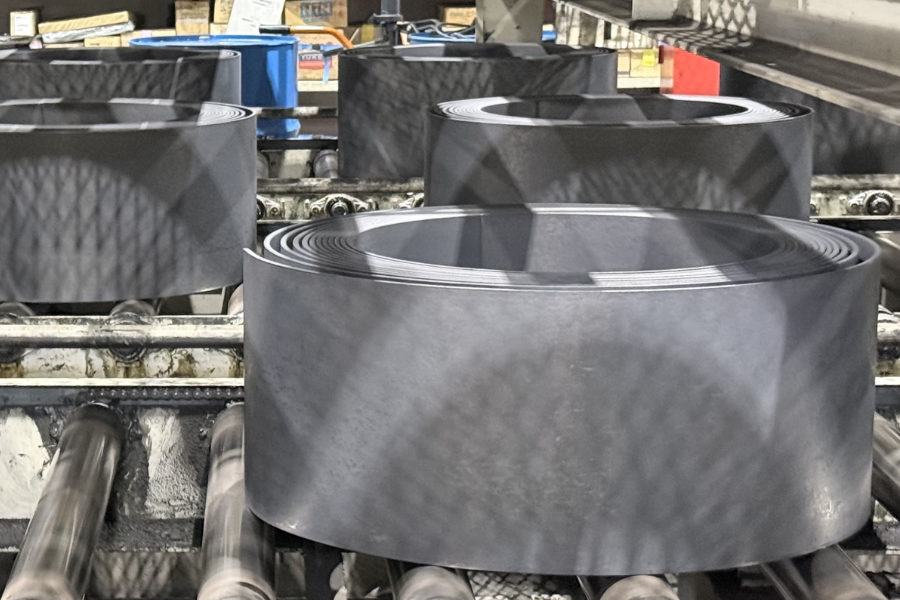
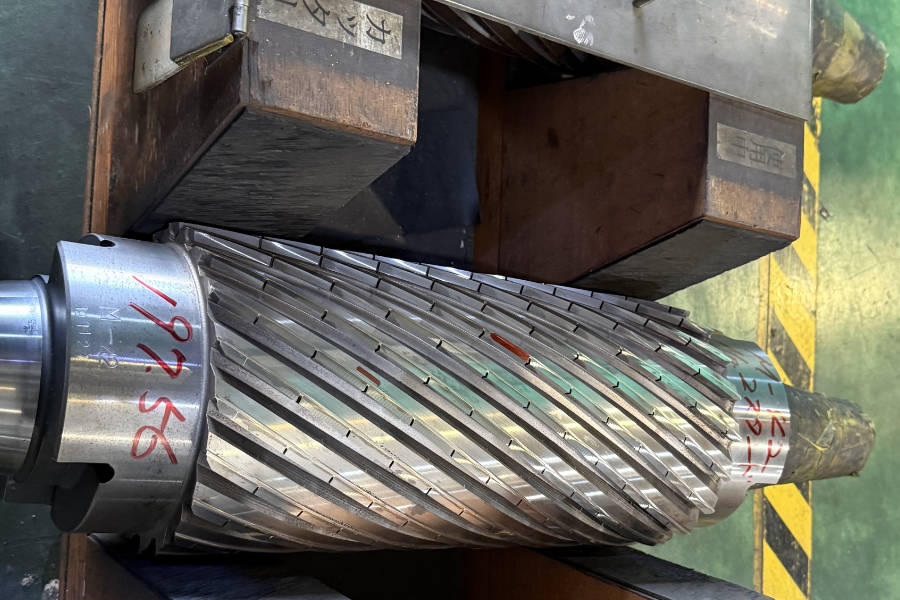
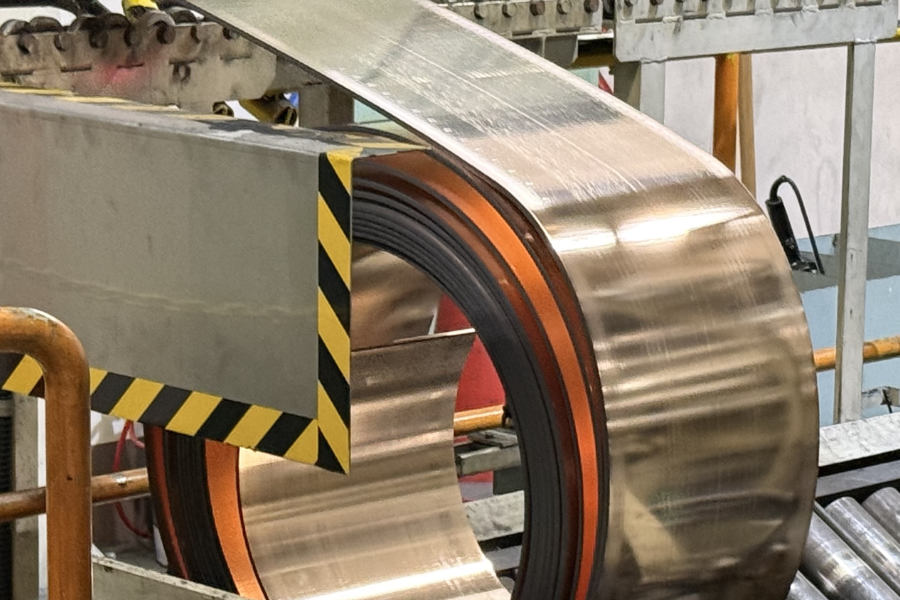
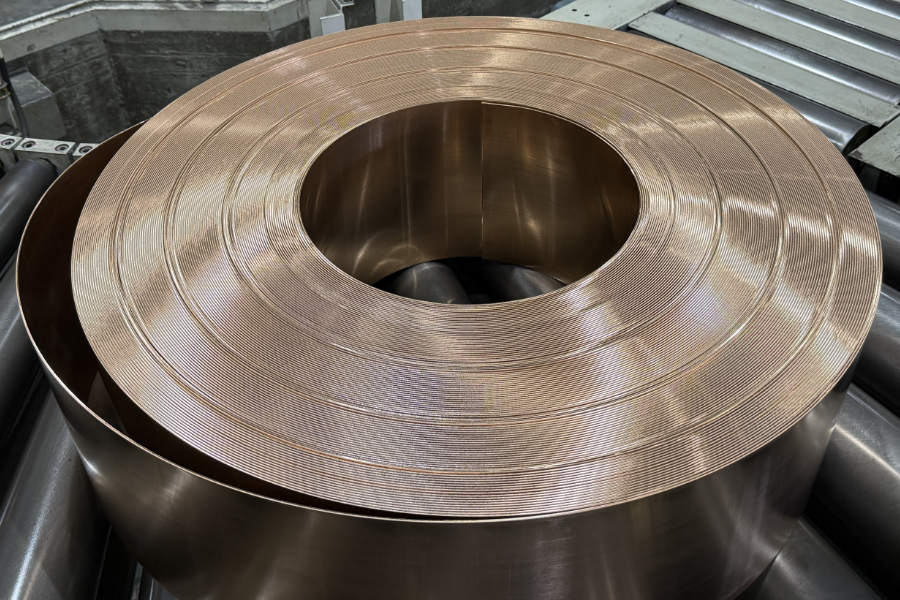
First, the unsightly gray coating that forms on the surface during annealing and rolling must be removed. This is done using enormous metal files, precisely matched to the width of the strips. The next step is fine rolling. This is crucial because only when the coil meets the thickness specifications with absolute precision (and we’re talking tolerances narrower than a human hair!) can perfect blanks be stamped from it.
The exact thickness of these coin blanks is crucial for vending machines to accept them. Each machine contains several small devices that check various technical specifications, including the coin’s thickness and weight. This stage of production ensures that users of the thousands of vending machines scattered throughout Japan can purchase what they intend to buy.
I’m then allowed to visit the Division of Coin Production. Mr. Matsuzaki guides me through the coin production area. However, I’m not allowed to take photos there. But that’s not a problem. The usual minting presses are also present in Japan, including the famous Schuler Ringmaster. After all, the Japanese Mint is justifiably proud of its bimetallic 500 yen coin, which is among the most counterfeit-proof coins in the world.
By the way, if you happen to be traveling to Hiroshima: you can visit a museum at the Hiroshima Mint that offers interesting insights into Japanese numismatics. There is also an official sales outlet for Japanese coins on site, open on working days. The address is:
Japan Mint Hiroshima Branch
3-1, Itsukaichi-Chuo 6-chome,
Saeki-ku , Hiroshima 731-5128
The mint is not located in the center of Hiroshima, but rather a little outside the city. Take the Sanyo Line from Hiroshima Station to Itsukaichi Station. From there it’s another 20-minute walk.
You can find out more about the Hiroshima Mint on the Japan Mint website or via Dive! Hiroshima.
Text and images: Ursula Kampmann