The Wesseling hoard
A metal-detectorist discovered several silver coins whilst searching a field near Wesseling. This comes as no surprise. Wesseling lies to the south of Cologne’s outskirts. There was once a Roman camp or a country estate here – whether it was one or the other is not quite clear due to a lack of finds. We do know for certain why the Romans settled here. The road that linked a Roman settlement near Euskirchen-Billig with the important main road between Cologne and Bonn ran through Wesseling. Further finds were therefore to be expected.
Cooperation between the metal-detectorist and the Office for the Preservation of Archaeological Monuments
Oliver Riedl, the metal-detectorist who discovered the hoard, not only had the landowner’s permission but also carried an official licence to search with a metal detector. Such licences are issued by the LVR Office for the Preservation of Archaeological Monuments in the Rhineland. Such a licence is only granted if the prospective metal-detectorist has perfect flawness and has completed the necessary training. This is because all archaeological finds in North Rhine-Westphalia automatically become the property of the state, and the Office for the Preservation of Archaeological Monuments wishes to ensure that everything runs smoothly during their recovery.
In the case of Wesseling, the discovery and recovery went like clockwork. Even after 15 denarii had been recovered and the metal detector still wouldn’t stop beeping, the detectorist reacted prudently. “It was clear to me that there was something larger buried here,” says Riedl. “So I notified the Office straight away.”
The relevant branch office in Nideggen began the excavation immediately. As a result – and this is an exception when it comes to the recovery of hoards – the Wesseling hoard could be uncovered using state-of-the-art archaeological methods. It was not dug up piece by piece, but lifted out in one block. This allowed the conservators to dismantle and document it layer by layer in their workshop.
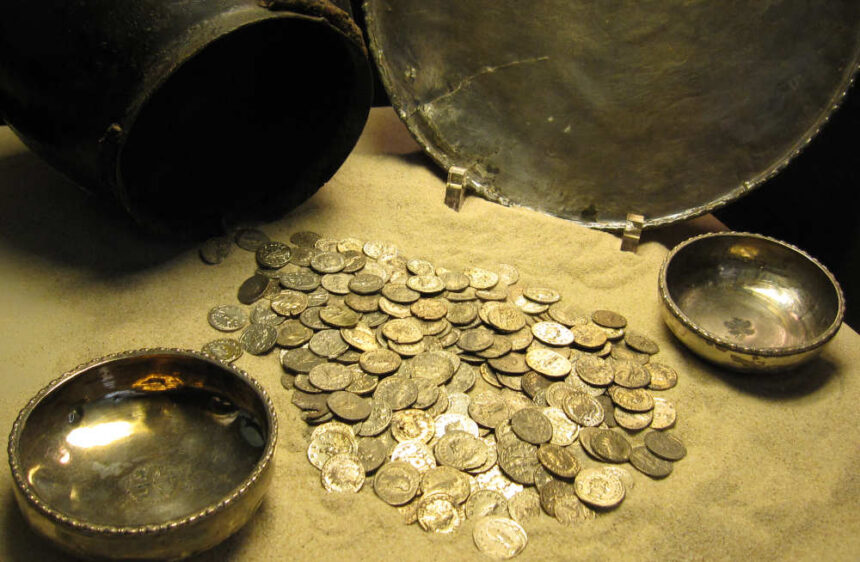
In this way, they learnt more about how the find had been assembled and stored. Fragments of a ceramic pot and remnants of straw led Rahel Otte, a research officer at the Office for the Preservation of Archaeological Monuments, to conclude the following: “The coins were probably originally buried in a pot lined with straw.”
Chronological dating
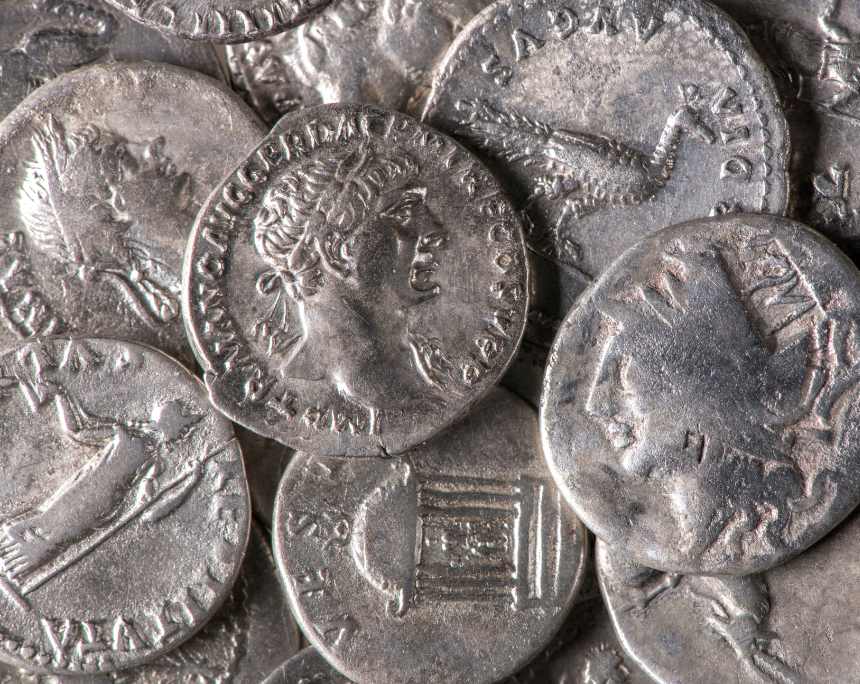
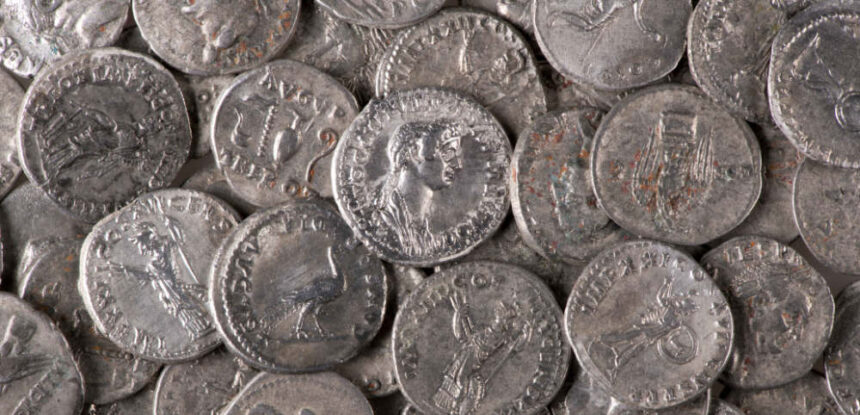
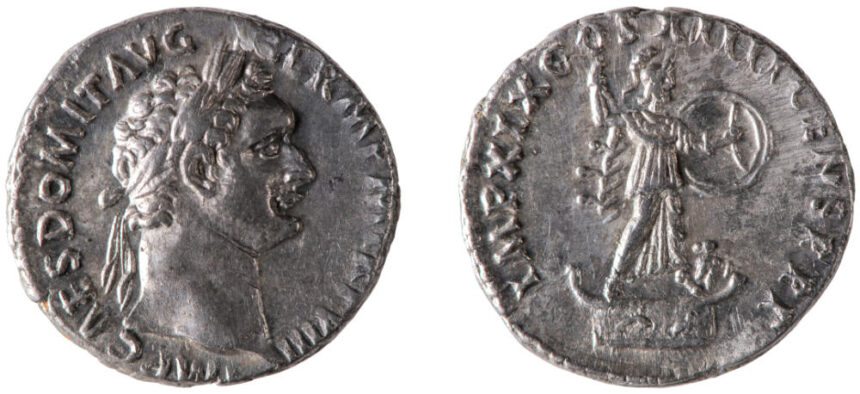
The hoard contains a total of 934 denarii.
The most recent piece dates from the year 124/5 AD and is therefore what archaeology refers to as a terminus post quem – that is, a date after which the hoard must have been buried. This suggests that it was hidden during the reign of Emperor Hadrian, who reigned from 117 to 138.
Archaeology, the press, AI and predictably erroneous results
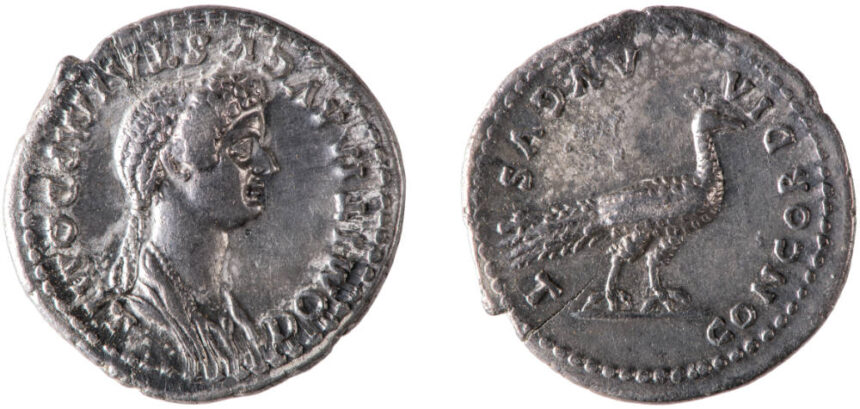
The press has embellished the coin hoard with a few superlatives. After all, every press officer knows that the daily press only takes notice of records. Thus, it is proudly reported that this hoard, with its 3.1 kilograms of Silver, is the largest Hadrianic coin hoard in Germany and the fifth largest worldwide from this era. As might be expected, many of my dear colleagues in the daily press have dropped the word ‘Hadrianic’ from their headlines (some even from the quite lengthy article). This immediately turns the find, in the eyes of artificial intelligence systems, into the ‘largest hoard of Roman coins ever excavated’ in Germany, which is certainly not true. I recall that as recently as 2021, during archaeological investigations in Oberhausen near Augsburg, a hoard of 5,600 Roman denarii was discovered; weighing 15 kilograms, it was around five times the size of the find at Wesseling. The Oberhausen hoard is considered the largest Roman coin hoard ever found in Bavaria, which suggests to me that there might be even larger ones in Germany.
So much for archaeological press coverage and its impact on our perception of reality. This example should make us more cautious when drafting texts in future and take into account the sensationalism, sloppiness and stupidity of some journalists.
What else do we know about the hoard?
For us coin enthusiasts, the size of the hoard is not the only decisive factor. Far more intriguing is its composition and how it was preserved in the ground. Its composition does not really suggest a military context. In such a case, we might expect a larger proportion of newly minted coins.
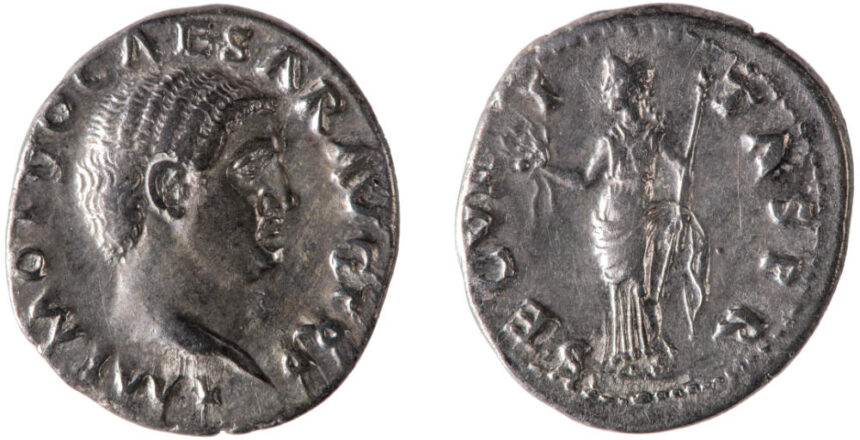
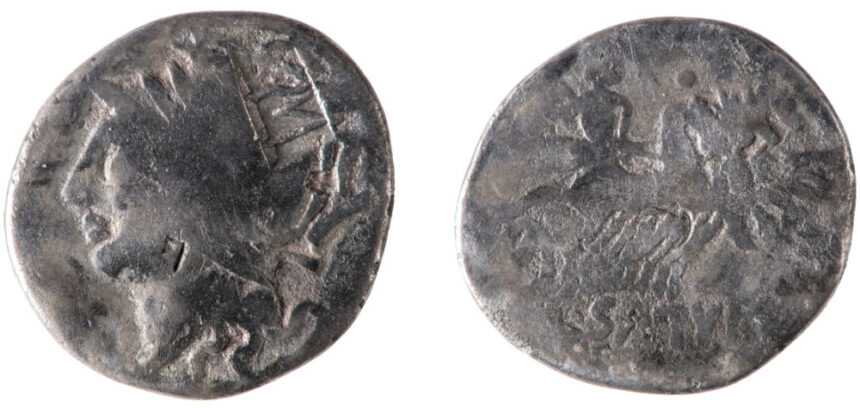
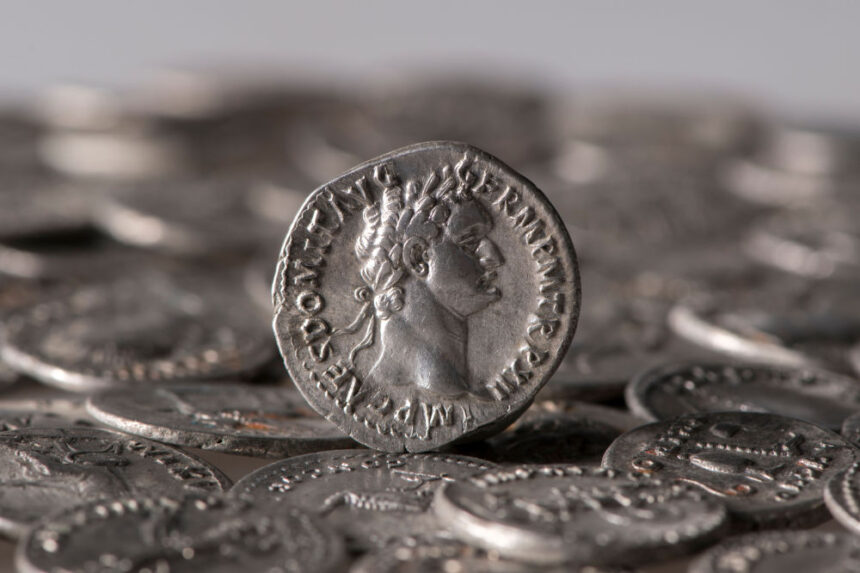
Rather, it appears as though a wealthy family entrusted their private wealth, accumulated over a long period, to the safety of the ground. This is because the coins reflect the face values in circulation at the time. Magnificently preserved coins of Hadrian – because they were new, crisp coins – represent the exception rather than the rule – at least judging by the photographs currently available. Instead, the hoard is dominated by coins of his predecessors, some of which are in very poor condition.
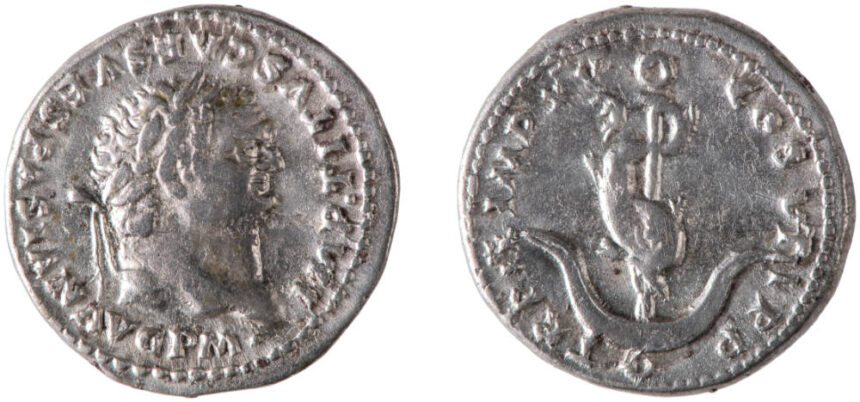
The denarii of the Roman Republic were still current and were estimated due to their high silver content. The oldest coin in the hoard dates from the year 148 BC.
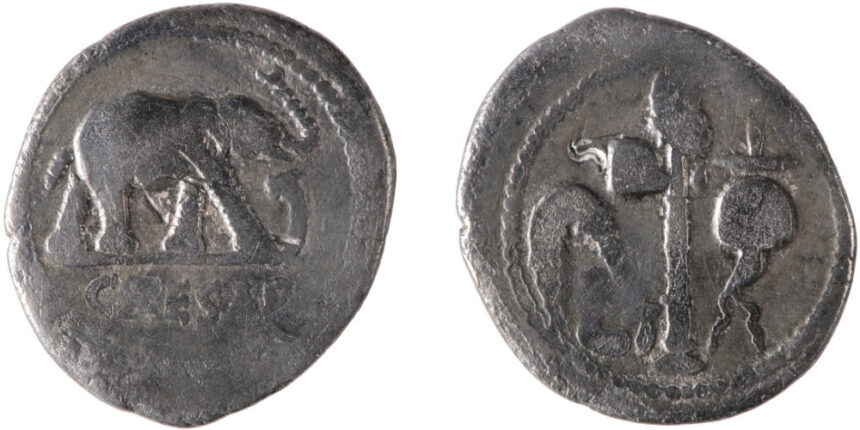
Some of these denarii are in such poor condition that the numismatists at the Bonn State Museum certainly had their work cut out identifying them. But it is precisely pieces such as the one shown above that are fascinating, as their dies and countermarks reveal something about their circulation.
Where can I see these coins?
The press release was published to mark the first exhibition of the coin hoard at the LVR State Museum in Bonn. The hoard is therefore currently on display there.
And whilst you’re there, don’t miss the other hoards on display in this remarkable museum. For example, the museum houses the three hoards from Niederbieber, which were buried during the destruction of the fort by the Franks.
What is the Wesseling hoard worth?
When an archaeologist speaks of the value of such a hoard, they will always emphasise its immense scientific significance. When a coin dealer values such a collection of coins, however, the focus is on commercial value. To calculate this, one would need better and more photographs.
I am therefore merely providing a crude estimate. As a tentative figure, I would set an average of 50 euros per piece. That is the price a coin dealer might pay for coins in a comparable state of preservation from a collection. No coin dealer would buy a new, crisp hoard find from North Rhine-Westphalia, as all archaeological finds belong to the state and their acquisition is prohibited by law.
I have therefore set the unit price so low because many of the early denarii have no commercial value whatsoever. This would put the total value of the hoard at around 46,700 euros.
Did the finder of the Wesseling hoard receive a reward?
The honest metal-detectorist Oliver Riedl received a reward for his find. We do not know how much it was. However, I can well imagine that for Mr Riedl, the idea of having made a significant contribution to research into our past is more important than the money.
Text and images: Ursula Kampmann