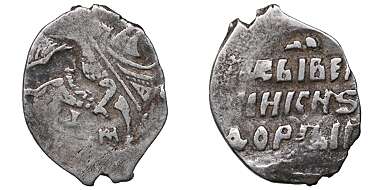
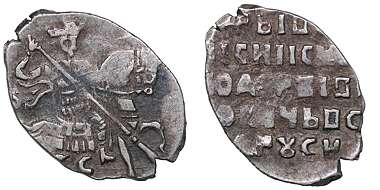
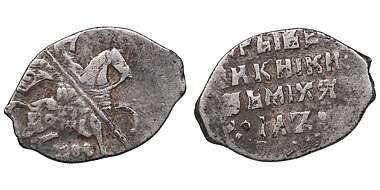
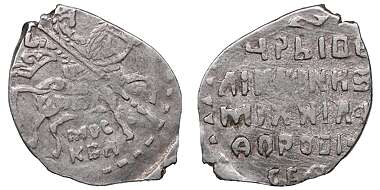
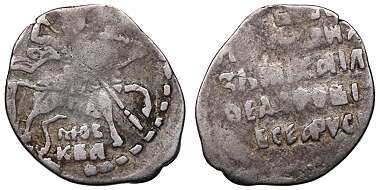
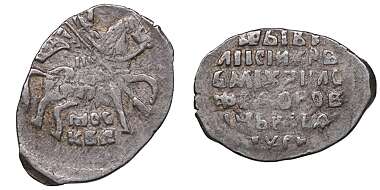
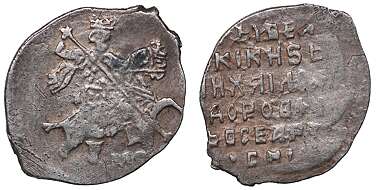
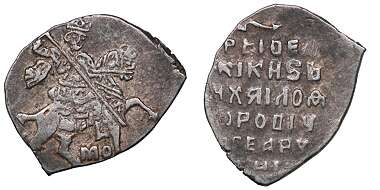
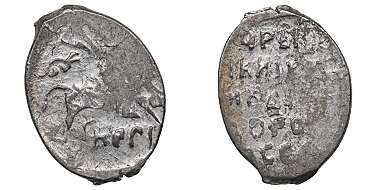
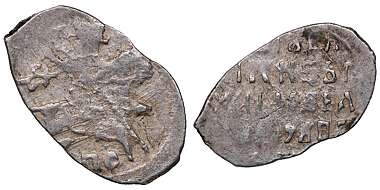
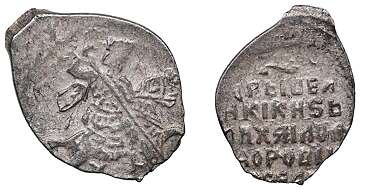
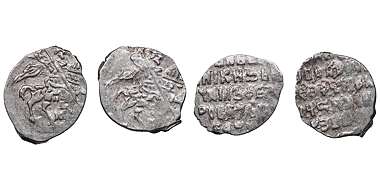
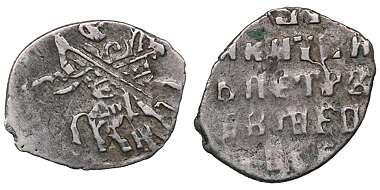
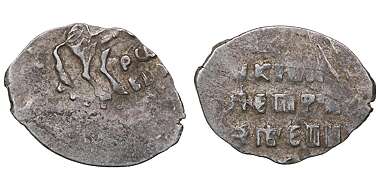
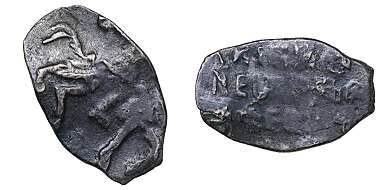
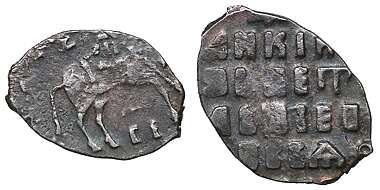
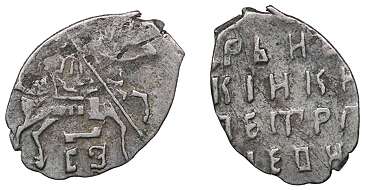
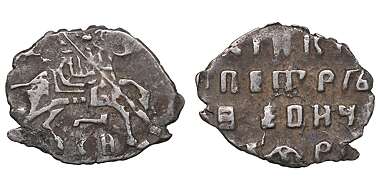
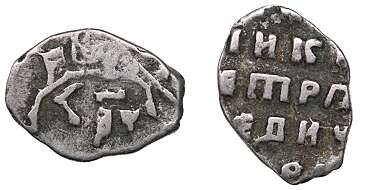
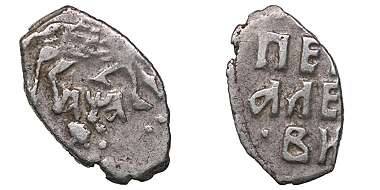
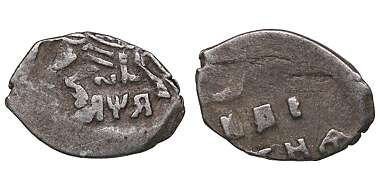
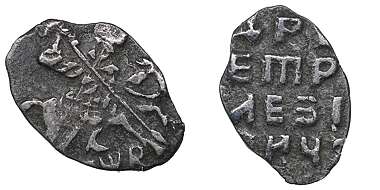
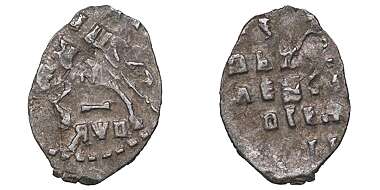
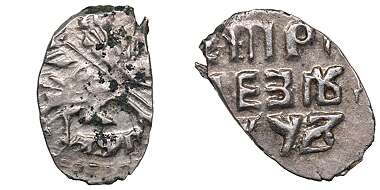
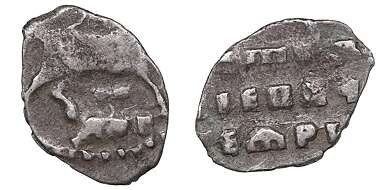
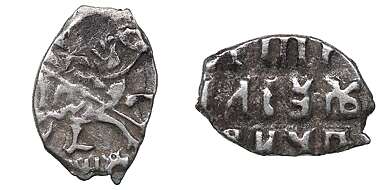
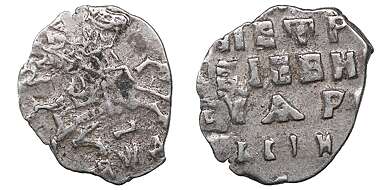
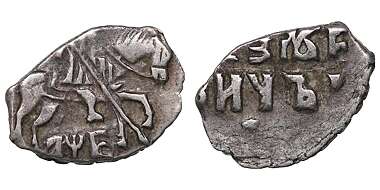
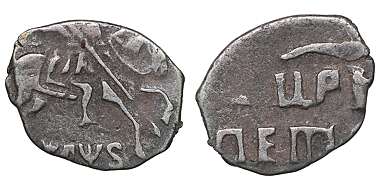
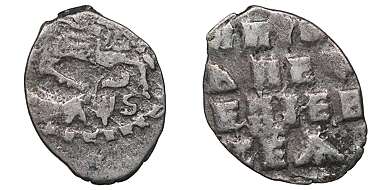
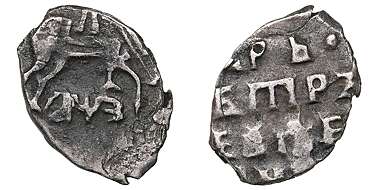
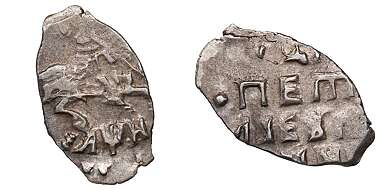
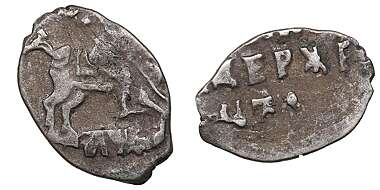
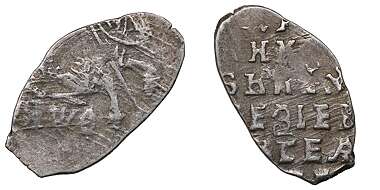
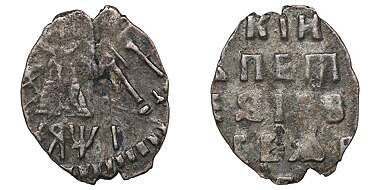
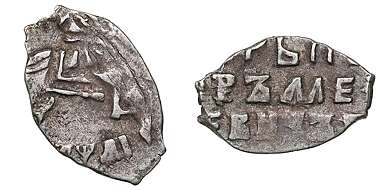
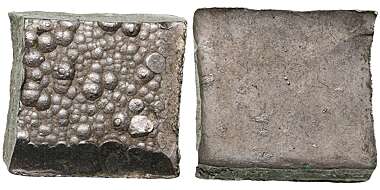
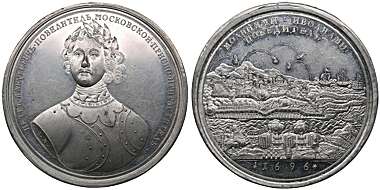
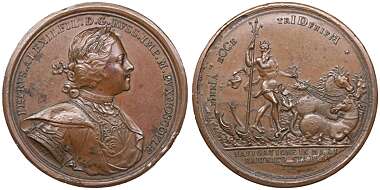
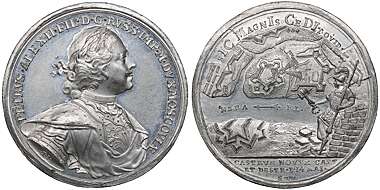
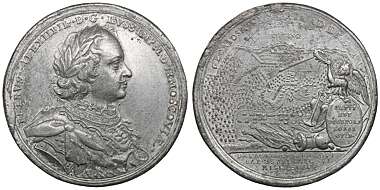
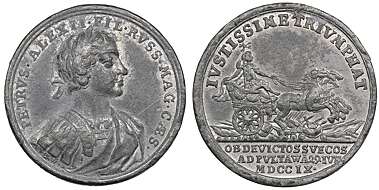
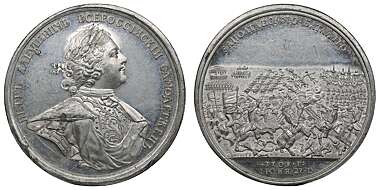
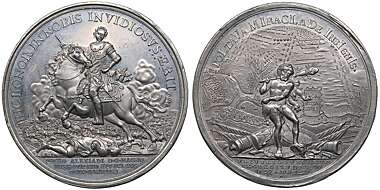
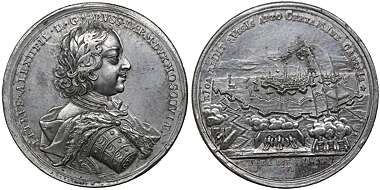
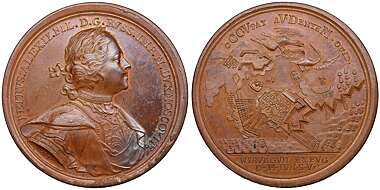
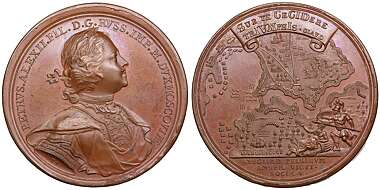
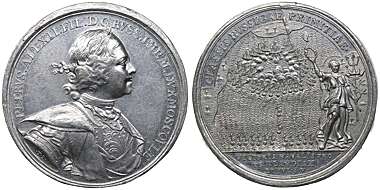
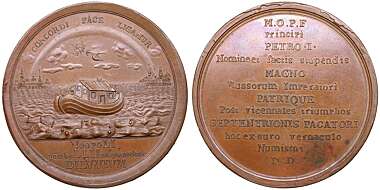
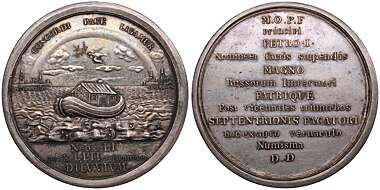
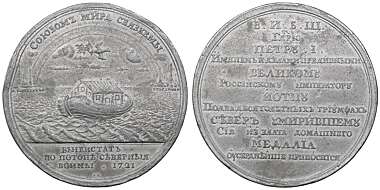
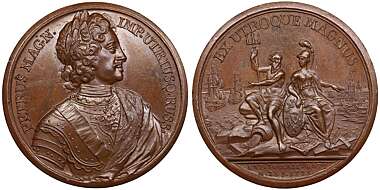
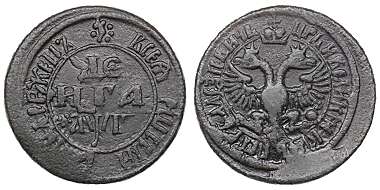
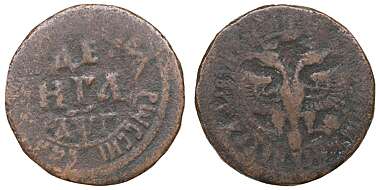
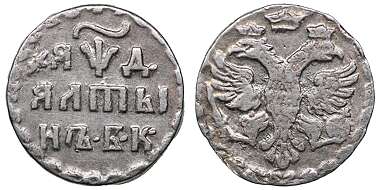
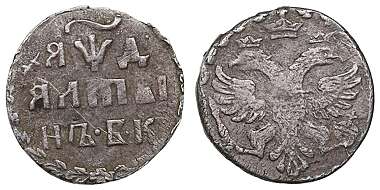
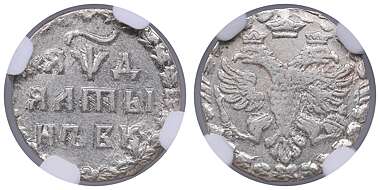
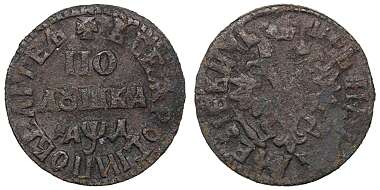
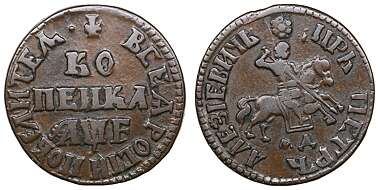
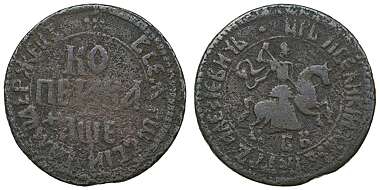
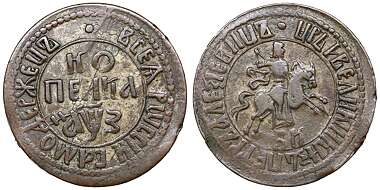
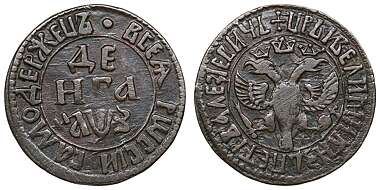
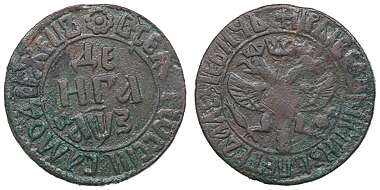
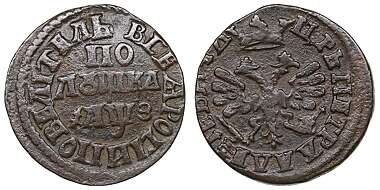
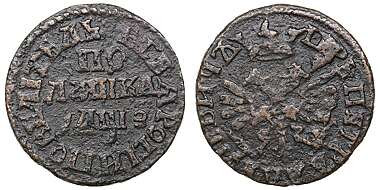
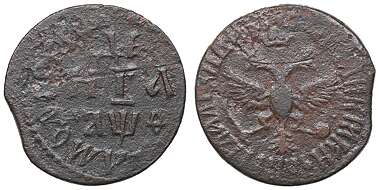
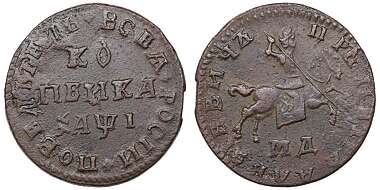
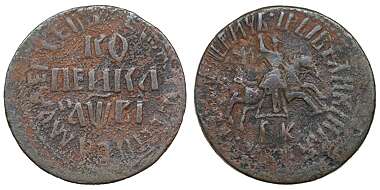
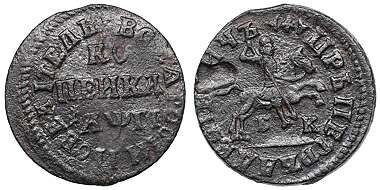
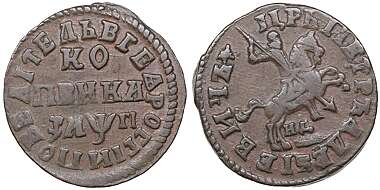
ロット 3069. Russia (Related to Sweden & Belarus) Tin-Alloy Medal 1708 (1720s) - Battle of Lesnaya, 28 September 1708 - Peter I the Great (1682-1725) 36.01g. 46mm. AU/AU. Traces of oxidation in the fields with some surface wear. Medalier: Philipp Heinrich Müller (without initial M on truncation). Plain edge. Diakov 25.20 - similar (see note below), (Ar - R3). An example struck from the same obverse die was sold in our Auction 68, Lot 520, on 3 May 2025, for €2,000. Original medals from the era of Peter the Great, particularly those by Philipp Heinrich Müller, are exceedingly rare and possess significant historical and numismatic value. Obv.: Right-facing bust of Peter I wearing a laurel wreath, armor, and fur-trimmed mantle with a lion on the chest with inscription around: PETRVS ALEXII FIL • D . G • RVSS • IMP • M • DVX MOSCOVIÆ • (Peter, son of Alexis, by the Grace of God Russian Emperor, Grand Duke of Moscow). Rev.: A detailed plan of the battlefield, with the winged figure of Fame seated upon military trophies to the right, holding a trumpet and a laurel wreath. Before her is a shield inscribed: CAPVT / EST / A CORPORE / LONGE / OVID (The head is far from the body. Ovid). Inscription above: GLORIOSA VICTORIA AD LEESNAM • / 28 • SEPT • S • V / LEESNO (Glorious victory at Lesnaya, 28 September, Old Style). In the exergue: DEVICTO LOWENHAVPT / CAESIS AVT CAPT • XVI • / MILL • SVEC (Lewenhaupt defeated, 16,000 Swedes killed or captured). * In the early 1720s, by order of Peter I, original medal dies created by Philipp Heinrich Müller were repaired, and sets of medals were struck in white metal (a tin-alloy). It appears that some obverse dies failed to withstand the workload and required restoration. In our opinion, this medal was struck using a restored original Müller obverse die of type M1, which originally bore the engraver's initial on the truncation of the sleeve (removed during restoration). Known examples struck from the original M1 die display a distinctive die crack running through the portrait, caused by the die deteriorating during striking, as well as damage to the circular inscription. We believe that this damaged die was repaired: the engraver's initial was removed, a small dot was added on the sleeve, some fine details of the relief were re-cut directly into the die, and the circular inscription was entirely recut in smaller lettering. The die crack, however, could not be eliminated and thus remains visible on all known examples. The reverse die used for this medal is original, although it also exhibits signs of deterioration. Given the composition of museum collections, which include numerous white-metal medals, and referring to Peter I's correspondence ordering the striking of tin-alloy medals as diplomatic gifts, it can be concluded that this medal was struck either during Peter's lifetime or shortly after his death. The Battle of Lesnaya, fought on 28 September (9 October, New Style) 1708 in present-day Belarus, was a major Russian victory during the Great Northern War (1700-1721). Russian forces under the personal command of Peter I intercepted a Swedish army led by General Adam Ludwig Lewenhaupt, which was transporting substantial reinforcements, ammunition and provisions to the main army of King Charles XII. After fierce fighting, the Swedish forces were compelled to retreat, abandoning much of their supply convoy and suffering heavy losses. The victory deprived Charles XII of vital resources at a critical stage of his Russian campaign and significantly weakened the Swedish army ahead of the decisive Battle of Poltava in 1709. Peter I famously regarded Lesnaya as the 'mother of the Battle of Poltava', recognising its crucial role in Russia's eventual victory over Sweden.
開始価格:
500 EUR
416 GBP
457 CHF
558 USD
四捨五入された近似値のみ日付:
2026/11/06
 consentmanager.net