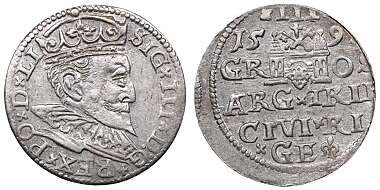
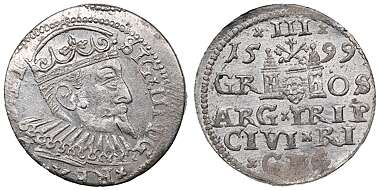
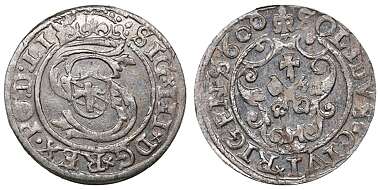
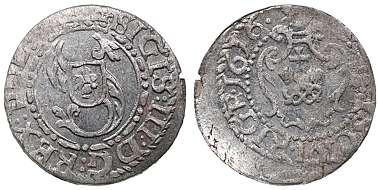
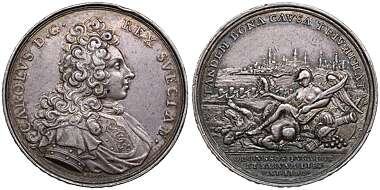
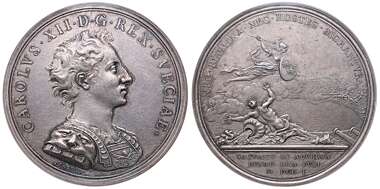
Лот 2499. Sweden (Related to Estonia, Latvia, Poland and Russia) Silver Medal 1701 - Crossing of the Düna and Victory at Riga, 9 July 1701 - Charles XII (1697-1718) - NGC UNC DETAILS 61mm. An exceptionally well-preserved specimen, among the finest encountered, displaying a beautiful, old, noble grey patina and remarkably sharp, virtually flawless relief detail. Both the obverse and reverse dies exhibit evidence of progressive die deterioration. From the famous L. E. Bruun Collection. Medalier: Bengt Richter (RICHTER below the obverse bust; R on a stone on the reverse). Delzanno (SKM) 104a, R. Hildebrand 68a; Bruun 17693. A rare issue, particularly in such an outstanding state of preservation. According to our records, the present specimen is the finest known example ever to have appeared at public auction. Obv.: Armoured bust of Charles XII facing right, with a lion's head on the shoulder. Legend: CAROLVS·XII·D·G·REX·SVECIAE· (Charles XII, by the Grace of God, King of Sweden). Rev.: The goddess of war flying above the River Düna, holding a sword and a shield bearing the Three Crowns of Sweden. Below, defeated enemy soldiers fleeing along the riverbank. Legend: NEC·FLVMINA·NEC·HOSTES·MORANTVR· / SAXONES·IN·ADVERSA· / DVNAE·RIPA·FVSI· / M·DCC·I· (Neither rivers nor enemies can delay him. The Saxons defeated on the opposite bank of the Düna, 1701). Following his decisive victory over the Russian army at Narva in November 1700, Charles XII established winter quarters at Laiuse, near Tartu (Dorpat), in present-day Estonia. During the winter of 1700-1701, the Swedish army recovered from the preceding campaign and prepared for renewed operations against the coalition of Saxony, Poland and Russia. In June 1701, Charles XII marched south from Estonia towards Riga, the principal city of Swedish Livonia, which had previously been threatened by the forces of Augustus II the Strong, Elector of Saxony and King of Poland. The opposing army, commanded by Field Marshal Adam Heinrich von Steinau, occupied fortified positions along the southern bank of the River Düna (Daugava), supported by Russian forces sent by Peter I under General Anikita Repnin. On 9 July 1701, according to the Swedish calendar, Charles XII launched a daring amphibious operation across the river near Riga. Swedish infantry and cavalry were transported in boats and barges under the protection of artillery fire and an artificial smoke screen, enabling them to establish a bridgehead despite the enemy's defensive positions. After several unsuccessful counterattacks, the Saxon forces were compelled to retreat. Although Russian troops formed part of the allied army, most of Repnin's main force did not participate directly in the decisive fighting. The Swedish victory secured Riga against further immediate attack, forced the Saxon withdrawal and enabled Charles XII to extend his operations into Courland, in present-day Latvia. The campaign marked an important turning point in the early stages of the Great Northern War, demonstrating the remarkable offensive capabilities of the Swedish army and strengthening Charles XII's reputation as one of Europe's most formidable military commanders. The victory also contributed to his subsequent decision to pursue Augustus II into the territories of modern Poland and Germany rather than immediately concentrate his forces against Peter I.
Стартовая цена:
4'000 EUR
3'335 GBP
3'657 CHF
4'466 USD
Примерные оценкиДата:
06.11.2026
 consentmanager.net