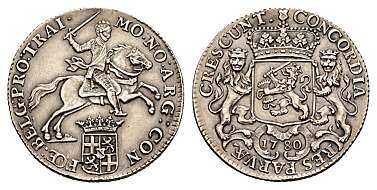
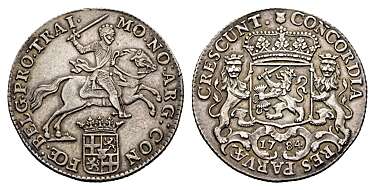
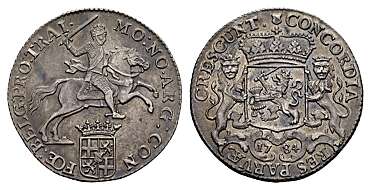
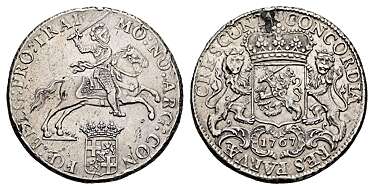
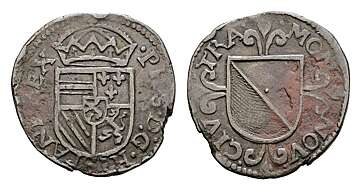
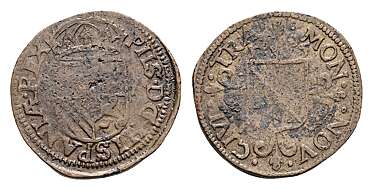
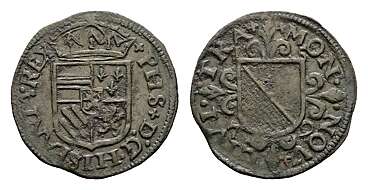
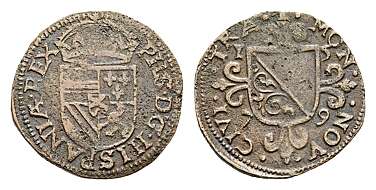
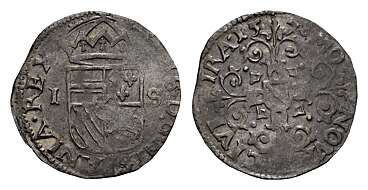
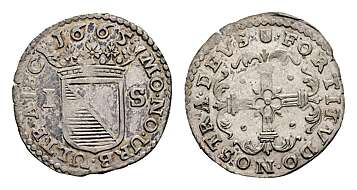
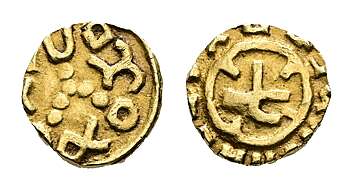
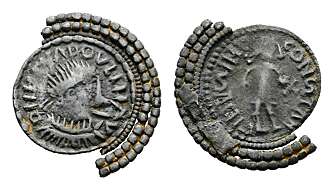
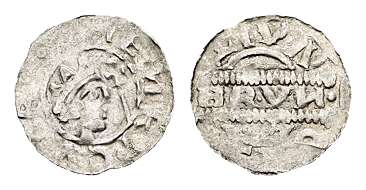
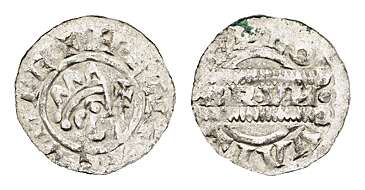
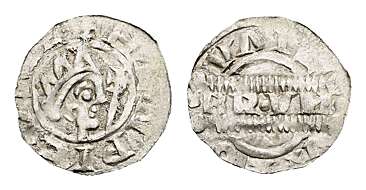
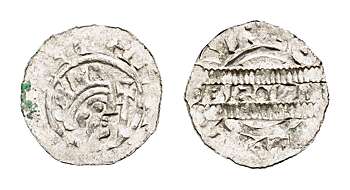
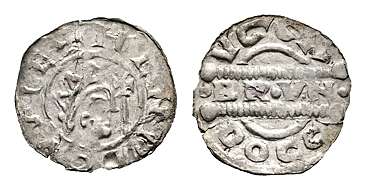
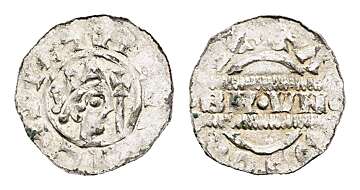
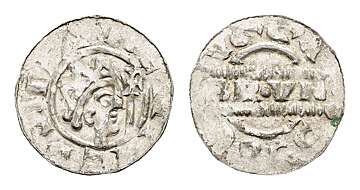
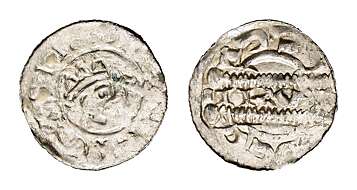
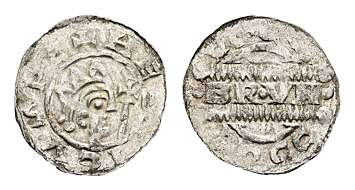
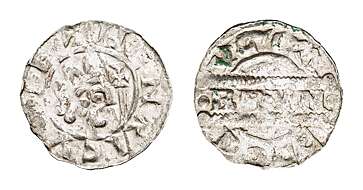
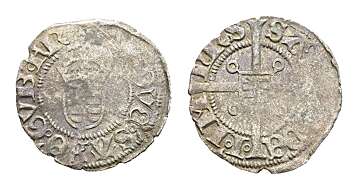
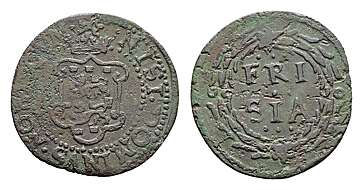
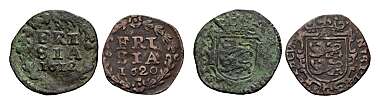
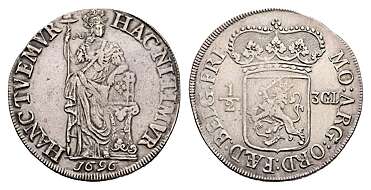
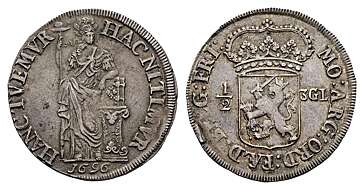
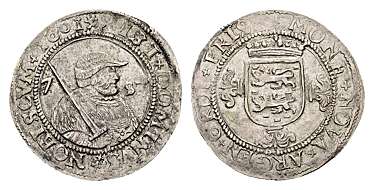
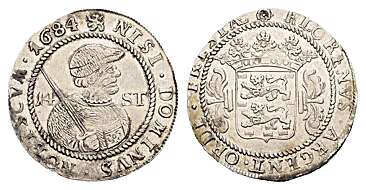
Лот 5574. Friesland op naam van Spaans gezag - Philips II (1555-1598) - ½ Philipsdaalder 1580, Leeuwarden (mm. arms of Leeuwarden) – unique off-metal trial strike in GOLD on the weight of 4 ducats - (Vanhoudt/Saunders Gold 1477 (this coin) / cf. Vanhoudt 390 (Silver) / CNM 2.16.1 (Silver) / Delm. 78 (silver)) – 13.27 gram – Obv. Bust of Philips II left, arms splitting date below – PHS · D · G: HISPAN · Z · REX · DNS · FRISI / Rev. Crowned arms of Philips II flanked by briquets and sparks, order of the Golden Fleece below - ·DOMINVS · MIHI · ADIVTOR · - Unique, a rarity in a league of its own and of the utmost importance for the numismatics of Friesland, Philips II, the Low Countries and even Spain – the first coin of the province of Friesland and the only known instance of a regular (½) Philipsdaalder in gold - Boldly struck with a magnificent and expressive bust, coated in a comely dandelion-yellow tone and the impressive lustre only interrupted by the faintest traces of handling in the larger fields – a.UNC – From the Collection of W.J. Van Welderen Baron Rengers (1835-1916), thence by descent through the family and for the very first time ever appearing on the open market. On February 1st 1580, the Kanselarij, the last bulwark of Spanish and Catholic control in Leeuwarden was occupied by its revolting citizens, the Catholics forced out of the city and Friesland fully officially comes under control of the revolting Estates. They had already signed the Unie van Utrecht prior and although the Betrayal of Count of Rennenberg later in 1580 would ensure that the eighty years’ war would still have a frontline in the northern provinces, Friesland would remain securely under the control of the Dutch Republic. Almost immediately after the occupation of the Kanselarij, the estates requested Lodewijk Alewijn (former mintmaster of Vianen and essayer at the mint in Utrecht) to come to the city and exploit the to be newly founded mint of the Frisian estates. He rented the ‘olde cancellerie’ (on the Tweebaksmarkt) and his experiences in Vianen, Utrecht and his close connection to the mintmaster for Gelderland, his brother Jacob Dirksz. Alewijn, must have allowed him to set up the mint at a record pace, as within weeks it seems coins were already leaving the mint. Initially, the mint was striking so-called ‘koningsmunten’; pieces still struck in name and title of the renounced king Philips II. For commercial purposes, these were very much still in demand and to maximize acceptance, the revolting states still named their former king on their coinage. A similar phenomenon can thus be seen on the coinages of Holland, Utrecht, Zeeland and Overijssel, all dated up to around 1580/81. This phase in the Frisian mint must have however been exceptionally brief in comparison to these provinces and only an extremely limited number of ½ Philipsdaalders were struck (it is theorized the full Philipsdaalder might also have been struck, though no examples have come to light). In silver, a mere two examples have stood the test of time; An example in the British Museum (inv. Nr. G3,FDSC2.5), which was part of the infamous collection of British monarch George III (1738-1820) and a second example previously in the collection H. Quintus (Auction T. Bom Dec. 1882, lot 306) and sold to the Fries museum (Inv. Nr. NY11944), previously erroneously regarded as unique. Both of these were struck with the same pair of dies as the example on offer here. In gold, however, we can without question speak of an utterly unique piece. The exact reason as to why an off-metal example was struck is not stated in the mint archives, but a presentation piece showcasing Lodewijk Alewijns work in the newly opened mint to the leaders of the Frisian estates, seems more than likely. It is, however, unique in its sort; no other gold off-strike from any such comparable piece is known. This gold off-strike stems from the collection of Frisian nobleman Wilco Julius van Welderen baron Rengers (1835-1916). Hailing from Frisian nobility, an early career as a lawyer saw him flourish as mayor of Leeuwarden between 1877 and 1883, after which he entered national politics, first in the House of Representatives and from 1904 to 1913 in the Senate. His obituary makes note of a modest, righteous man and while not an avid coin collector or numismatists himself, rather an interested historian, he undoubtedly possessed a small cabinet of coins and medals with emphasis on his home province. How exactly he acquired the piece remains unknown, although perhaps it is imaginable it simply descended through the family generations before him. As is proper for Frisian nobility, the baron kept the piece to himself; the only public appearance being the Historical Exhibition of Friesland, held in the summer of 1877 during his tenure as mayor, in the Stadhouderlijk Hof in Leeuwarden. Listed in the exhibition catalogue, under vitrine 88, ‘½ Philipsdaalder van 1580, in gouden proefslag, hoogst zeldzaam’ is noted. After the exhibition was done, the piece returned back behind closed doors into the collection of the baron and was largely forgotten by the numismatic world. Even when Jacques Schulman briefly got to see and make a pencil rubbing of this coin for his archive around ca. 1970 (upon which the notation in Vanhoudt/Saunders is based), the piece remained unpublished, unknown to the numismatic world at large and appears in not a single other reference work. Heritage Auctions Europe is honored to bring it to the open market for the very first time and we expect, besides a renewed interest in this underexposed area of Frisian numismatics, a strong bidder interest at this once-in-a-lifetime opportunity.
 consentmanager.net