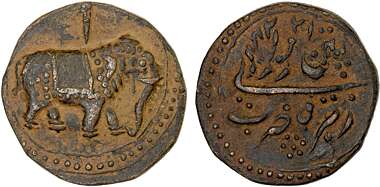
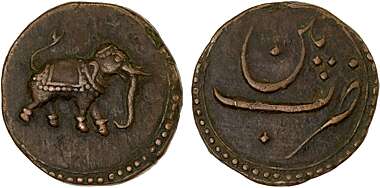
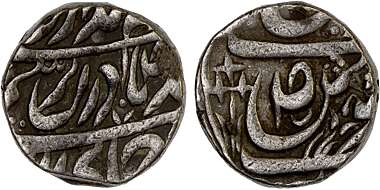
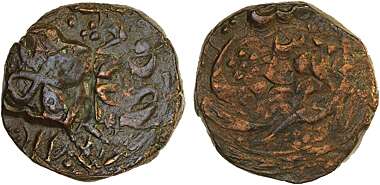
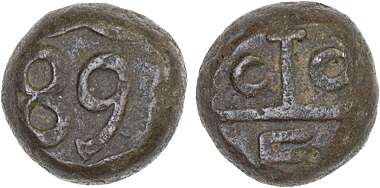
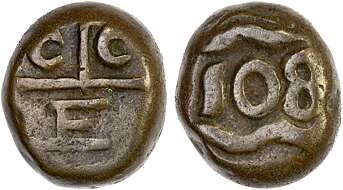
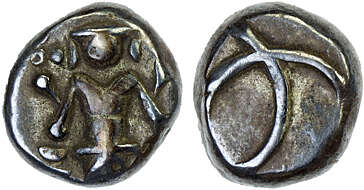
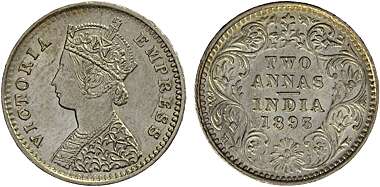
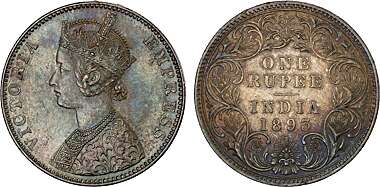
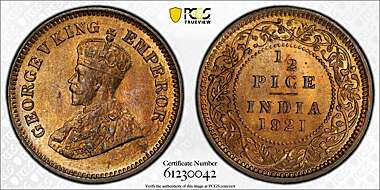
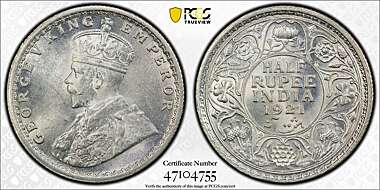
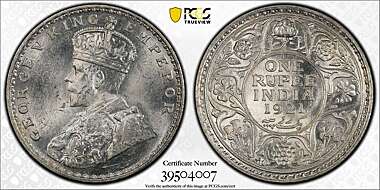
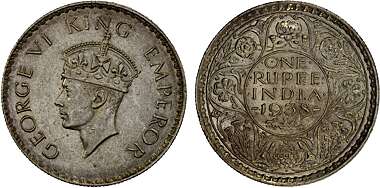
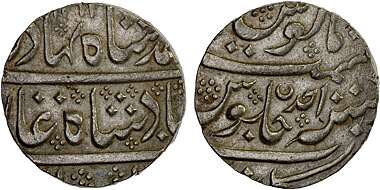
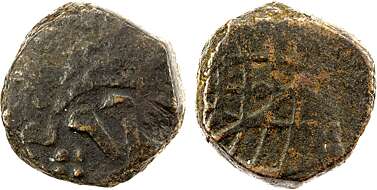
Лот 601. MYSORE: Tipu Sultan, 1782-1799, AE paisa (zohra) (11.08g), Patan, AM1224, KM-123.6, elephant right, year 1 indicated by the Persian letter "alef" above elephant, VF, ex Dr. Vincent John Adams Flynn Collection.
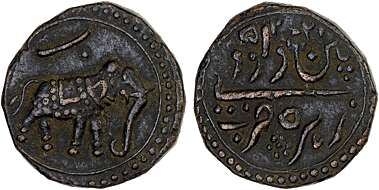
Лот 602. MYSORE: Tipu Sultan, 1782-1799, AE paisa (zohra) (11.16g), Patan, AM1225, KM-123.7, Mauludi date, elephant right, year 2 indicated by the Persian letter "be" above elephant, VF, ex Dr. Vincent John Adams Flynn Collection.
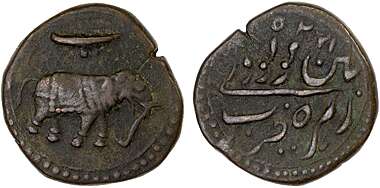
Лот 603. MYSORE: Tipu Sultan, 1782-1799, AE paisa (zohra) (10.71g), Patan, AM1225, KM-123.7, elephant right, year 2 indicated by the Persian letter "be" above elephant, F-VF, ex Dr. Vincent John Adams Flynn Collection.
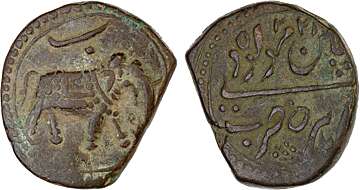
Лот 604. MYSORE: Tipu Sultan, 1782-1799, AE paisa (zohra) (10.97g), Patan, AM1225, KM-123.7, elephant right, year 2 indicated by the Persian letter "be" above elephant, zohra below mint name, F-VF, ex Dr. Vincent John Adams Flynn Collection.
Лот 605. MYSORE: Tipu Sultan, 1782-1799, AE paisa (zohra) (11.04g), Patan, ND, KM-123.9, elephant right, undated type, VF-XF, ex Dr. Vincent John Adams Flynn Collection.
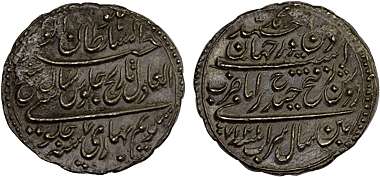
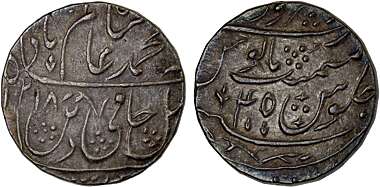
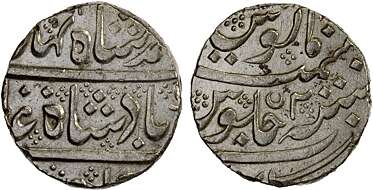
Лот 608. MYSORE: Krishna Raja Wodeyar, 1799-1868, AR rupee, Mahisur (Mysore), AH(12)21 year 47, Cr-207, with crescent privy mark, regnal year retrograde, NGC graded XF45.
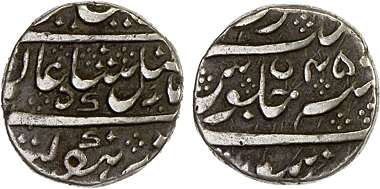
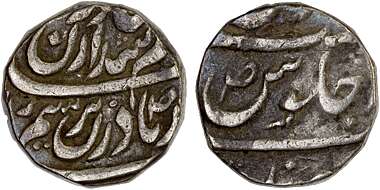
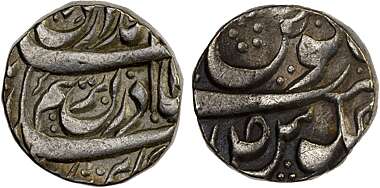
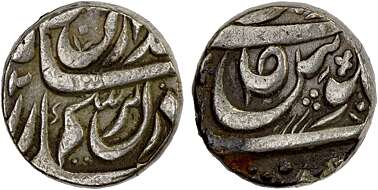
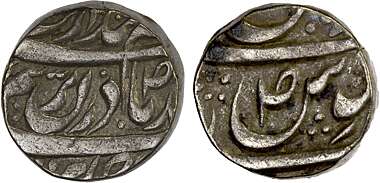
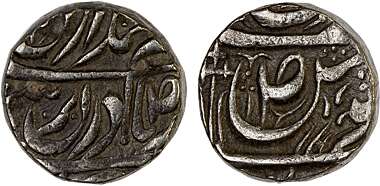
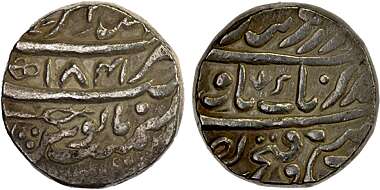
Лот 619. SIKH CONFEDERACY: AR rupee (11.52g), Anandgarh, VS1841 (1784), KM-30, Herrli-02.02.04, Gobindshahi couplet in Persian (abundance, power and victory (and) assistance without delay are the gift of Nanak (and) Guru Gobind Singh) // Persian legend at the top with the Vikram Samvat 1841, with floral and mace mintmarks, VF. Struck by the military government of the Sikh Confederacy, known as the Dal Khalsa, predates the foundation of the Sikh Empire by around 15 years. The old spelling of the city is Anandghar.
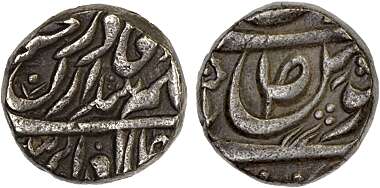
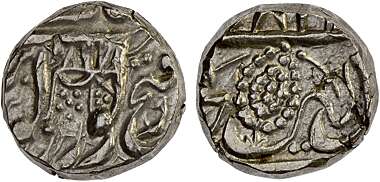
Лот 622. SIKH EMPIRE: Anonymous, AE falus (paisa) (8.79g), Peshawar, AH1248 (1832), KM-, SCP-52F, four-part floral symbol within pointed quatrefoil, mint date around // mint formula, overstruck on undetermined host, crude F-VF, RR.
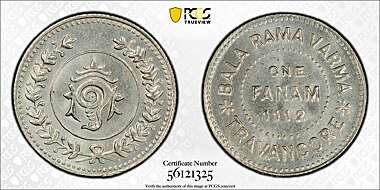
Лот 624. TRAVANCORE: Bala Rama Varma II, 1924-1949, AR fanam, ME1112 (1937), KM-61, a superb lustrous mint state example! PCGS graded MS65. This type was struck at the Trivandrum Mint (Thiruvananthapuram, Kerala). These Travancore 1937 one fanam coins were produced using imported English coin presses from melted foreign silver. The Trivandrum Mint used dies supplied by the Birmingham Mint (Heaton & Sons) in 1937-1938.
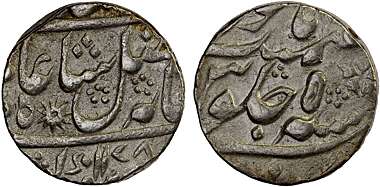
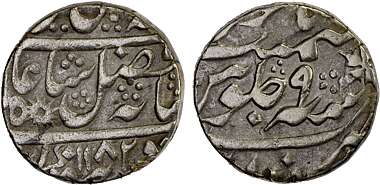
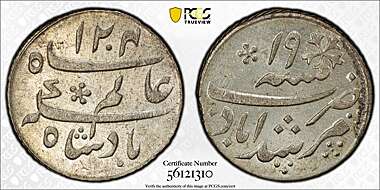
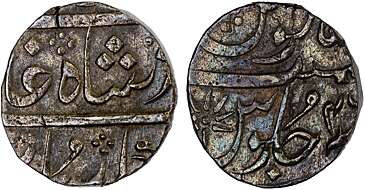
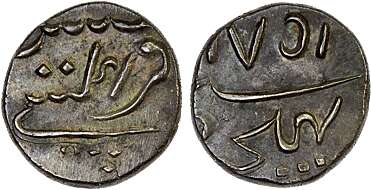
Лот 631. BENGAL PRESIDENCY: AR 1/4 rupee, Murshidabad, AH1204 year 19, KM-96.1, Stv-4.22. Prid-159, East India Company issue in the name of Shah Alam II, struck in Calcutta from 1793-1818 with frozen date and mint, oblique edge milling (grained right), with central dot in central group of pellets privy mark, a wonderful bright lustrous mint state example! PCGS graded MS64. Incorrect Stevens and Krause catalog numbers on PCGS holder.
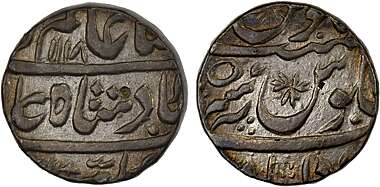
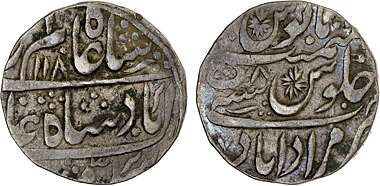
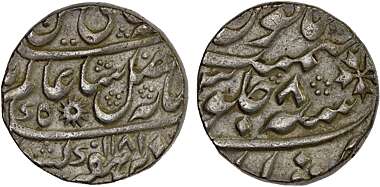
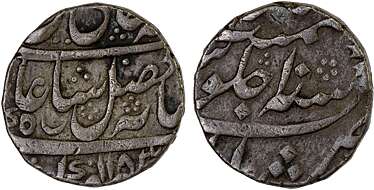
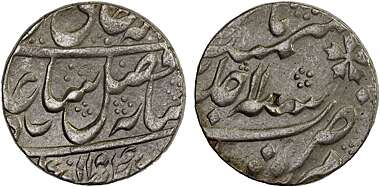
Лот 633. BENGAL PRESIDENCY: AR rupee, Muhammadabad Banaras, AH1229 year 17-49, KM-41, East India Company issue in the name of Shah Alam II, struck with frozen date year 49, fish & flower privy marks, very lustrous, NGC graded MS62.
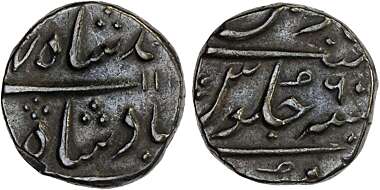
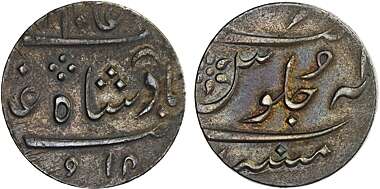
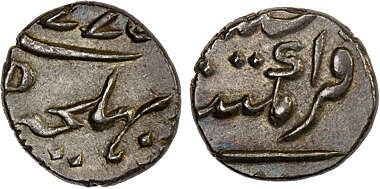
Лот 635. BOMBAY PRESIDENCY: AR 1/2 rupee (5.75g), Munbai, year 6, East India Company issue, in the name of Ahmad Shah, VF. Possibly a late Mughal issue or very early Presidency issue.
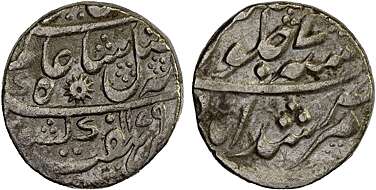
Лот 636. BOMBAY PRESIDENCY: AR rupee (11.51g), Surat, year 46, KM-212.1, East India Company issue, privy mark #1, struck 1800-1832, lustrous fields, AU.
Лот 637. BOMBAY PRESIDENCY: AR rupee, Munbai, ND, KM-220, East India Company issue, machine struck in the style of the old Bombay rupee issued in the name of Emperor Alamgir II, struck at Calcutta mint with inverted crescent mark 1810-1813, XF.
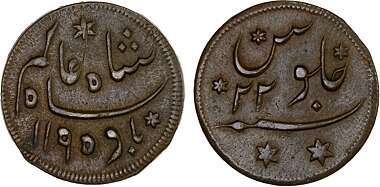
Лот 639. MADRAS PRESIDENCY: AE 1/2 anna (13.79g), Pulta, AH1195 year 22, KM-126, John Prinsep series, large flan type, struck 1780-1786, XF. John Prinsep opened a copper mint at Pulta in 1780 under authority of the government, after he and Alexander Cunningham discovered the copper mines at Rotasgarh. The mint operated from 1780 to 1786. By 1788 Prinsep left India and decamped for home, arriving in London with an enormous £40,000 fortune, primarily derived from his indigo ventures, which he used to set himself up in business as an East India agent and Italian silk merchant, a step made easier by his role as an East India Company shareholder.
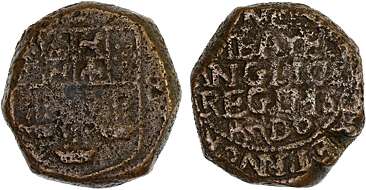
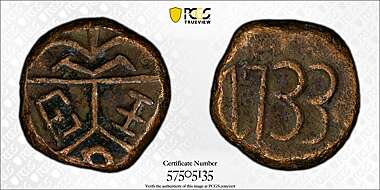
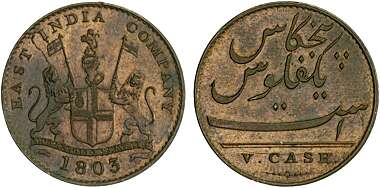
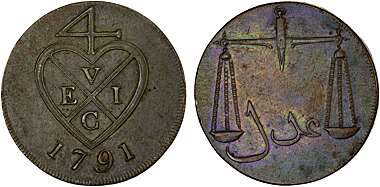
Лот 640. MADRAS PRESIDENCY: AE cash (1.16g), 1733, KM-302, East India Company issue, balemark on reverse, PCGS graded XF40. Soon after its creation, the United East India Company began to use a balemark, which identified its products as they arrived in busy ports or were sold on the trading floor. Initially a simple mark, this evolved by the 1700s into a heart shaped figure (denoting good luck) surmounted by a figure 4 (symbolizing Agnus Dei - 'Lamb of God') and containing the initials of the company, VEIC, with the letter U Latinized. This symbol became known as "the chop", a word derived from the Hindi word 'chap', which means stamp. From the late 17th century to the early 19th century the exchange rate was 80 cash equaling 1 fanam, with 36 fanams equaling 1 pagoda.
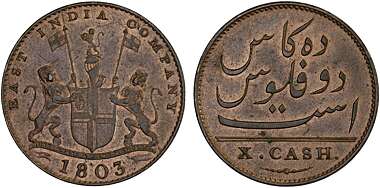
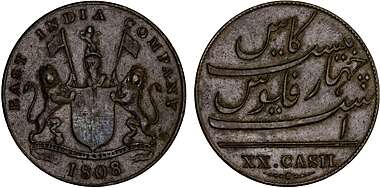
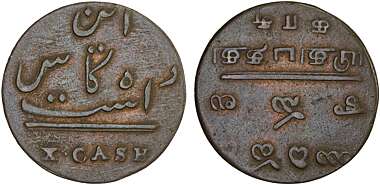
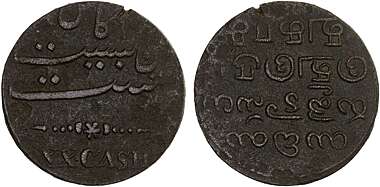
Лот 648. MADRAS PRESIDENCY: AE 10 cash (4.56g), ND (1807), KM-326, East India Company issue, denomination in Persian and English // Tamil and Telugu, VF-XF.
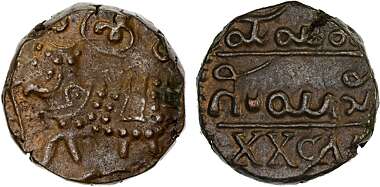
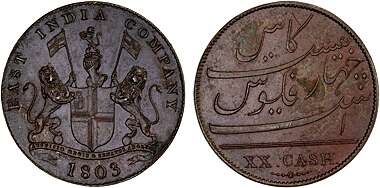
Лот 649. MADRAS PRESIDENCY: AE 20 cash (9.38g), ND (1807), KM-328, East India Company issue, denomination in Persian and English // Tamil and Telugu, porous fields, VF.
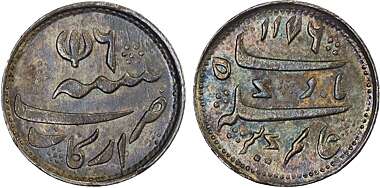
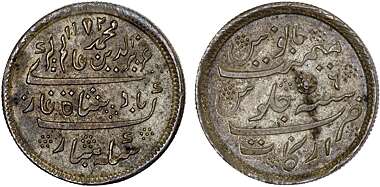
Лот 650. MADRAS PRESIDENCY: AR 1/4 rupee, Arkat, AH1172 year 6, KM-409, East India Company issue, indented cord milling, edge, struck 1812-17 at the Madras mint, choice lustrous example, AU.
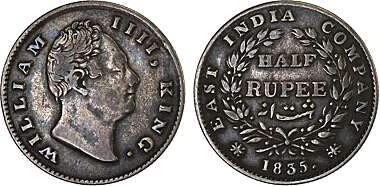
Лот 651. MADRAS PRESIDENCY: AR 1/2 rupee, Arkat, AH1172 year 6, KM-426, East India Company issue, reeded edge, struck 1823-25 at the Calcutta mint, lustrous fields, AU.
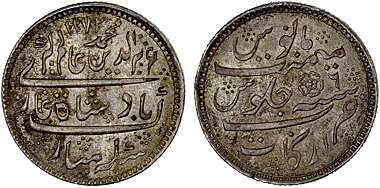
Лот 652. MADRAS PRESIDENCY: AR rupee, Arkat, AH1172 year 6, KM-427, East India Company issue, reeded edge, struck 1823-25 at the Calcutta mint, lustrous fields, AU.
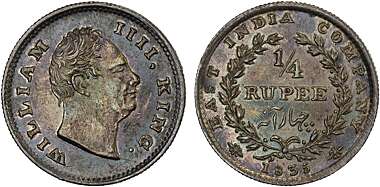
Лот 653. BRITISH INDIA: William IV, 1830-1837, AR 1/4 rupee, 1835(c), KM-448.3, East India Company issue, light hairlines, pleasantly toned, a lustrous example, AU.
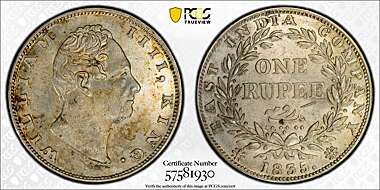
Лот 655. BRITISH INDIA: William IV, 1830-1837, AR rupee, 1835(c), KM-450.3, S&W-1.39, Prid-34, East India Company issue, type C/I, with F' incuse on truncation, a lovely lustrous mint state example! PCGS graded MS63.
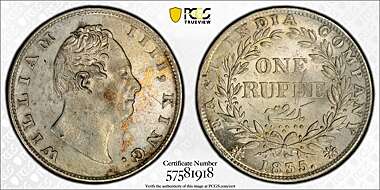
Лот 656. BRITISH INDIA: William IV, 1830-1837, AR rupee, 1835(c), KM-450.3, S&W-1.39, Prid-34, East India Company issue, type C/I, with F' incuse on truncation, a pleasing lustrous mint state example, PCGS graded MS62.
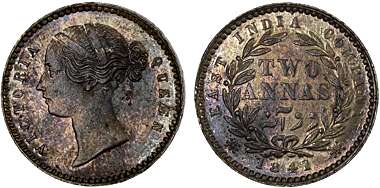
Лот 659. BRITISH INDIA: Victoria, Queen, 1837-1876, AE 1/4 anna, 1858(h), KM-463.1, S&W-3.78, Prid-156, East India Company issue, struck at the Heaton Mint, Birmingham, obverse B, reverse I, with single leaf at wreath ends, a wonderful mostly red lustrous example! NGC graded MS64 RB, ex Stephen Album Auction 25, Lot 1532.
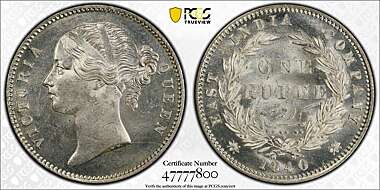
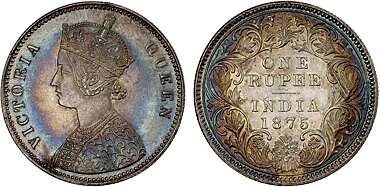
Лот 660. BRITISH INDIA: Victoria, Queen, 1837-1876, AR rupee, 1875(c), KM-473, Type A Bust, Type I Reverse, a few faint hairlines, a lovely toned lustrous example, AU.
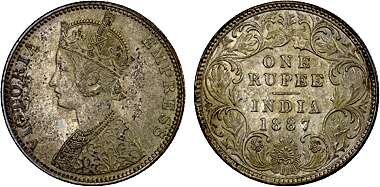
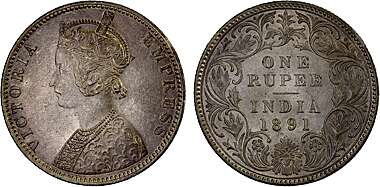
Лот 662. BRITISH INDIA: Victoria, Empress, 1876-1901, AR rupee, 1887-B, KM-492, incuse mint mark, a few faint hairlines, a attractive lustrous example, AU.
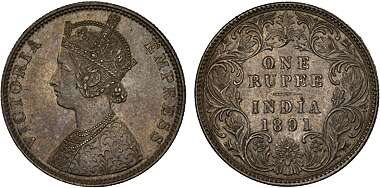
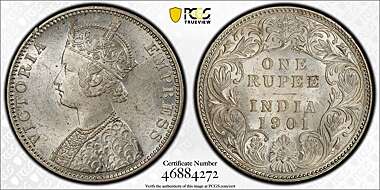
Лот 667. BRITISH INDIA: Victoria, Empress, 1876-1901, AR rupee, 1901-B, KM-492, S&W-6.164, Prid-188, an attractive mint state example, PCGS graded MS62.
Лот 670. BRITISH INDIA: George V, 1910-1936, 1 anna, 1912(b), KM-513, S&W-8.277, Prid-942, a wonderful lustrous example! NGC graded MS64, ex Monetarium Auction 8, Lot 35.
Лот 675. BRITISH INDIA: George V, 1910-1936, AE 1/12 anna, 1926(b), KM-509, S&W-8.564, Prid-854, a fantastic quality mint state example! NGC graded MS66 RB.
Лот 682. PORTUGUESE INDIA: Goa: João III, 1521-1557, AE leal (11.41g), ND, Gomes-J3.10.01, with the usual crude flan and uneven strike, astrolabe reverse, a rarity despite the condition, VG, ex Charles W. Lueders III Collection.
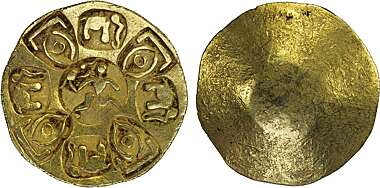
Лот 685. INDIA: Modern Imitations, 20th century, AV "pagoda" (3.58g), running Garuda, holding a bird, inn the center, 4 elephant punches and 4 temple symbols around, uniface, vaguely based on medieval Chalukya and Vidarbha gold pagodas, likely made in 2nd half of the 20th century, XF.
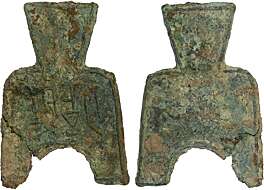
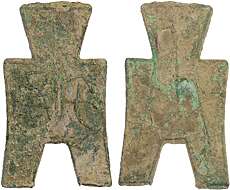
Лот 686. CHINA: WARRING STATES: State of Liang, 400-300 BC, AE spade (12.68g), H-3.38-40, flat-handled arched-foot type, yu yi jin ("Yu one jin") in archaic script, broken and repaired, Fine, ex Dr. Dirk Löer Collection.
Лот 687. CHINA: WARRING STATES: State of Yan, 350-250 BC, AE spade money (5.72g), H-3.182, flat-handle square foot spade type, an yang in archaic script, with collector's original card, VF, ex Dr. Rolland James Brines Collection.
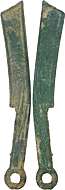
Лот 688. CHINA: WARRING STATES: State of Yan, 400-200 BC, AE knife money, H-4.42.4ba, Ming type, Group 4, You series, you tu in archaic script on reverse, plastic is cracked on the GBCA holder (we will NOT accept returns for broken plastic), graded 80 by GBCA Grading Company, VF, ex Bernd Löer Collection.
Лот 689. CHINA: YUTIAN KINGDOM: Anonymous, ca. 2nd-3rd century, AE 6 zhu (3.8g), Cribb-2, Sino-Kharosthi series, struck posthumously in the name of Gurgamoya (ca. 30-60 AD), horse standing right, Kharosthi legend around // Chinese inscription liu zhu qian ("6 zhu currency"), small liu variety, graded 82 by GBCA Grading Company, F-VF, ex Dr. Dirk Löer Collection. The Yutian Kingdom was located in the Khotan (Hetian) region in today's southwestern Xinjiang, China. See Cribb's articles in Numismatic Chronicle, Volumes 144 & 145 (1984 & 1985).
Лот 690. CHINA: YUTIAN KINGDOM: Anonymous, ca. 2nd-3rd century, AE 6 zhu (4.6g), Cribb-8, Sino-Kharosthi series, struck posthumously in the name of Gurgamoya (ca. 30-60 AD), horse walking right, Kharosthi legend around // Chinese inscription liu zhu qian ("6 zhu currency"), small liu variety, overstruck on an earlier type, graded 82 by GBCA Grading Company, F-VF, ex Dr. Dirk Löer Collection. The Yutian Kingdom was located in the Khotan (Hetian) region in today's southwestern Xinjiang, China. See Cribb's articles in Numismatic Chronicle, Volumes 144 & 145 (1984 & 1985).
Лот 691. CHINA: YUTIAN KINGDOM: Anonymous, ca. 2nd-3rd century, AE 6 zhu (5.7g), Cribb-8, Sino-Kharosthi series, struck posthumously in the name of Gurgamoya (ca. 30-60 AD), horse walking right, Kharosthi legend around // Chinese inscription liu zhu qian ("6 zhu currency"), small liu variety, overstruck on an earlier type, graded 82 by GBCA Grading Company, F-VF, ex Dr. Dirk Löer Collection. The Yutian Kingdom was located in the Khotan (Hetian) region in today's southwestern Xinjiang, China. See Cribb's articles in Numismatic Chronicle, Volumes 144 & 145 (1984 & 1985).
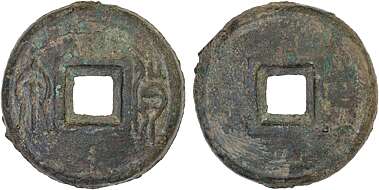
Лот 692. CHINA: XIN: Wang Mang, 7-23 AD, AE cash (22.5g), H-9.60, 31mm, large size and heavy huo quan "bing qian" (biscuit), an above-average example with bold characters, =, VF.
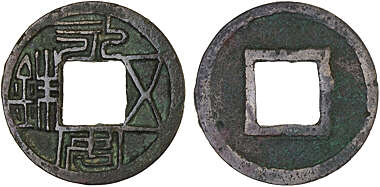
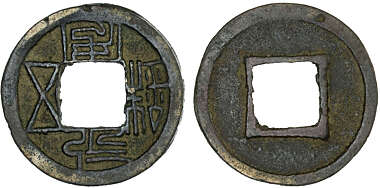
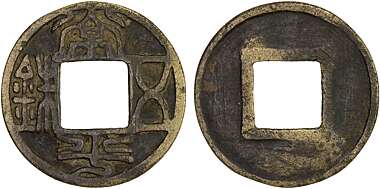
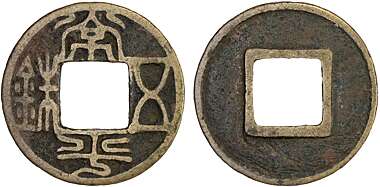
Лот 693. CHINA: NORTHERN WEI: Anonymous, 529-543, AE cash (3.5g), H-13.23, yong an wu zhu, graded 85 by GBCA Grading Company, VF-XF. Yong An wu zhu coins were first issued in the autumn of the second year of Yong'an in 529 AD by Emperor Xiao Zhuang. It is said that they continued to be cast until 543 AD under the Eastern and Western Wei dynasties. During the Eastern Wei dynasty, private coins with nicknames such as Yongzhou Green-red, Liangzhou Thick, Constrained Cash, Auspicious Cash, Heyang Rough, Heavenly Pillar, and Red Halter circulated, and were all possibly Yong An wu zhus.
Лот 694. CHINA: NORTHERN WEI: Anonymous, 529-543, AE cash (3.02g), H-13.23, yong an wu zhu, with collector's original card purchased from Wang Wen Djong in November 1936, VF, ex Dr. Rolland James Brines Collection. Yong An wu zhu coins were first issued in the autumn of the second year of Yong'an in 529 AD by Emperor Xiao Zhuang. It is said that they continued to be cast until 543 AD under the Eastern and Western Wei dynasties. During the Eastern Wei dynasty, private coins with nicknames such as Yongzhou Green-red, Liangzhou Thick, Constrained Cash, Auspicious Cash, Heyang Rough, Heavenly Pillar, and Red Halter circulated, and were all possibly Yong An wu zhus.
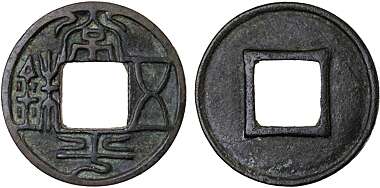
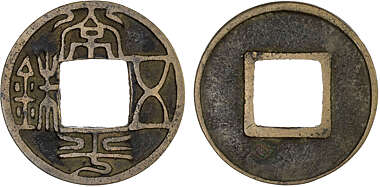
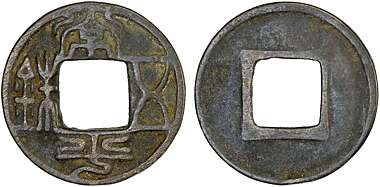
Лот 695. CHINA: NORTHERN QI: Anonymous, 550-577, AE cash (3.7g), H-13.27, chang ping wu zhu, graded 85 by GBCA Grading Company, VF-XF. The legend on this coin translates as the "Constant and Regular Wu Zhu". They were cast by Emperor Wen Xuan in 553 and made in fine quality. Under the Northern Qi, there was an Eastern and a Western Coinage Region, under the Chamberlain for Palace Revenues.
Лот 696. CHINA: NORTHERN QI: Anonymous, 550-577, AE cash (3.73g), H-13.27, chang ping wu zhu, with collector's original card purchased in August 1937, VF, ex Dr. Rolland James Brines Collection. The legend on this coin translates as the "Constant and Regular Wu Zhu". They were cast by Emperor Wen Xuan in 553 and made in fine quality. Under the Northern Qi, there was an Eastern and a Western Coinage Region, under the Chamberlain for Palace Revenues.
Лот 697. CHINA: NORTHERN QI: Anonymous, 550-577, AE cash (3.48g), H-13.27, chang ping wu zhu, Fine. The legend on this coin translates as the "Constant and Regular Wu Zhu". They were cast by Emperor Wen Xuan in 553 and made in fine quality. Under the Northern Qi, there was an Eastern and a Western Coinage Region, under the Chamberlain for Palace Revenues.
Лот 698. CHINA: NORTHERN QI: Anonymous, 550-577, AE cash (3.07g), H-13.27, chang ping wu zhu, Fine. The legend on this coin translates as the "Constant and Regular Wu Zhu". They were cast by Emperor Wen Xuan in 553 and made in fine quality. Under the Northern Qi, there was an Eastern and a Western Coinage Region, under the Chamberlain for Palace Revenues.
Лот 699. CHINA: NORTHERN QI: Anonymous, 550-577, AE cash (3.43g), H-13.27, chang ping wu zhu, Fine. The legend on this coin translates as the "Constant and Regular Wu Zhu". They were cast by Emperor Wen Xuan in 553 and made in fine quality. Under the Northern Qi, there was an Eastern and a Western Coinage Region, under the Chamberlain for Palace Revenues.
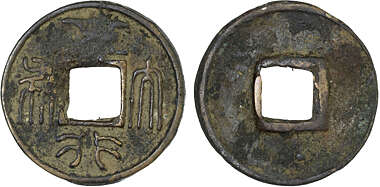
Лот 700. CHINA: NORTHERN ZHOU: Anonymous, 557-581, AE cash (2.87g), H-13.30, wu xing da bu, with collector's original card purchased in November 1936, Fine, ex Dr. Rolland James Brines Collection. The legend translates as "the large coin of the five elements [metal, wood, water, fire, and earth]", issued in 574 by Emperor Wu. They were intended to be worth ten bu quan coins, but illegal coining soon produced specimens of a reduced weight and the authorities banned the use of this coin in 576.