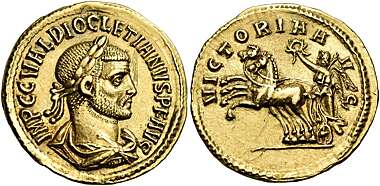
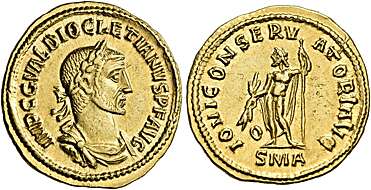
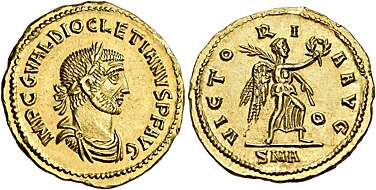
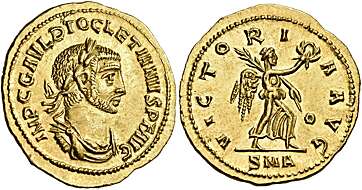
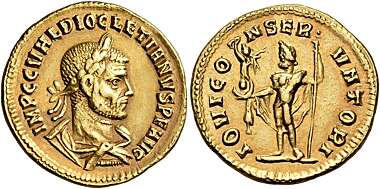
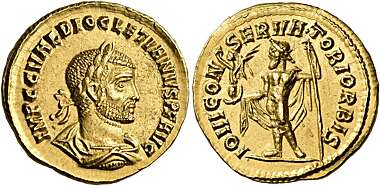
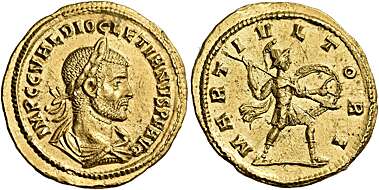
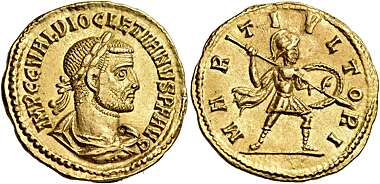
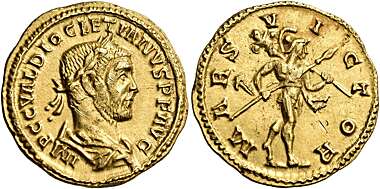
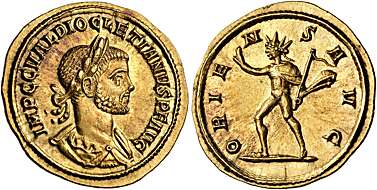
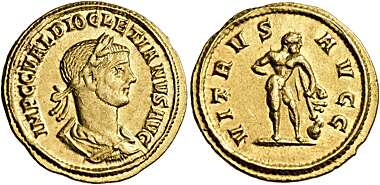
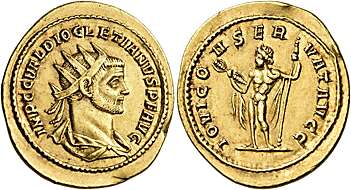
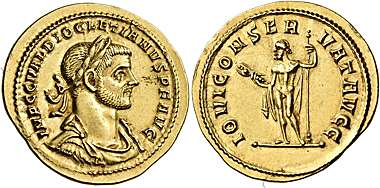
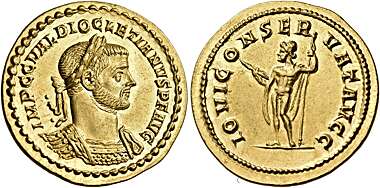
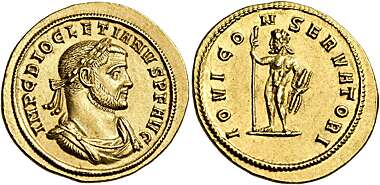
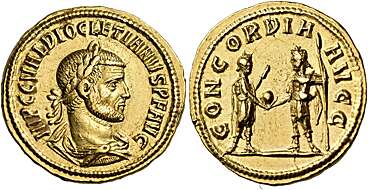
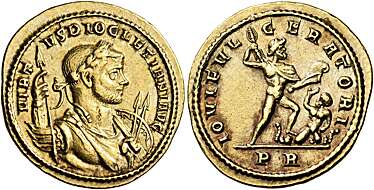
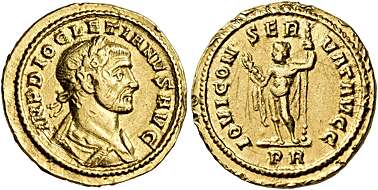
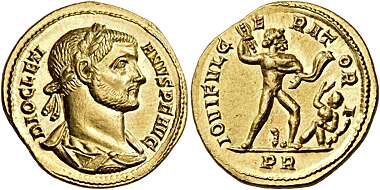
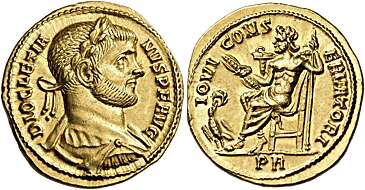
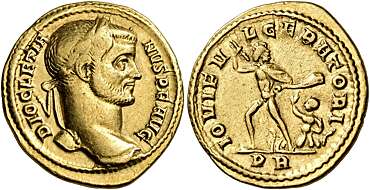
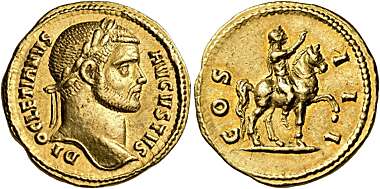
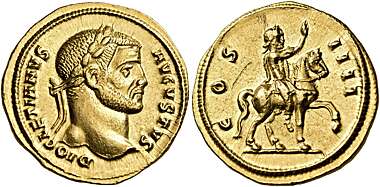
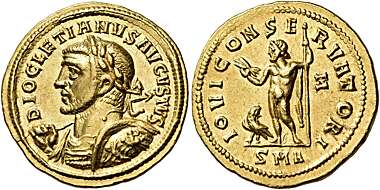
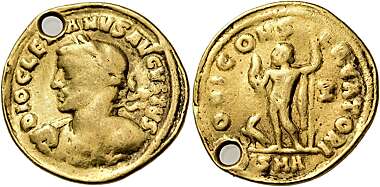
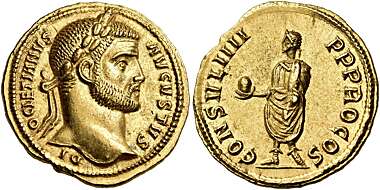
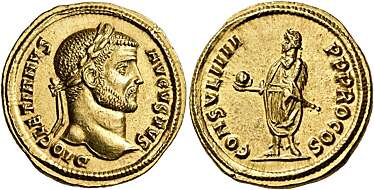
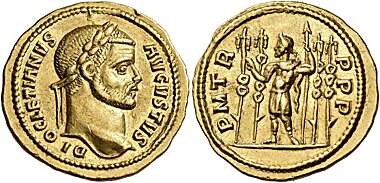
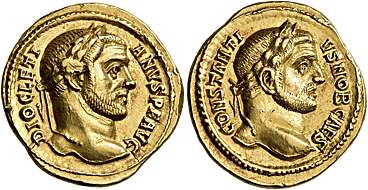
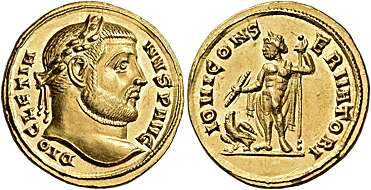
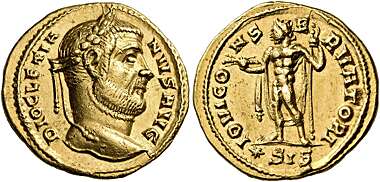
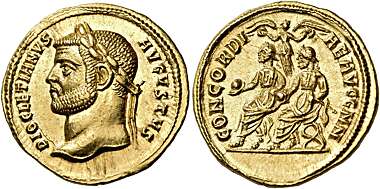
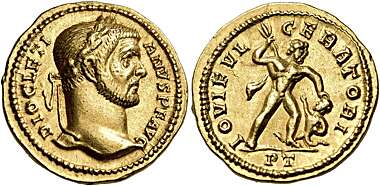
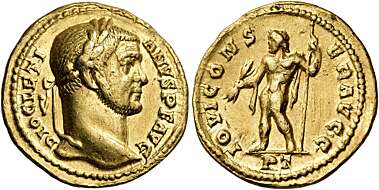
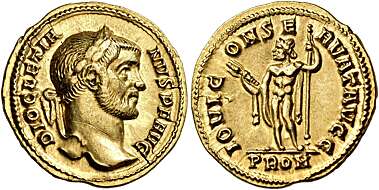
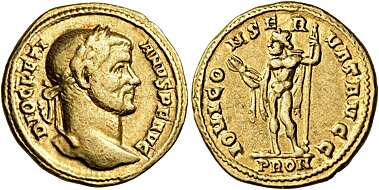
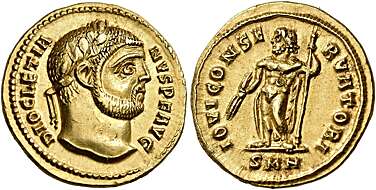
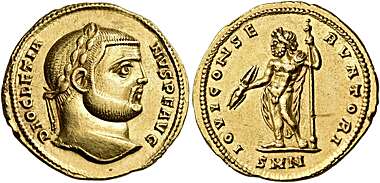
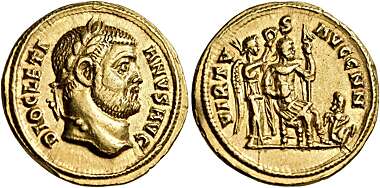
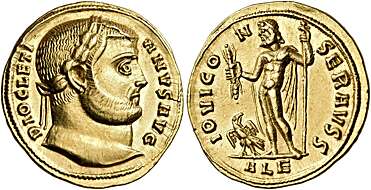
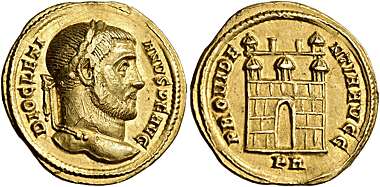
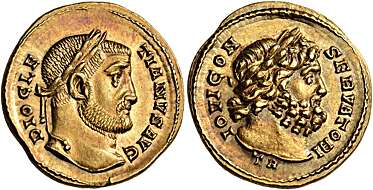
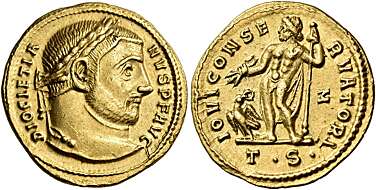
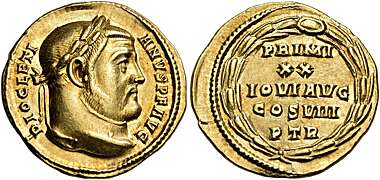
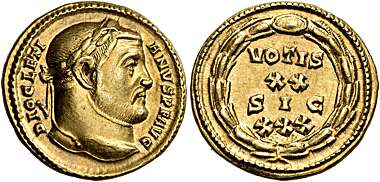
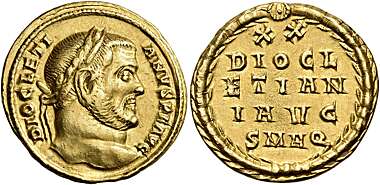
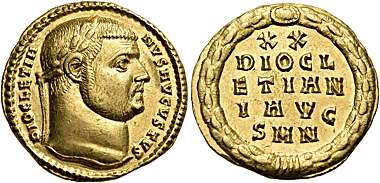
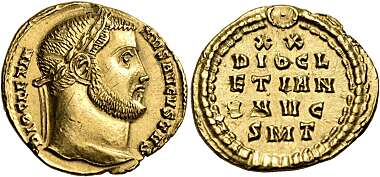
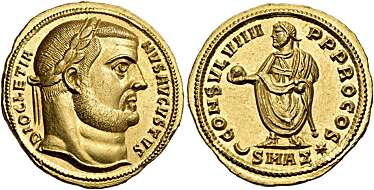
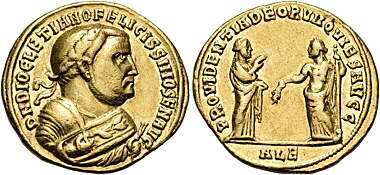
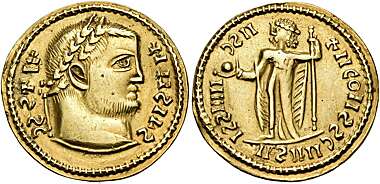
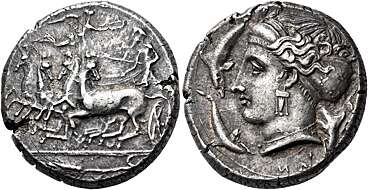
拍品 32. Once in the Gotha collection Diocletian, 284-305. Aureus (Gold, 19 mm, 5.33 g, 6 h), on the heavy standard, Rome, 287. DIOCLETIA - NVS P F AVG Laureate and lightly bearded bare bust of Diocletian to right. Rev. IOVI FV-LGERATORI / PR Jupiter striding to left, his head and torso turned back to right, hurling thunderbolt from his right hand at an anguipedal giant at his feet to right. Calicó 4532 (R3). Depeyrot 6/7 (dated to 287). Lukanc Rome 15 (dated to 289-290). RIC V, 2, p. 235, 146 var. (undated); RIC VI -. An attractive, toned piece with an intriguing mythological reverse, alluding to the Empire's struggle against the usurper Carausius. Good very fine. From The Dr. Ivo Lukanc Collection of the Gold Coinage of Diocletian, ex Giessener Münzhandlung 50, 24 September 1990, 676, and from the Gotha collection, Hess, Luzern, [240], 9 May 1951, 270. For an earlier reverse die with the same types, almost certainly cut by the same engraver, see, above, lot 28. When Diocletian first began striking gold coins the portraits they bore were basically the same types as those found on all imperial gold since the late first quarter of the second century., busts, sometimes bare-headed but usually laureate, but almost always draped and cuirassed (or one or the other); and, depending on the Caesar or Augustus's age, bearded (ranging from short and trimmed to long and flamboyant). This style began under Trajan, as a break from the simple heads or bare-shouldered busts that had been the rule since the reign of Augustus. The decision to abandon the draped bust format must have been carefully thought out since it was replete with symbolic importance; Diocletian must have had a circle of economic and political advisors who were behind the change (it is extremely unlikely that Diocletian, despite his talents, thought this up himself). In any case, in 287, in Rome and Cyzicus, the old type changed to a laureate bust with bare shoulders. This harked back to the coinage of Augustus and his immediate successors, but also displayed a kind of stern masculinity. While the heads did show some aspects of individuality (Diocletian's and Maximianus's noses are different, sometimes), the intention seems to have been to show a uniform vision of power (all the Tetrarchs look very similar to, or the same as, each other). This was a perfect illustration of the change from the Principate to the Dominate. It is clear that orders went out as early as late 287 to all the mints striking gold to use the new bust type. While the old-style types continued at Antioch until 290, the change was certainly complete by 293 when the Tetrarchy was established: not only did the newly introduced silver argentei bear the new bust type, but so did some of new folles. Furthermore, this coin was once in the great collection in Gotha: while there is still a magnificent collection of coins in Gotha, a considerable part of the collection was taken west by the ducal family just prior to the end of World War II. Many of the more valuable pieces were then sold during the 1950s, including a large portion of Roman gold that appeared in the 1951 Hess sale. The coins themselves were in the collection at least prior to World War I, with many surely being bought in the 18th or 19th centuries (or even earlier). https://cdn.nomosag.com/auctions/95/video00032.mp4?sv=2023-01-03&ss=b&srt=co&st=2025-03-10T16%3A25%3A27Z&se=2099-03-11T16%3A25%3A00Z&sp=rl&sig=i7RzFAqwYGMJUp3u71BbRyL3HhIAtR%2F8cUnRnTVQfyU%3D&rsct=video%2Fmp4
 consentmanager.net